
After years of playing the good-guy best friend, the Crazy Rich Asians breakout takes on his first true villain role in Hulu’s The Season — and opens up about the identity he spent a lifetime trying to find on screen.
For this month’s cover story, we sat down with Chinese- Australian actor Chris Pang, who stole hearts as the charming Colin Khoo — the groom at the center of the wedding chaos — in the film adaptation of Kevin Kwan’s best-selling novel, Crazy Rich Asians.
Yes, CRA, as it’s adoringly called by fans, made him a name — but this time, we find Pang in another role, one that’s a first for him to play. In Hulu’s The Season, a champagne-fueled revenge drama set against Hong Kong’s elite boating scene, Chris plays Andrew Fung, an unapologetic, no-holds-barred newly rich hotelier desperate to prove that he belongs.

Born and raised in Melbourne, Chris is the son of Barry and Anne Pang — founders of the renowned Barry Pang Kung Fu Schools and grew up in a household immersed in Wing Chun, a Southern Chinese close-quarters martial art built for efficiency and self-defense. From a young age, he idolized Bruce Lee, Jackie Chan, and Jet Li. Pang credits that early exposure to martial arts as one of the building blocks that later shaped his journey into the entertainment industry.
Pang recalls what it was like to grow up as an Australian boy who is Chinese: “Honestly, it’s very similar to being an American Born Chinese — even the acronym is the same, ABC. I didn’t really see Asian people doing the cool things, being the main character of anything. There was Bruce Lee — the greatest Asian who ever lived — an icon.”
Asian representation in international film has long struggled and this has been going on for decades. Actors were often sidelined into supporting roles, reduced to damaging stereotypes with lasting effects on how audiences perceive them.
Pang saw it firsthand, even in the work of the two men he idolized most. “In their international English-speaking films, even Jet Li and Jackie Chan weren’t playing the typical hero types: strong, masculine, saves the day, gets the girl. They were mostly reluctant heroes,” he says. “Besides them, the Asians we saw on screen were, honestly, quite damaging, and made it hard for me to be proud to be Asian and find my identity. That’s what made it so important to me to tell different stories and create characters that could change that so a kid growing up today has better role models, and feels represented and accepted in a way I didn’t.”
When it came down to choosing what career he was going to have, Chris decided to try out his luck as an actor and he chose to fly out to Asia instead of starting out in Australia where he took the chance to meet people from the industry there, establishing a network that would later on play a pivotal part in establishing his cross-continental journey in the film industry.
Ironically, after landing his first acting role, Pang had to fly back to Australia. Where he was left to make a choice about whether he was going to pursue this or not. I packed up my bags, he said, moved to Hollywood, and I guess that was the moment it became real. “
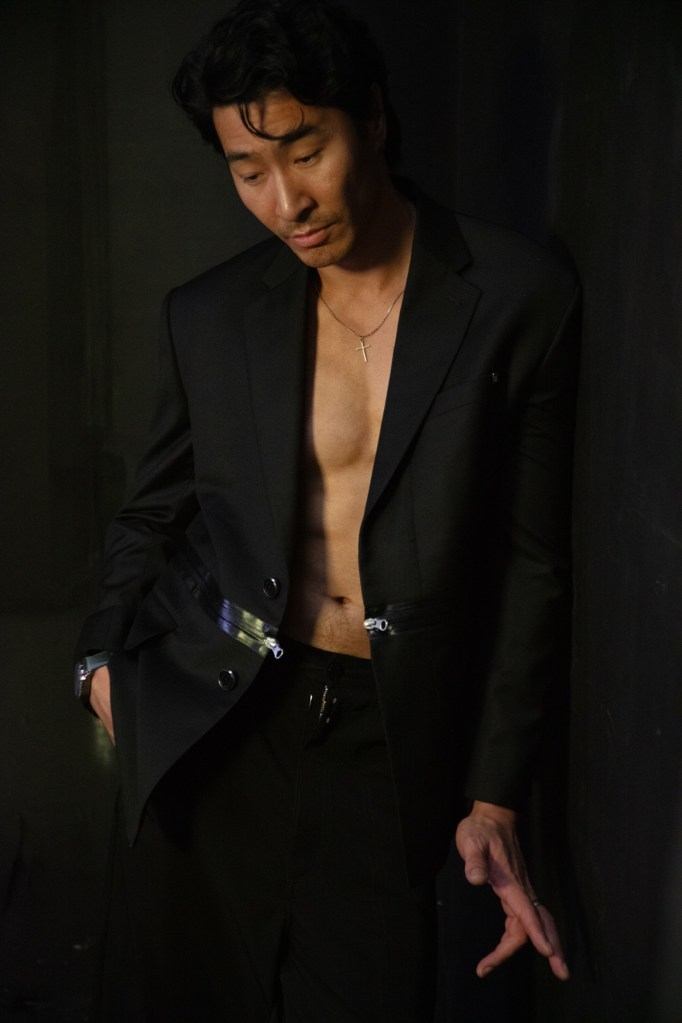
Selling phones at the time, Pang’s first industry credit, a voice-over job for a Jackie Chan film, happened after he randomly walked into a recording studio. He dubbed Daniel Wu’s character at the time, who he now calls a friend. At the time, it would be years before Crazy Rich Asians arrived and Pang was candid about those long stretches in-between roles, according to him.” I’d moved to Hollywood and gone through some really dark, slow stretches where I didn’t know if this was going to work out, or if there was even a place for me in this industry. I think Crazy Rich Asians – and honestly every project really – has been a marker of validation, a sign that maybe this could work. “
“I still don’t know if I have longevity,” Pang reiterates. “I ask myself that every day, because the industry is changing fast and everyone’s struggling right now. Getting cast is hard for anyone, but getting cast as a minority is even harder — there are just fewer opportunities. If I’m honest, the biggest hurdle is the day to day motivation to keep going. But I’m sustained by something bigger than myself — I’m fighting for the kid I once was, for what would have actually helped him, and for changing the way Asians are perceived in Western media.”
That fight didn’t start with Crazy Rich Asians, either. Years earlier, in Tomorrow, When the War Began, Pang played an Asian male lead in a relationship with an Australian love interest — a pairing he knew, even then, was rare on screen, and one that mattered to Asian friends who hadn’t grown up with much to point to with pride. What Crazy Rich Asians did was open the door wider: proof that authentic, Asian-led stories could get made without the old constraints on who’s allowed to carry a film. The way Pang sees it, the responsibility now shifts behind the camera — the groundwork, he says, has to be laid before a single scene is shot, or there’s nothing real left for an actor to bring to life.

That’s the door The Season walked through. Created by Yalun Tu and directed by Marialy Rivas, the six-episode Hulu drama drops a striving outsider into the glittering, secret-laced world of Hong Kong’s super-yacht set — and gives Pang a character built almost in defiance of everything he’s usually asked to play.
“I’ve mostly been cast as the good guy best friend type,” Pang says. “I love playing the villain instead — it’s just more fun to be a horrible human being, because you don’t get to do that in real life. I’m sick of being compassionate, empathetic and a functional member of society.” Andrew, he explains, doesn’t have an inside voice — only an outside one. “Whatever unfiltered thought forms in his head is exactly what comes out of his mouth,” Pang says. “Those are always my favorite characters to watch too, there’s something about that messiness that’s just fun to watch.” Surrounded by a cast playing careful, filtered high society, Andrew’s bluntness stands out even more. He’s Pang’s favorite character in the series, and he expects audiences to split down the middle on him — “people are either going to love him or love to hate him.”
Finding Andrew’s make or break point took some work. Rivas pushed him further with each take, but Pang says the real challenge wasn’t how far the character could go. Andrew, by design, is unpredictable enough that almost nothing feels too extreme for him. The harder question was staying inside the reality of the world the show had built, especially early on, before the rest of the comedic cast had arrived and the tone was still being found. “It took us a minute to find that balance,” he says, “but once we were all on the same page we had a blast pushing Andrew as far as he could go.”
If Andrew is defined by what he wants; status, validation, a seat at a table he wasn’t born into. In this case, Pang is careful to draw the line between the character’s hunger and his own. In real life, he has never been drawn to social status, he says; if anything, snobbishness turns him off. But he recognizes the ache underneath it: the feeling of being a minority who doesn’t quite fit, of not being quite good enough, familiar from growing up Chinese-Australian — and from acting itself, a profession with no scoreboard, where you’re always quietly wondering if you measured up. “Andrew’s insecurity comes from a different place than mine,” he says, “but he’s still really relatable to me.”
Much of that tension plays out opposite Justin Chien ( The Brothers Sun and Avatar: The Last Airbender alum), who plays Andrew’s best friend, David introduced as the golden boy before the cracks start to show. Pang and Chien are genuinely close off-screen, and he sees a version of the show’s dynamic in their real friendship: Chien “very by the book and straight-laced,” Pang prone to saying “some pretty out there things.” On set, he says, it became “this nice dance is when I’d zig he’d zag.”
That off-screen closeness extended across the whole cast, drawn from Australia, the UK, the US, Canada, Korea, Japan, Taiwan, Hong Kong, and China. Pang describes an instant camaraderie among Asian actors who’d grown up worlds apart yet all coming together to create a world that attracts”We’ve all fought the same silent fights our whole lives,” he says, pointing to the small things nobody had to spell out: taking your shoes off indoors, the ritual of hot pot, cooking your own meat at the table. Karaoke, he adds, was a given. The cast kept hanging out well past wrap on any given day, weekends, dinners, the ordinary stuff of real friendship. “Shooting in Hong Kong with this cast,” Pang says, “has been one of the best filming experiences I’ve ever had.”

“It was genuinely meaningful being able to communicate with the whole crew in my native tongue – it just feels different. I think I accessed a part of myself that I didn’t even know needed care, and it was really satisfying and fulfilling.”
The city itself mattered too. Pang had resisted working in Asia for years, worried it would prioritize a market some of his friends — the ones who didn’t speak Chinese —couldn’t access, and he’d made a point of favoring English-language work because of it. Filming The Season changed something. Communicating with the entire crew in his native tongue, he says, “just feels different.” “I think I accessed a part of myself that I didn’t even know needed care,” Pang says, “and it was really satisfying and fulfilling.” He’s now open to more work in the region helped along, he noted, by how quiet production has been in Los Angeles lately.
That openness is already shaping what comes next. Beyond acting, Pang has moved into producing — developing his own slate of projects rather than waiting, as he puts it, for someone to write the perfect role for him. Action, crime thrillers, rom-coms, horror: a bit of everything is in the pipeline. Directing, he says, is still a few years off — a different skill set he wants to earn properly before he attempts it.
One project closest to his heart is a biopic of Sessue Hayakawa, the silent-film-era star Pang calls the most successful actor of his time and America’s first sex symbol and today, a name almost nobody recognizes. “It just summed up everything that’s held Asian actors back for so long,” Pang says. “He achieved everything I’m still fighting for, and it’s wild to think that happened a hundred years ago and almost nobody knows about it.” The timing, he believes, is no accident: funding a film built around an Asian male lead something Hayakawa managed a century ago has only recently become realistically possible again.
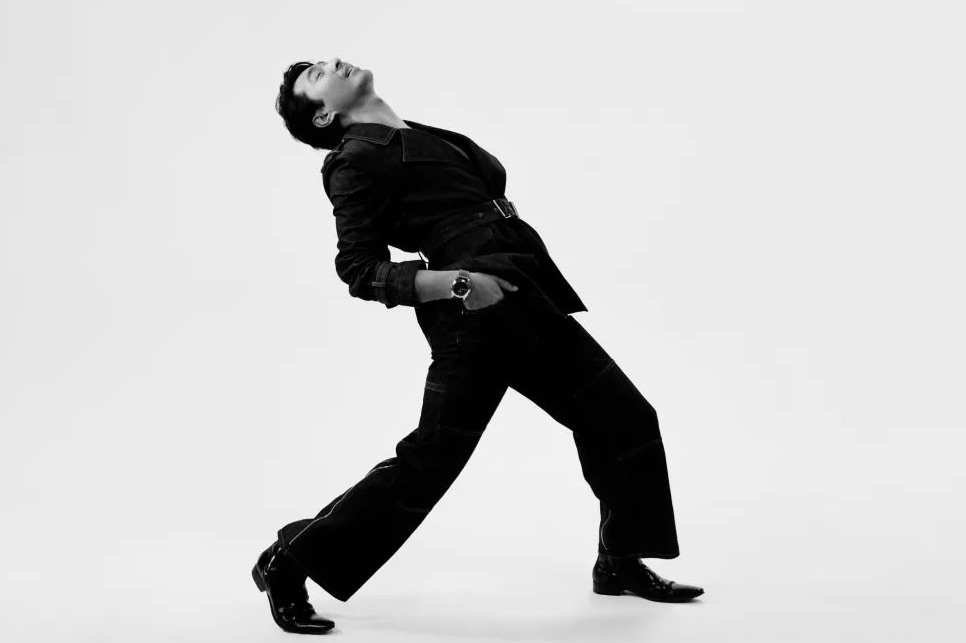
Asked what he’d tell a young Asian actor starting out today, Pang doesn’t soften it. “This is one of the hardest things you could ever choose to do, no matter who you are,” he says. “Nothing prepares you for how much rejection wears you down, or how lost you’ll feel not knowing when you’ll work next, if ever. There’s no clear career path laid out for you — everyone’s journey looks completely different. It’s full of self doubt, imposter syndrome, an endless string of no’s before you get a single yes, and no financial stability.” For minority actors, he adds, the odds tilt further still the opportunities simply smaller to begin with. But he doesn’t end there. “Your reward is getting to do what you love, and when you do get the highs, they’re the highest highs you’ll ever feel,” he says. “When things are going well there’s genuinely nothing like it.”
As for whether he’ll get to revisit the world that first made him a household name — a Crazy Rich Asians series is reportedly back in development Pang isn’t holding back. “I will be the first one celebrating,” he says, “when it finally happens.”
Follow Chris on Instagram: @pangeerz Catch The Season on VIU and HULU
Editorial Credits:
Photographer & Art Director: Nikolaus James Murray
Creative Direction: Victoria Hirakawa-Lee
Production: DARING MINDS Productions
Styling: Miguel Luis Martinez
Styling Assistant: Pacey
Written by: Cyan Leigh Dacasin
Editor-in-Chief: Natalie Tran Steger
Graphic Designer: Kevin Conopio