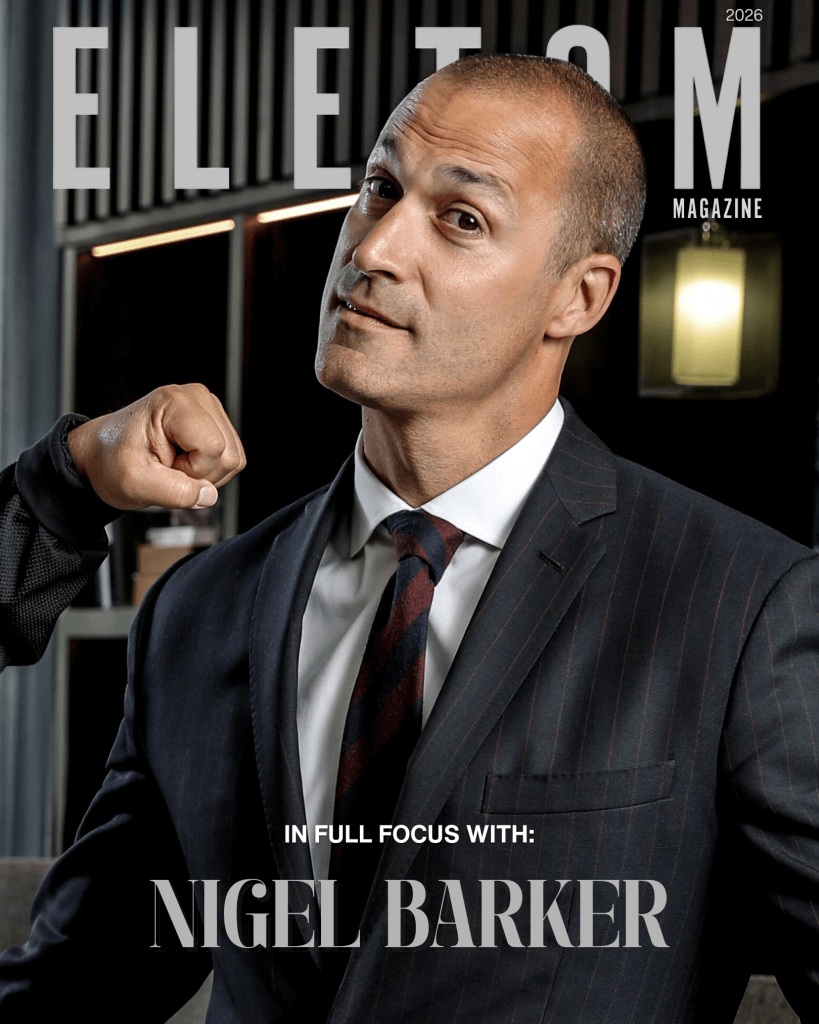
— The Photographer, judge, entrepreneur on fashion, identity, ANTM, and the life he built entirely on his own terms.
When a young Nigel Barker told his father that he was learning to sew so he could get a head start in medical school, Mr. Barker Sr. shrugged it off. “I said it with a completely straight face. I’m not sure he entirely believed me, but he let it go.”
For those of us who grew up in the early 2000s to the mid-2010s, Nigel Barker, the English-Sri Lankan photographer, former model, and entrepreneur, was a familiar face thanks to his longtime role as a judge on the cult phenomenon America’s Next Top Model.
Yet, modeling was the farthest thing from his mind. “From a young age, fashion had always had a gravitational pull on me that I couldn’t explain or ignore,” he said — a spark first ignited when his brother David, who ran a company called Xaymaca, commissioned his then 17-year-old brother to design a hat for him. That design, to his surprise, became a reality, manufactured and sold at The General Trading Company in Sloane Square, London — a luxury shopping district frequented by the late Princess Diana and the Sloane Rangers.
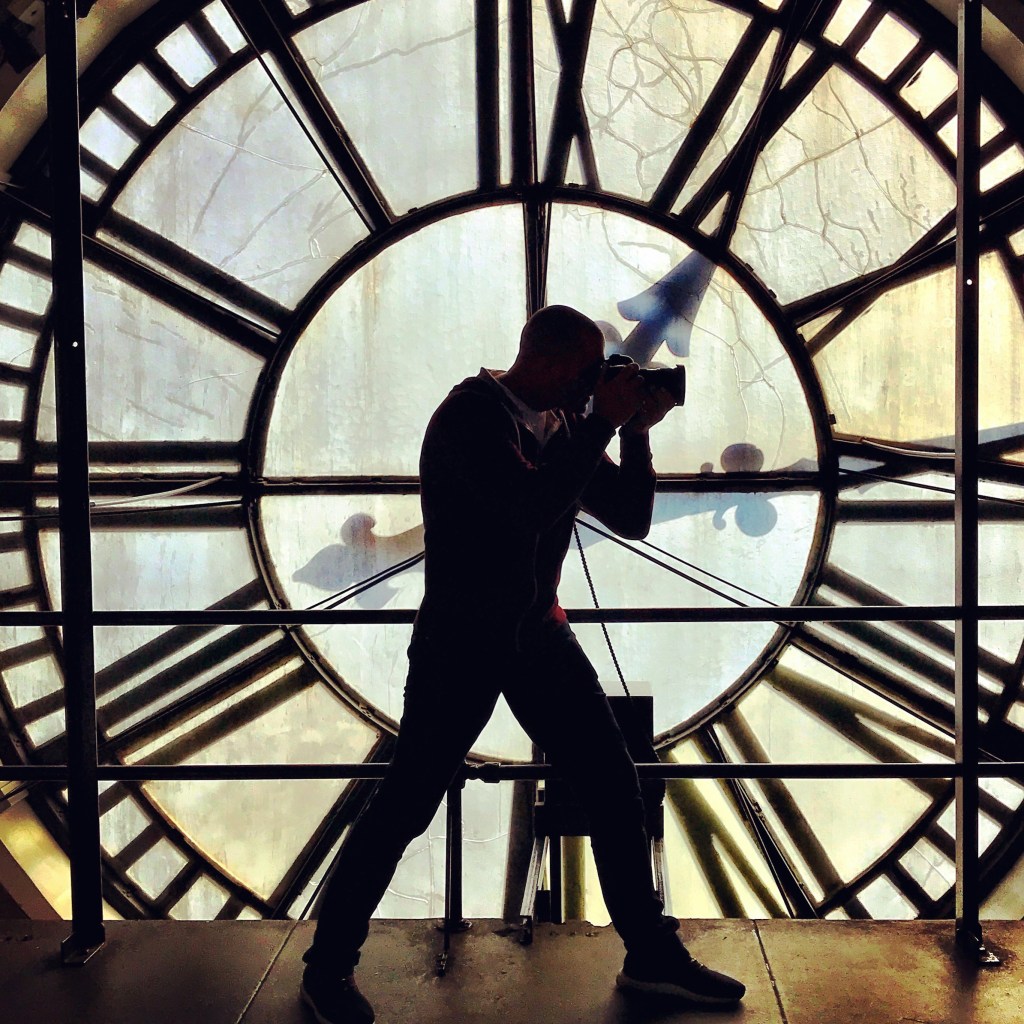
“I didn’t fully understand it at the time. I had taken something from my imagination and made it tangible, made it sellable. That feeling stayed with me,” he said. Even though pursuing a career in fashion from the get-go was not in the cards, Barker learned to draw, cut patterns, and weave while formally studying Biology, Chemistry, and Physics with every intention of training to be a doctor, which, according to him, was his mother’s vision for his future.
During his senior year of high school, his mother, Gillian, a former model, entered him in a televised model search on The Clothes Show, a program similar to America’s Next Top Model’s competition format, without him fully understanding what he was getting into. While he didn’t win first place, he finished in the top three and walked away with a modeling contract from Select Models.
Shortly after that, a plan was devised: take a gap year, earn some money, see a little of the world, then come back and get on with becoming a doctor. This, however, did not happen.
“Parents, take note: Be very careful what you allow your children to do during a gap year, because one year became two, and two years became a quiet but firm decision that I wanted to pursue a life in fashion rather than medicine.” That revelation, he adds, did not go down particularly well at home.
The industry, from the time that he entered, was a very different world from what it is today. He remembered how agents operated with a real investment mentality — “They did not sign you unless they truly believed in you, and if they did, they backed that belief with real commitment,” he said.
That being said, from his experience, models at the time were placed in apartments, given monetary advances to live on, and worked patiently to build a portfolio. But according to Barker, that dynamic had changed enormously since then.
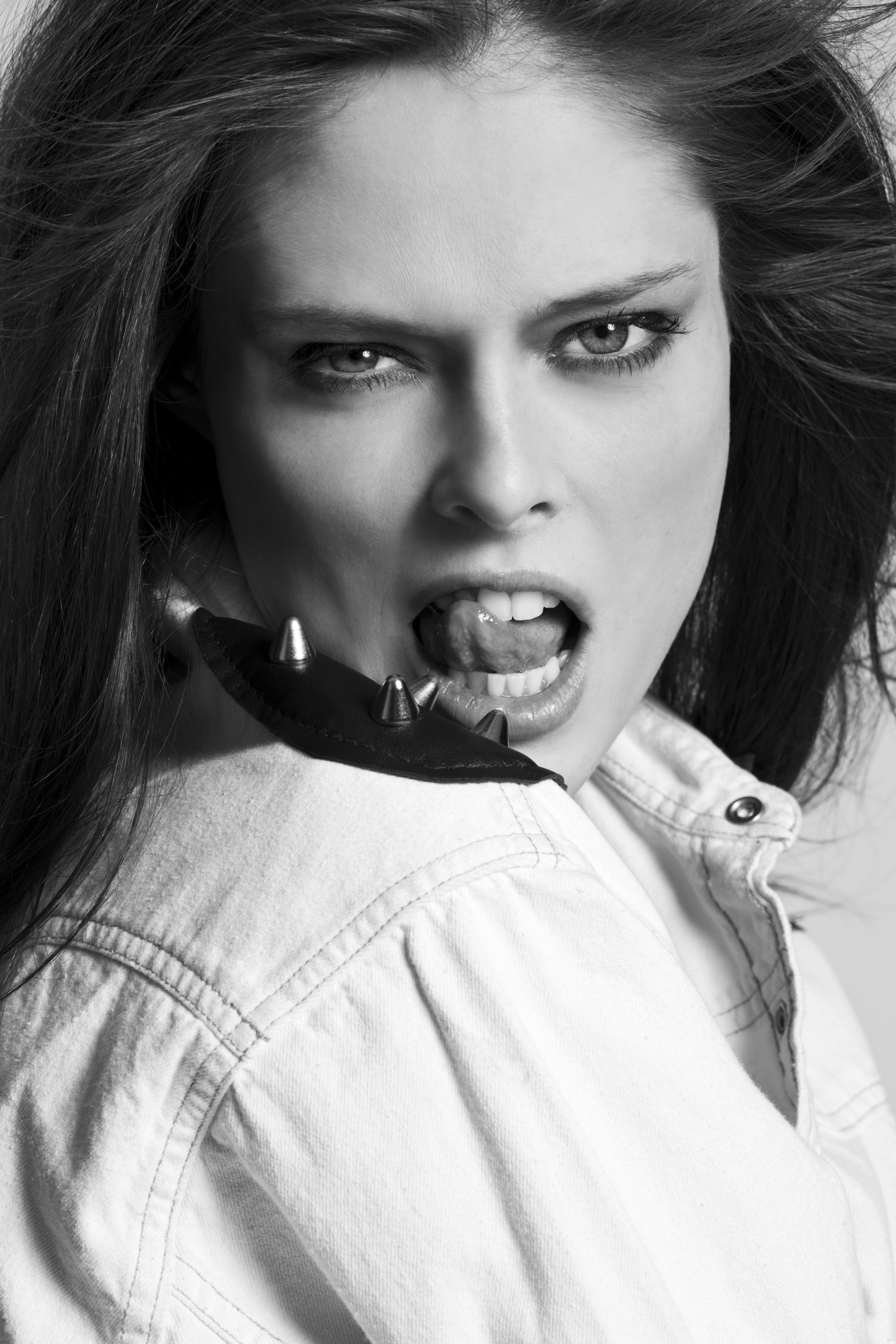
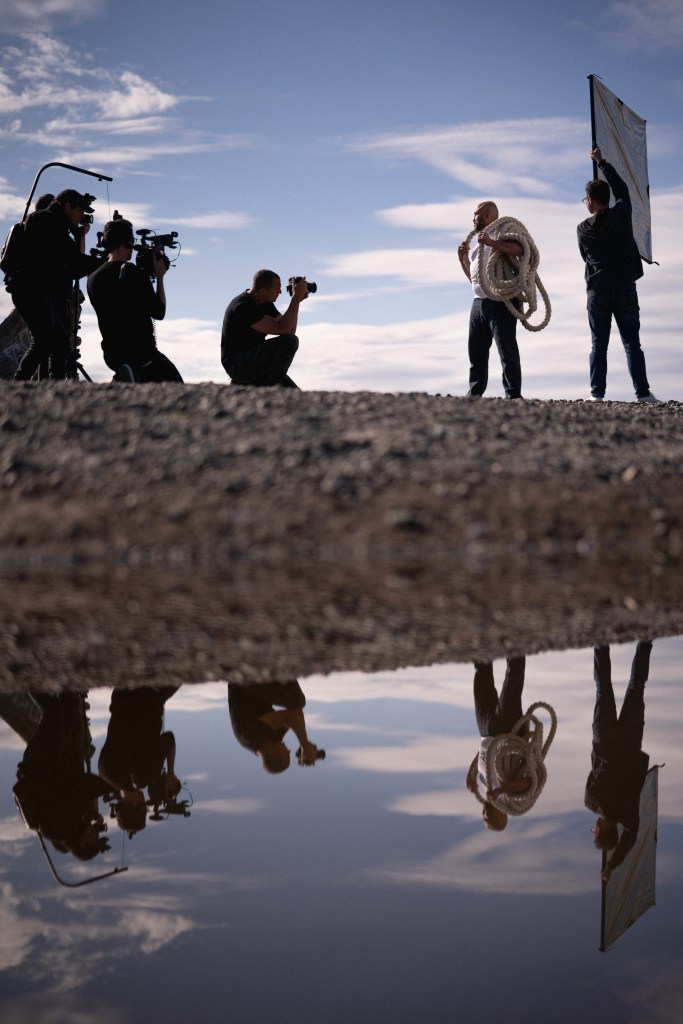
While the industry itself was generous and gave aspiring talent the ability to grow, it also had its limitations and flaws.
“I won’t pretend that I was ever deeply in love with modeling as a profession. What captivated me was what modeling gave access to — a world that was creative and unpredictable and constantly in motion, full of people and places and possibilities I could never have encountered otherwise.”
Nigel was faced with the absurdity of having to conform to whatever the market considered palatable at the time, since the industry was defined by a very narrow, rigid idea of what beauty was supposed to look like. Yes, models of color existed, but only in small numbers, a far cry from where the industry operates today.
He recalled a moment when industry insiders told him not to disclose that his mother was Sri Lankan. For them, the idea of presenting himself as Hispanic or Latin instead was deemed a more acceptable alternative than being white.
He has never forgotten that, nor let go of how incredibly preposterous it was.
“The irony I have always appreciated is that my Latin was considerably better than my Spanish. Make of that what you will.”
What was the turning point that made you want to move behind the camera?
The answer, when he looked back on it, was deceptively simple yet poetic — he met his wife, Cristen, and her sister, Kimberly.
“But let me give you the full picture,” he says, “because context is everything.”
The year was 1994, and around that time, Barker had been working in the industry for four years and had already had incredible experiences, building relationships and learning the fashion world from the inside out. “But I could also read the writing on the wall, and that writing was unmistakable,” he recalled.
It was also the onset of a new era within modeling — the days of powerful supermodels like Cindy, Naomi, and Linda were fading. What rose in its place was heroin chic and the androgynous waif — enter Kate Moss, Amber Valletta, and Kristen McMenamy.
“I was standing there at six foot four, with a presence that was anything but waifish. I knew with quiet certainty that my days in front of the lens were numbered.”
The turning point occurred when he refused to accept the idea of walking away from everything he had built. That was when he posed a different question to himself — not about what he would lose when the modeling stopped, but about what he could keep. That was when he turned to photography.
“The camera doesn’t age. The eye only deepens.”
He knew what came next. He needed inspiration. A photographer, much like a painter, needed a muse. A reason to pick up the camera and mean it.
“And then, as if the universe had been quietly listening, I met Cristen and Kimberly.“
He remembers that moment with the kind of clarity reserved for things that genuinely change your life.
“They were unlike anyone I had ever encountered in fashion, or anywhere else for that matter. Half Chinese, half Irish, Russian, German, and Norwegian — a lineage so improbable and so beautifully resolved in their faces that you almost couldn’t believe they were real. There was something otherworldly about them, something that existed just slightly outside the ordinary spectrum of human beauty.”
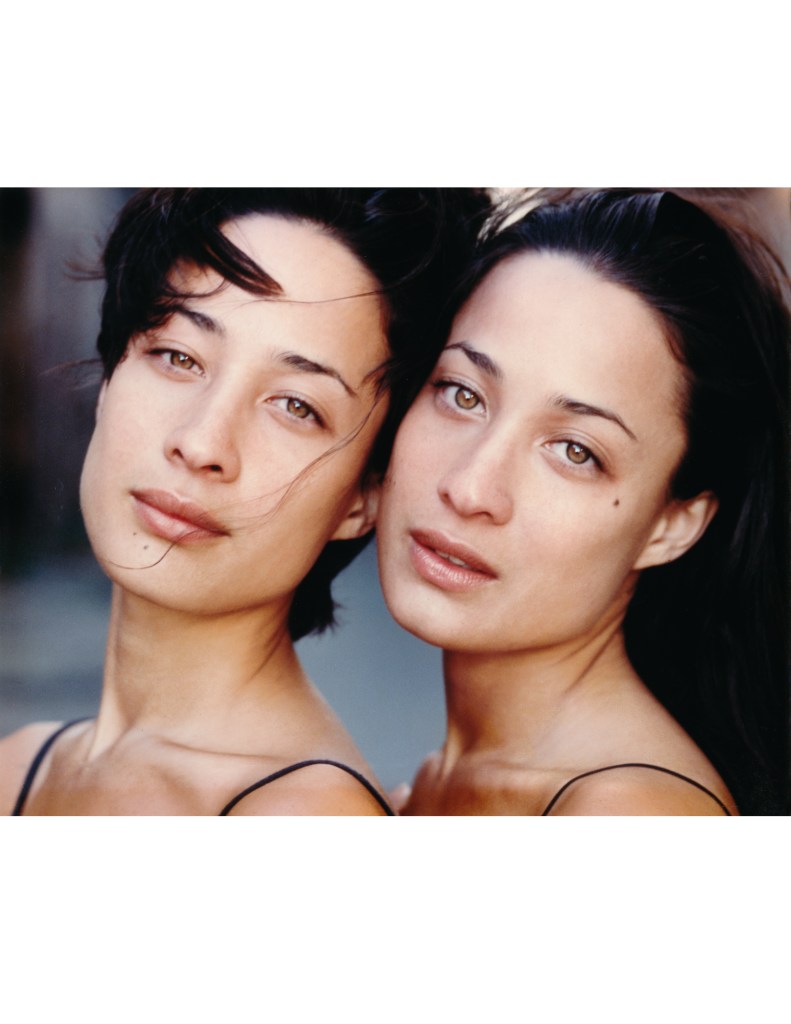
Another detail that stopped Barker completely was the fact that they were identical twins. As if one wasn’t already enough to rearrange your idea of what a muse could be — there were two of them. Two faces carrying the same extraordinary genetic symphony, and yet each entirely, undeniably herself.
“I fell in love with Crissy. Completely and without reservation.”
At the same time, he fell in love with the visual language he could build around them — the stories he could already see before he ever picked up the camera. It is why, more than thirty years later, the twins, known in the industry as the Chin Twins, have become his forever muses.
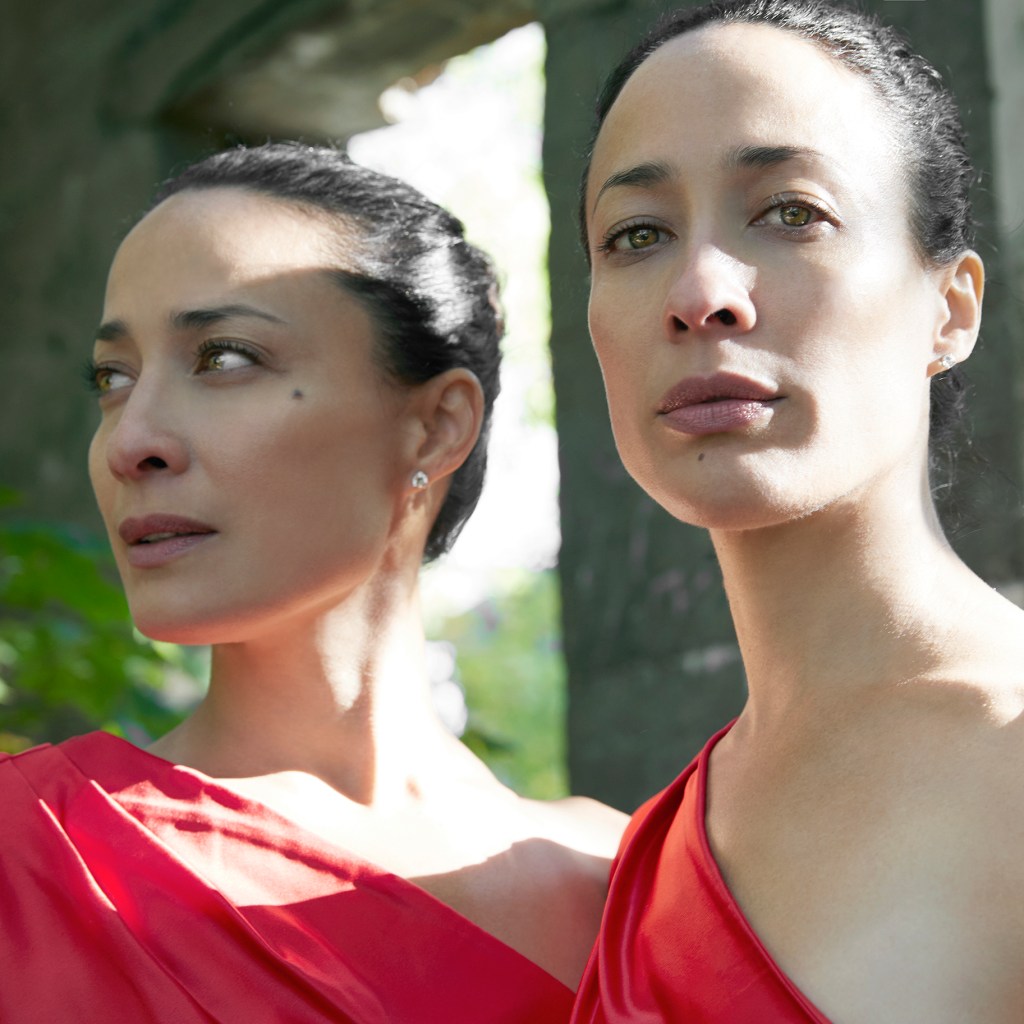
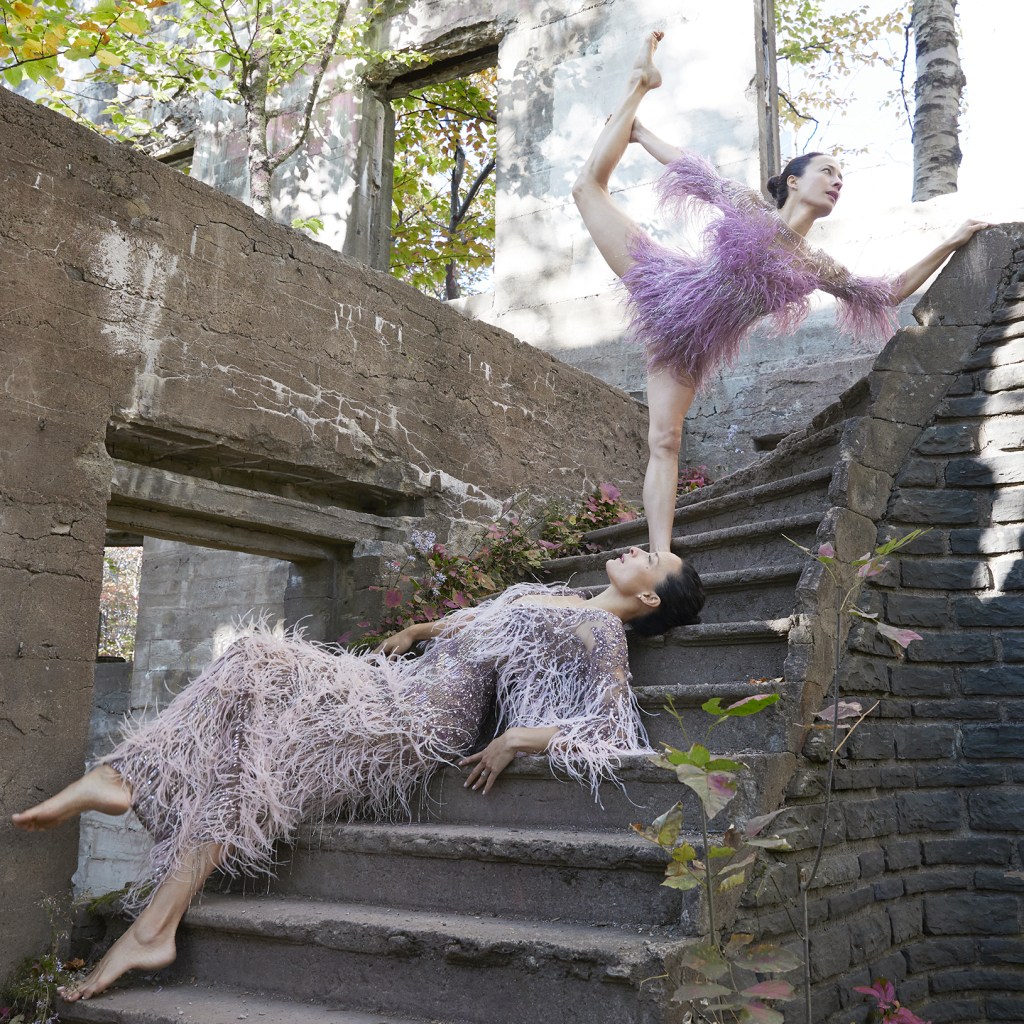
As a budding photographer in Milan, he took advantage of what was around him. Admittedly, he never formally assisted a photographer — he was entirely self-taught.
“But that doesn’t mean I learned in a vacuum. Far from it.”
Barker started small yet moved with intention. He observed everything happening on the other side of the lens — how the photographers he worked with built their light, managed their teams, and balanced client expectations against their own creative vision. It was a balancing act and a study taught by some of the greatest image-makers in the world. For him, as an aspiring lensman, he simply paid attention to what was already in front of him.
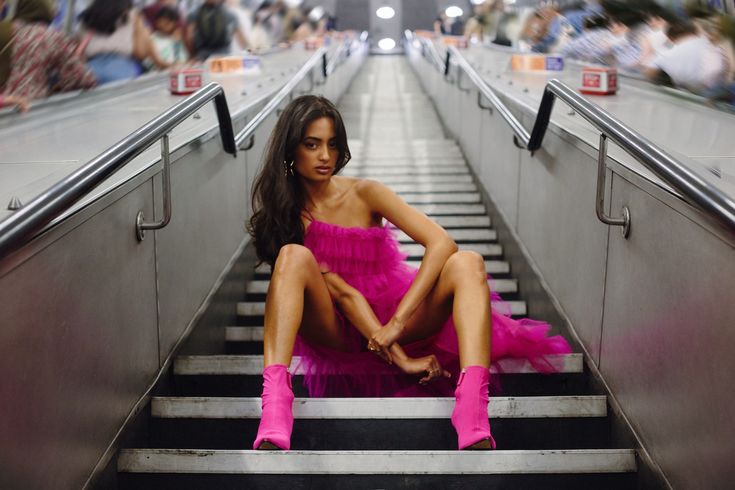
He began applying what he had learned while living in Milan at La Darsena, a mythic model residence where dozens of them lived in apartments facing one another across a courtyard. Barker would take the opportunity to photograph models at the end of their working day, with hair masterfully coiffed and makeup expertly applied after a long day of shooting.
“I wanted them exactly as they were: polished by the best in the business, still wearing the invisible fingerprints of professional stylists and makeup artists. In exchange, I would give them test shots for their portfolios — images they actually needed and could use. It was a perfect trade.”
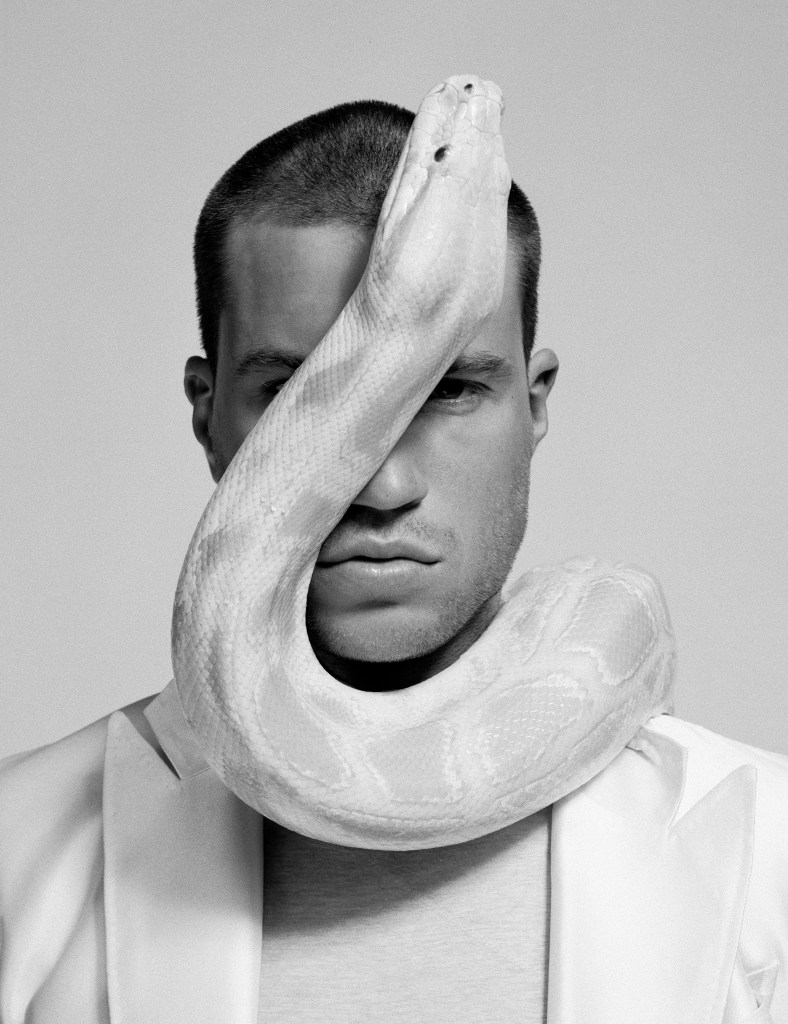

They didn’t have a rack of wardrobe or a studio, but they did have freedom and youthful confidence in their own skin. After all, they were young, beautiful people in the center of Italy’s fashion capital — what they lacked in resources was more than made up for in atmosphere.
“Not a formal apprenticeship, but something I’d argue is far more valuable — years of immersive observation followed by the courage to simply begin, with whatever and whoever was right in front of me.”
Coming from that experience, what was it like photographing people so close to you, and how did that shape your approach to working with subjects?
“Photographing someone you love is magic in its own right, but to photograph them across thirty-plus years? That is something truly unheard of. Something almost sacred. You don’t just document their life, you live it alongside them.”
He describes it as less like a shoot and more like a choreographed dance — one that changes and evolves in a way that is never quite the same twice. It is why, after thirty years of photographing people, he learned to invest real time in getting to know whoever was in front of his camera. He stopped trying to impose his vision and learned to listen instead — to who they are, what moves them, and what makes them feel appreciated.
“Because the most extraordinary photographs don’t happen to people. They happen with them.”
This philosophy is perhaps best captured in one of his most recognised beliefs: that he prioritises emotion over technical ability in photography.
“That’s the whole game, honestly. Light doesn’t create emotion, but it absolutely conducts it. It can whisper or it can shout. It can make vulnerability look like strength or turn an ordinary face into something almost biblical.”

Since he has lived on both sides of the lens, he makes a point of empathizing with the person standing in front of his camera.
“To this day, before we shoot, I have my first assistant step in and photograph me within the actual setup so I can feel exactly what the model will feel — the heat of the lights, the angle of the gaze, the energy of the space. It keeps me honest. It keeps me connected.”
But perhaps the most important lesson he discovered is the importance of shooting for himself, not at the pleasure of others.
“It sounds simple, perhaps even selfish, but it is the only sustainable creative truth. You cannot read minds. You cannot chase the tastes of others without losing yourself entirely in the process.”
After years working as a photographer in New York with his own studio, Barker found himself in front of the camera again — this time as a judge on America’s Next Top Model alongside global supermodel Tyra Banks, Miss J. Alexander, and Jay Manuel.
A Note on This Section: The experiences of the contestants discussed in this section, including Shandi and Keenyah, are explored in fuller detail in Reality Check: America’s Next Top Model, now streaming on Netflix. Their stories deserve to be heard in their own words.
You served as a judge for seventeen cycles during reality TV’s golden era. For many of us, ANTM was trailblazing — it brought fashion into living rooms around the world and inspired many young people, especially those from underrepresented communities, to pursue modeling, fashion, and photography. But it also had deeply harmful moments. How do you hold both of those truths at the same time?
“Thank you for that question, and for framing it with such thoughtfulness and generosity — because you’re right, both of those things are true, and I think we have to be honest enough to hold them at the same time.”

There is no question that ANTM was groundbreaking — and, for a generation of viewers, revolutionary. It was a surreal thing to see people from different walks of life, backgrounds, and body types represented on television every week, compared to the annual pageantry of something like Miss Universe.
“We brought fashion, photography, and a belief that beauty comes in many forms into homes that had never seen that reflected back at them. When I hear that the show inspired young people — especially from communities that felt invisible in mainstream media — that means everything to me. That was the spirit we were trying to create.”
But Barker acknowledges that the show had its darker side — harmful moments including severe body image commentary, blackface photoshoots, and cultural appropriation — moments that viewers watched unfold on television are now making headlines again following the release of the Netflix documentary Reality Check: Inside America’s Next Top Model.
“And honestly, that reckoning probably should have come 15 or 20 years ago. The fact that it’s happening now doesn’t make it less important — if anything, those conversations feel just as urgent and necessary today.”
What the documentary revealed, particularly around Shandi, Keenyah, and the other contestants, proved illuminating and deeply uncomfortable to witness from a whole new perspective, for old and new viewers alike.
“When I learned the full scope of what Shandi experienced, my heart sank. Those aren’t decisions I would have made. There should have been someone there, in a parental role, genuinely looking after these young women. That was a failure — a low point, not just for ANTM, but for reality television as a whole.”
He is clear about what his role was on the show — as a judge and a photographer, not a producer.
“But I also know that ‘I didn’t know’ isn’t a complete answer. Maybe if I had asked harder questions or dug a little deeper, things could have been different. That’s something I carry.”
That level of acknowledgment in the industry is so rare, especially given its reputation for moving on without looking back. But Barker is not the type to move on without being honest.
“So how do I hold both truths? With humility, I hope. The show opened doors — real ones, for real people. And it also, at times, failed the very people it was supposed to champion. Both of those things deserve to be said out loud, clearly, without qualification. The young women who came through ANTM deserved better care, more protection, and more respect. Acknowledging that honestly is the least we owe them.”

Let’s talk about how your time on the show ended. You, Jay Manuel, and Miss J all left after Cycle 17, and the circumstances have never really been fully told. Can you share what actually happened?
“You know, it’s something I’ve thought about a lot over the years, and I think the full picture has never quite been told fairly — so I’m glad people are asking.”
When that time came, it took everyone by surprise.
“When Jay, Miss J, and I were let go, it wasn’t some dramatic falling-out or creative disagreement. The network told us changes were needed. Tyra and Ken passed along that message at the 11th hour on the final day of the contract, with no warning, and she described it to us as ‘no sacred cows.’ I understand that.”
While he understood that television is a business that relies on ratings and relevance to keep going, the Page Six headline was not what he expected.
“We were told there would be a joint press release, that we’d all be quoted, that we’d have some dignity in how we exited. Instead, Page Six broke the story that we’d been fired.”
Even though he hasn’t spoken to Banks in a few years, Barker reiterates that he is always cordial, despite what happened.
“She’s someone I spent seventeen cycles of my life working beside, and that doesn’t just disappear.”
One thing Barker wants people to understand about Reality Check, however, is how the documentary even began. He recently addressed the confusion online during an Instagram Live with Jay Manuel.
“This documentary did not start with Tyra. It started with Miss Jay. Miss Jay wanted to tell his story, and he invited Jay and me to be part of it. That’s the origin. We’d been working on this for roughly five months before Netflix was even involved, before Tyra was even part of the conversation.”
He further clarifies that Banks had no hand in developing the narrative or controlling the documentary’s final outcome.
“That’s simply not accurate. She came in later, on the same terms as everyone else. The directors have confirmed she had no editorial control and didn’t see a final cut before it aired. She was a participant, same as the rest of us.”
That piece of information changes how viewers may have perceived the documentary, particularly those who assumed Banks used it to advance her own story.

“This wasn’t Tyra’s project. It was all of ours. It clearly morphed from being around Miss Jay’s life and legacy, to what all of us experienced on that show. The fact that we gave hours of interviews that were edited down to what you see on screen — that’s television. That happened to Tyra too. We all went in knowing that.”
What he hopes people take away is simple — focus on what was built, not on how it ended.
“Jay, Miss Jay, and I are not bitter men sitting around nursing grievances. We had an extraordinary run. Seventeen cycles. We helped shape something that really changed the modeling industry and popular culture. And yes, the ending was messier than it deserved to be. But I’d rather focus on what we built than on how we left.”
Life after ANTM looks good on you. You’re still shooting, still advocating, still mentoring — and now you have a front row seat to your daughter’s journey in the industry. How has everything you’ve lived through contributed to what you’re building in this upcoming chapter?
“I’ve always been wired to be an entrepreneur — restless, curious, and genuinely excited about what’s next. Staying connected to the cultural conversation isn’t something I do passively; it requires real participation. Yes, having teenage children is an extraordinary gift in that sense — they are the zeitgeist, they breathe it — but even that isn’t enough. You have to be in the arena, not just watching from the stands.”
When it comes to their children, Barker and his wife, Cristen have always led with one guiding principle: this is your life to design. While he acknowledges that the doors to this industry wouldn’t have been there had he not made that journey, he is clear that the pathways to this industry are only meaningful if the children want to walk through them.

“Our role as parents isn’t to hand them a map — it’s to help them understand how vast and extraordinary the territory really is, and to remind them that the most interesting paths are often the ones nobody has walked before.”
Throughout his career in the industry, what he has learned can’t be confined to a single category. Fashion for him is a way of seeing how presentation, identity, desire, and aspiration are part of our endeavors as humans. After all, we thrive on creativity through methods that go beyond a single aspect.
His drive to create is constant — regardless of whether he’s filming a documentary or, interestingly enough, building something in the spirits world. His Espresso Martini brand, The Barker Company, one of his latest projects in the past four years, relied on his natural drive to solve problems. He worked with home bartenders and professional mixologists alike to overcome a long struggle to consistently produce a truly exceptional Espresso Martini — one that doesn’t compromise on quality, flavor, or experience — and they solved it by creating an unmatched mood and aesthetic.

Barker’s philosophy boils down to two questions: how do we make this feel alive? How do we make someone lean in?
“Once you internalize that, you start seeing a furniture company as a lifestyle story waiting to be told. You look at an alcohol brand and see culture, ritual, and community. You look at a charitable initiative and understand that the way you frame a cause determines whether it moves people or merely informs them.”
His approach, regardless of the situation or brief, has always been rooted in the same essential impulse — celebrating life in all its richness and complexity. Barker is attracted to stories that matter to someone. In his thirty years, he has refined his skills, sharpened his wits, and built confidence that isn’t about pretending the hard things didn’t happen.
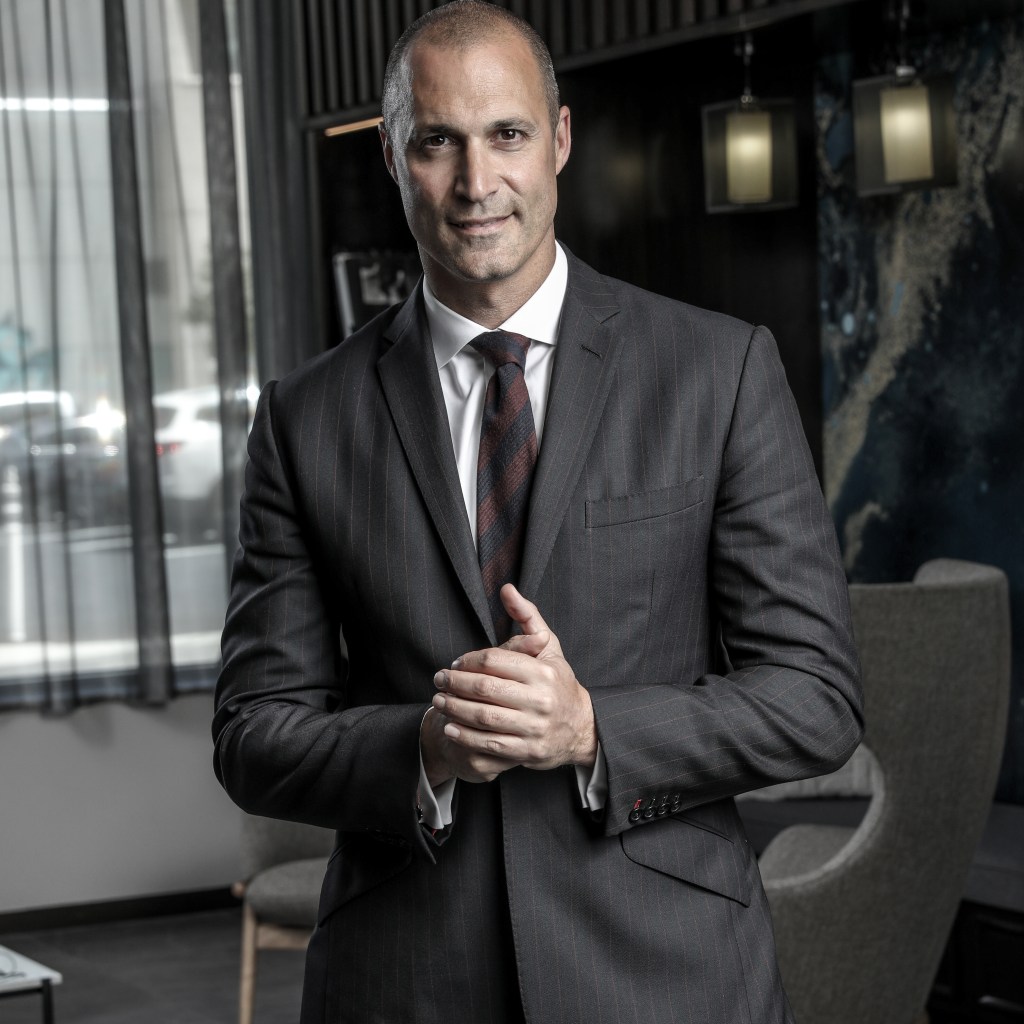
“Yes, the tools change, the aesthetic language shifts, and the demands of each discipline are genuinely different. But the through-line has always been the same: show up with curiosity, find the beauty or the dignity or the quiet courage that’s already there, and tell it honestly enough that it resonates far beyond the room it was made in.”
It is a philosophy that extends well beyond the camera.
“If I can use whatever platform, talent, or access I have to show someone else what’s possible for them — then I’ve done something that actually matters.”
While he knows the benefit of slowing down, he believes that life is worth celebrating loudly. After all these years, Nigel Barker is still looking forward to the next chapter — one brimming with the possibility of new challenges and lessons.
Editor’s Note: The Barker Company recently announced a partnership with City Harvest, a New York City-based organization that fights food insecurity by redirecting surplus food from restaurants, bars, and businesses to those in need. Together, they created Espresso Martini Month — officially declared to be the month of March — with 25% of all online sales donated directly to City Harvest throughout the month.
For more on Nigel Barker and The Barker Company, check out their social media accounts below.
Instagram: @Nigel Barker | @thebarkerco
All image rights belong to Nigel Barker/ NB Studio