If New York Fashion Week runs on commerce, Milan on craftsmanship, and Paris on prestige, London has always belonged to the provocateurs. It’s where the designers use the runway to ask uncomfortable questions about what fashion is supposed to do. It’s where McQueen built his legend, where Westwood sharpened her blade, where emerging talent challenges what came before. While designers eventually “graduate” to Paris for cachet or New York for accessibility, London remains fashion’s laboratory. The place where ideas are tested before they’re ready for mainstream acceptance.
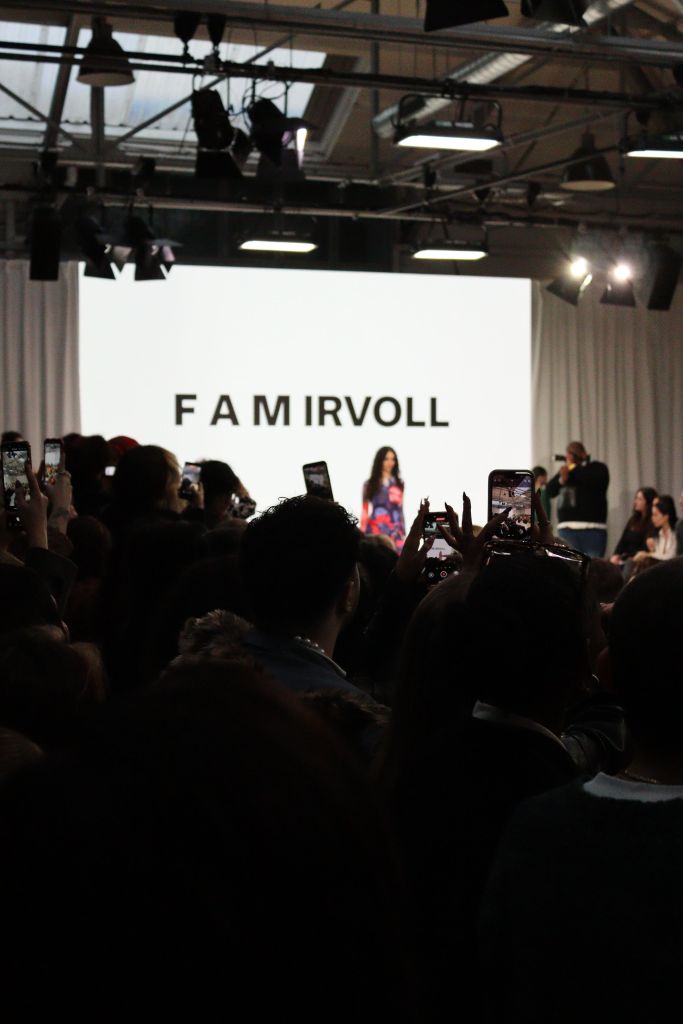


Fam Irvoll AW26: I Used to Be Seventeen Protein Studios
At Protein Studios in Shoreditch, Norwegian designer Fam Irvoll opened her AW26 show with a question her grandmother answered: “How old do you feel?” Her response – seventeen – became the collection’s anchor. Not seventeen as nostalgia for youth’s supposed freedom, but seventeen as the age you never quite leave behind, the moment before you learned to perform restraint.

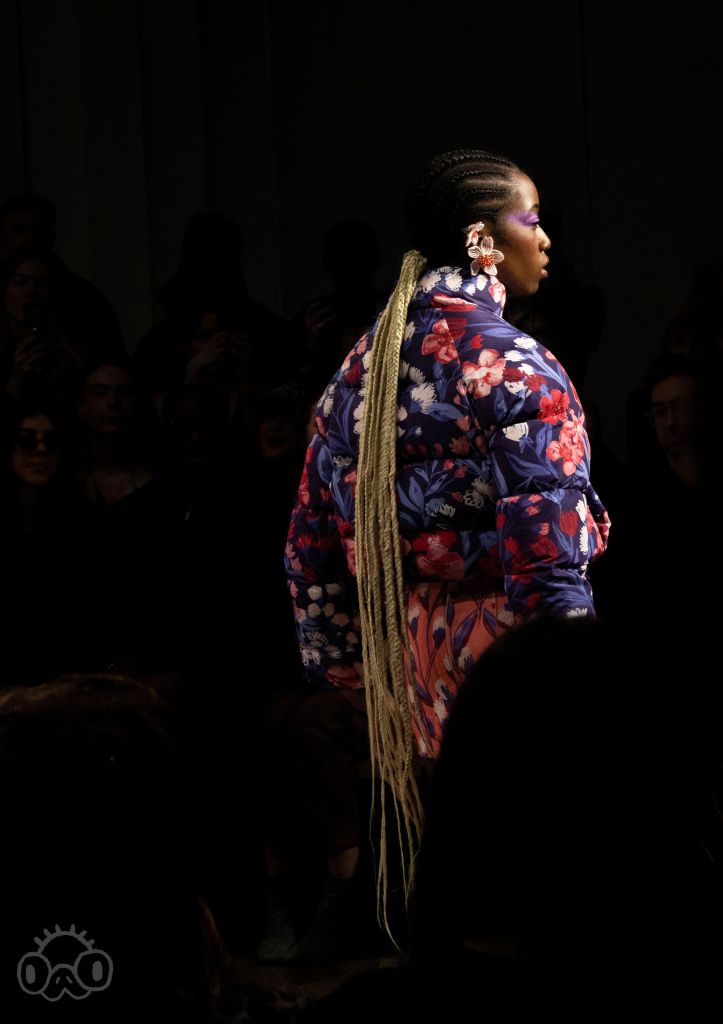
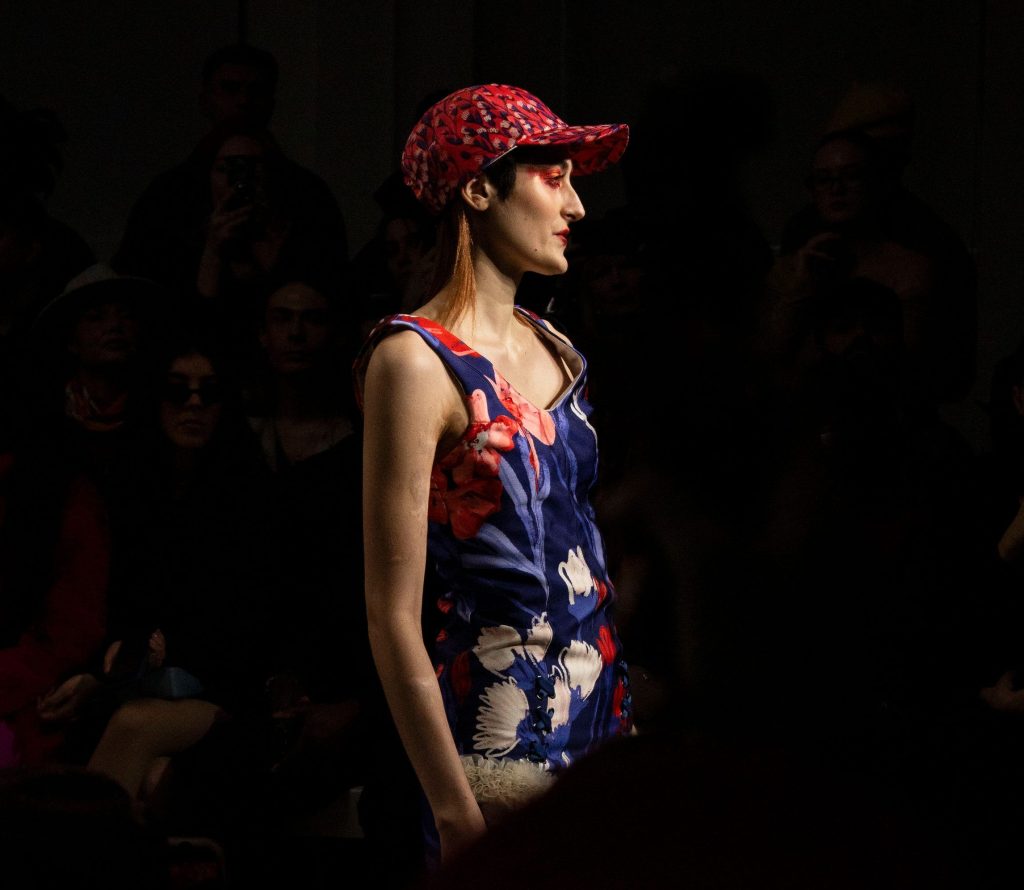
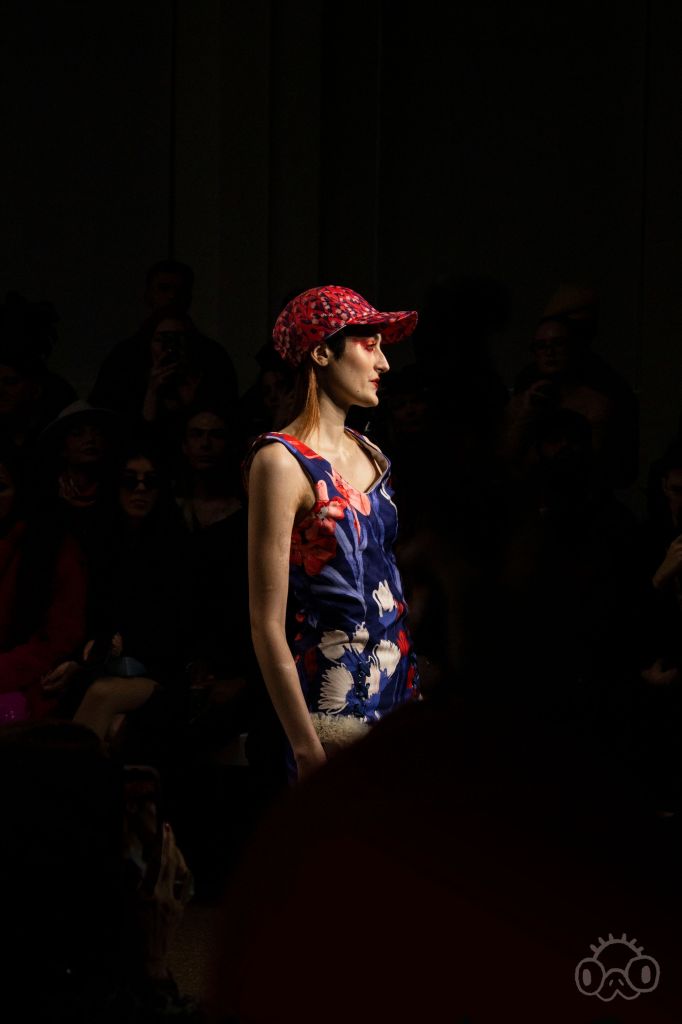
The collection materialized this tension through exaggerated floral prints. Blooms from Irvoll’s childhood drawings, scaled up or down and saturated until they refused to be simple. Quilted puffer jackets in electric colours bore floral appliqués; denim trousers and skirts featured embroidered flowers scattered like deliberate afterthoughts. Contrasting topstitching traced seams on workwear-inspired pieces, turning construction details into decoration. Drawstrings dangled from hems and waistbands. Adjustable elements that can turn design into personal choice, the way you’d customise your outfit in your bedroom mirror at seventeen before anyone taught you there was a correct way to wear things.
The styling doubled down on the refusal to match: oversized knitwear worn as micro-dresses, athletic ribbed socks paired with floral Mary Janes, bright patterned fanny packs layered over wide-leg denim. Models wore electric eyeshadow and mismatched clip in hair extensions. Magenta, violet, grass green, cobalt applied with the confidence of someone who stopped asking permission. Sculptural floral earrings framed faces like exclamation points.

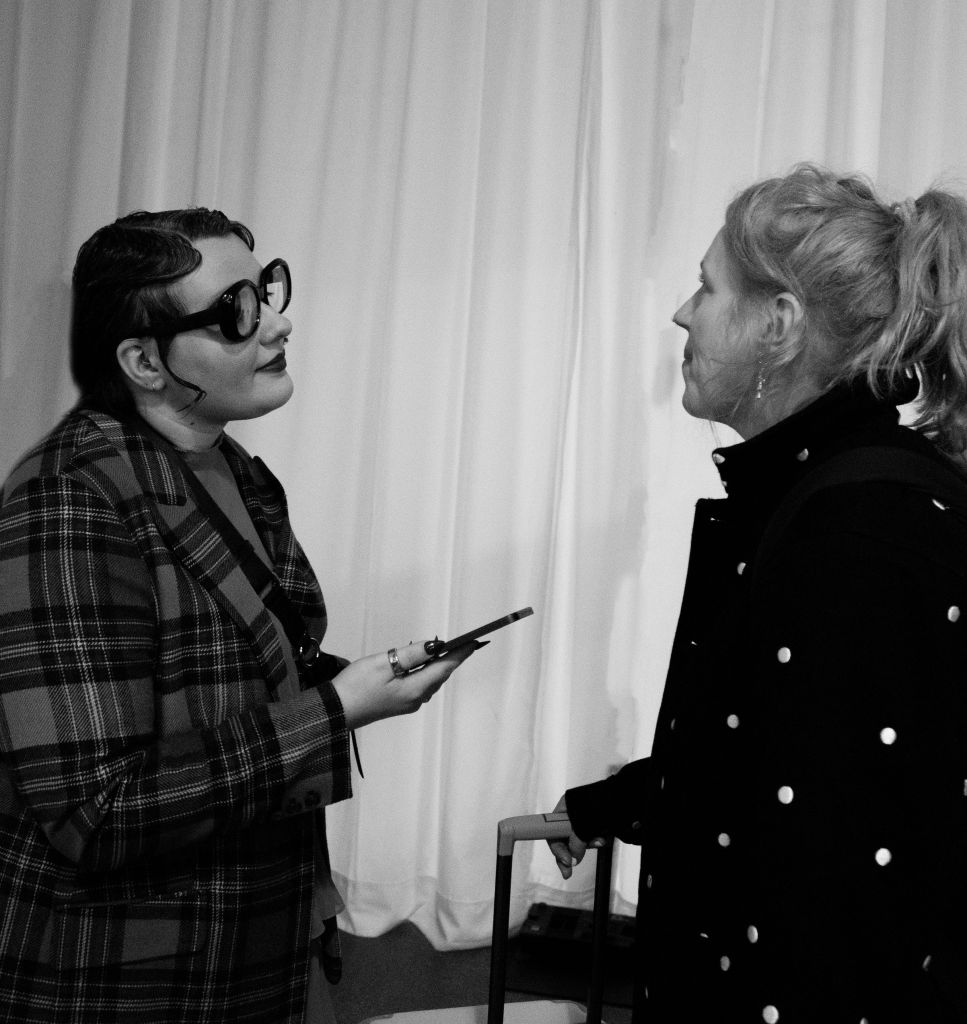
Backstage, Irvoll explained the collection’s actual subject. “It wasn’t like a particularly beautiful year when I was 17,” she said. “It’s just—I kind of feel that age.” The collection doesn’t romanticise seventeen; it recognises it as the age that persists underneath adult performance. Her grandmother feels it. Irvoll feels it. The implication: we all do, if we’re honest.
What matters is what she does with that recognition. “I think this fashion industry is very snobbish,” Irvoll said. “People are too cool for school. I just want it to be fun and nice and not serious. Because it’s not that serious.” This from a designer whose work has dressed Beyoncé and Lady Gaga. She knows what serious looks like, and she’s choosing otherwise.
The collection exists in direct opposition to Scandinavian minimalism’s current resurgence. Where Copenhagen Fashion Week returned to “greige” and “classic form” this season, marketing restraint as the responsible response to uncertain times, Irvoll went louder. “We don’t have that (London’s creative scenes),” she said of Norway. “We have beige. A lot of beige and very capitalist. Everything matches everything. So I don’t really belong there.”
She studied at Central Saint Martins, moved through London’s rave and drag scenes, found her aesthetic language in environments that rewarded excess over editing. The collection reflects that training: maximal without being chaotic, joyful without being naive, colourful without apologising for taking up space.

The fashion psychology here is pointed. Minimalism promises that if you reduce yourself enough, capsule wardrobe, neutral palette, “investment pieces”, you’ll finally be acceptable. Irvoll’s work asks: what if you stopped trying to be acceptable? What if you dressed like you still felt seventeen, before you learned that wanting to be seen made you excessive?
Irvoll proves that maturity doesn’t require reduction. Sometimes it means remembering what you wanted before the world taught you to want less.
INF Dark AW26: The Evolving Path Protein Studios
Taiwanese designer Kuo Wei brought INF Dark‘s AW26 collection to the same venue with a premise that reframes fashion’s typical narrative structure. “Normally people show the final silhouette or the final outcome,” he explained backstage. “They’ve been missing the process and all the paths, the evolving paths. This time we’re trying to show the evolving paths by different pieces.”
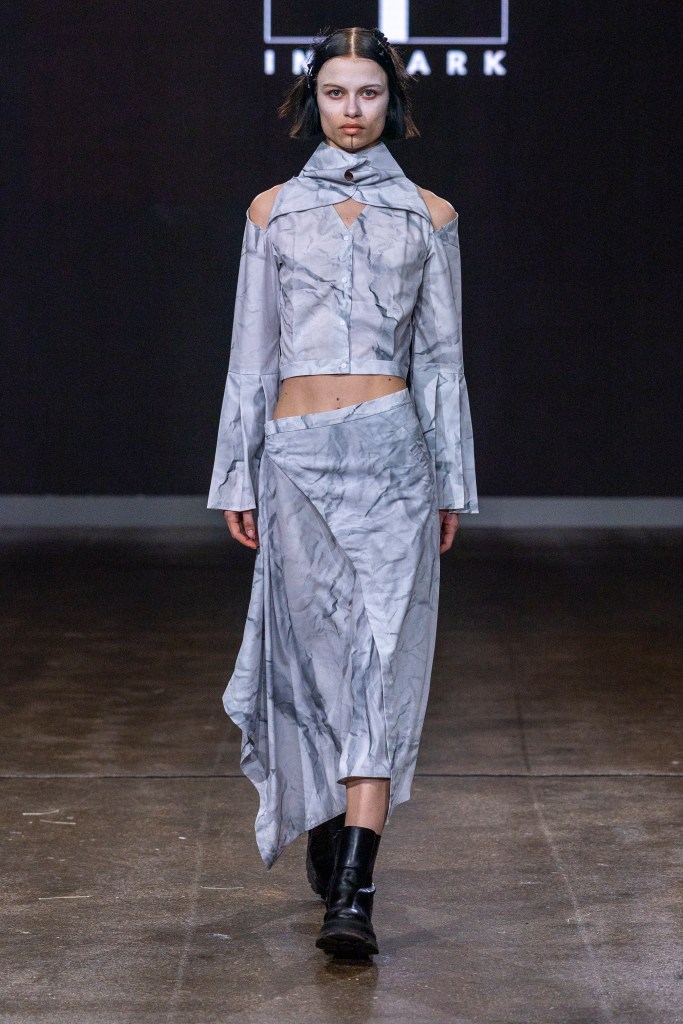

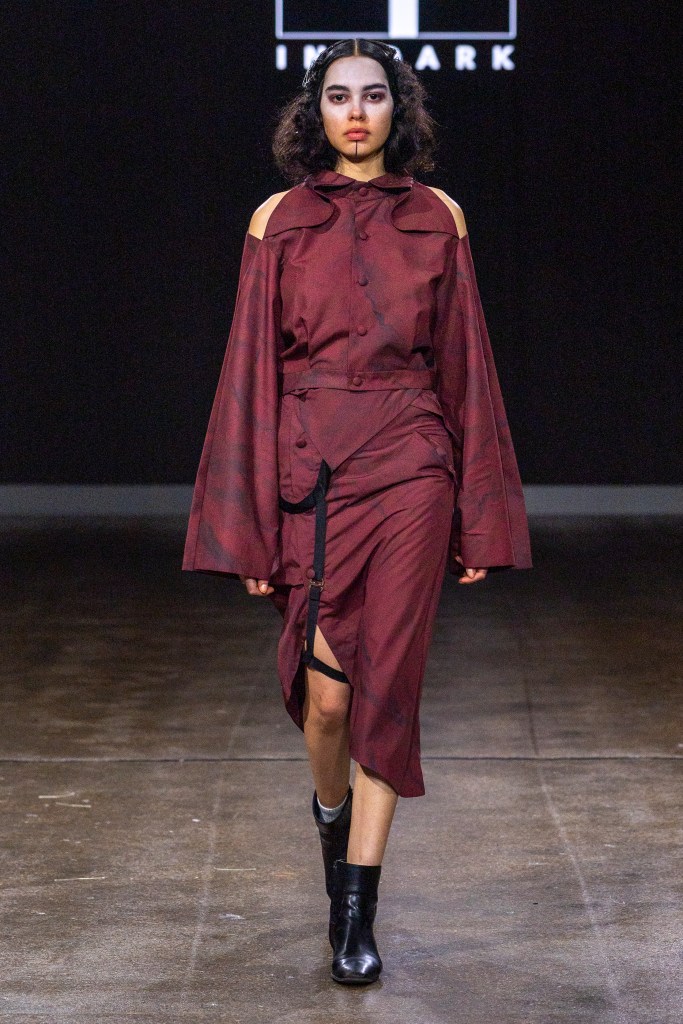
The collection opened in black. Pure black that INF is known for, before introducing muddy olives, oxidised burgundies, and slate greys. Each garment bore visible construction. Shoulder cutouts that exposed skin beneath structured blazers, asymmetrical hems that fell at unpredictable angles, drawstrings and ties trailing from unexpected seams. A pale grey paper-textured print appeared throughout, its crumpled surface catching light like topographic maps of devastation. Wei explained the print’s origin: “We wrapped paper, peeled it up, took a picture, and digitalised it. It creates disorder but also an order.”
The silhouettes embodied INF’s transformative philosophy. Pieces engineered with modular construction that hinted at endless possibilities. Strategic shoulder cutouts exposed skin beneath structured tops. Pieces with straps cinched at the calves, creating gathered volume. Blazers in wrinkled bright blue or rust red are layered over contrasting shirting, each piece visible through deliberate architectural gaps. Models walked twice, first in foundational pieces, then returning with additional layers, demonstrating Wei’s “evolving path” where outfits evolve rather than resolve, becoming more complete piece by piece.
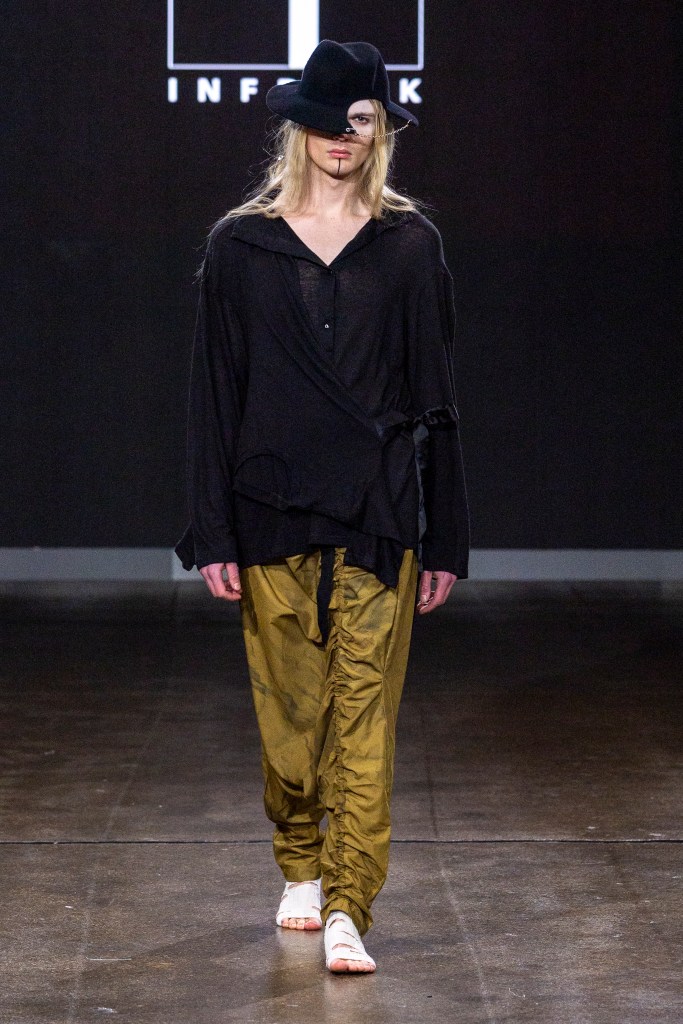
Wei’s inspiration was pulled from sci-fi dystopia. “As old sci-fi movies said, the end of evolving should always be apocalyptic,” he noted. “We paint this with the total apocalyptic vibe. You might feel a little bit doomed.” The collection delivered: models moved slowly, deliberately, through the stark space, faces marked with a single vertical line from forehead to chin, expressions almost angry. An older model in a cobalt suit and burgundy shirt disrupted the youth-dominated runway, reinforcing that transformation has no age limit.
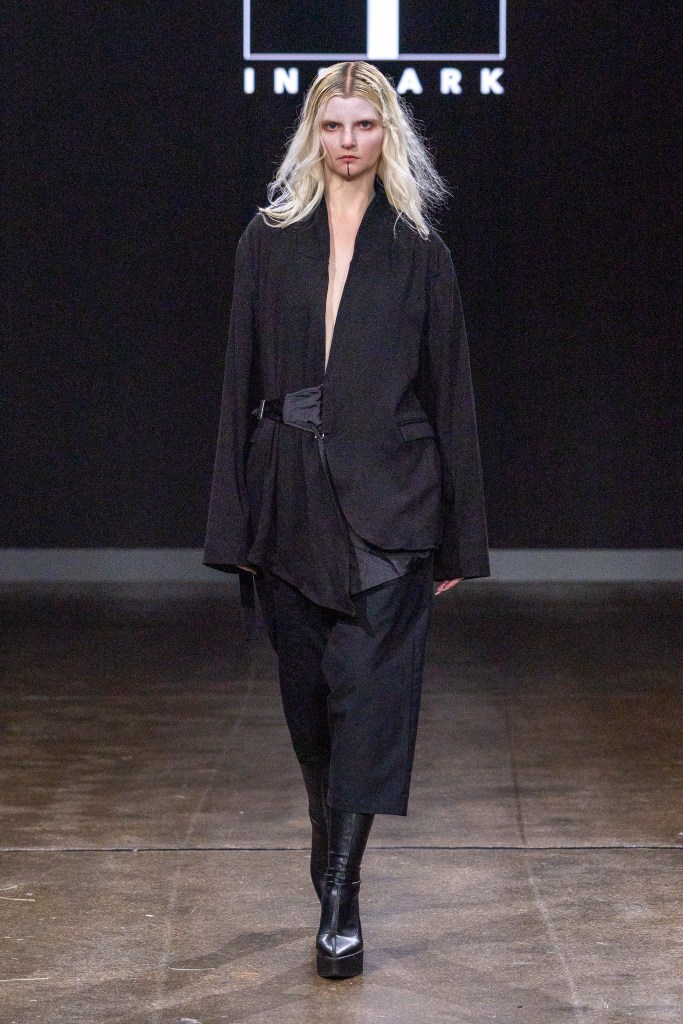

The psychology here turns on what Wei calls “the evolving path”, the idea that becoming isn’t a destination but a process. Most fashion presents the endpoint: this is who you’ll be when you wear this. INF Dark AW26 presents the journey, the process itself.
When asked what he wants people to feel wearing his work, Wei’s answer matters: “Whatever they like. That’s the principle when I created this, use us as a tool to achieve becoming all sorts of people you wanted to become, and we just accompany you. It’s the principle for fashion: do whatever you like. That’s the bonus we should all possess.”
INF Dark AW26 proves that transformation doesn’t require shedding who you were. You decide who you want to become, the garment is just the tool to get there, and the designer accompanies you on that journey.
London Fashion Week AW26 delivered exactly what it promises: designers willing to ask questions the industry would rather avoid. Despite grey skies and persistent drizzle, London Fashion Week buzzed with the energy that’s been missing from recent seasons. Photographers clustered at exits. Attendees talked about what they’d seen rather than performing attendance. Two designers, two completely different visual languages, one shared conviction: fashion’s job isn’t to make you acceptable, it’s to give you permission to refuse. After seasons of watching minimalism rebrand restraint as sophistication, watching London reassert its role as the place where designers are allowed to mean something felt like coming home.
FAM IRVOLL PHOTOGRAPHY CREDITS: LAWRENCE GREEN | INF DARK PHOTOGRAPHY CREDITS: ©CHRIS YATES / CHRIS YATES MEDIA