I was standing backstage at a TV shoot in Germany—nervous, unfamiliar with the space, about to step into the bright lights of a live set. It wasn’t the first time I’d spoken about fashion psychology, but something about the moment felt different. Bigger.
And yet, I didn’t shrink.
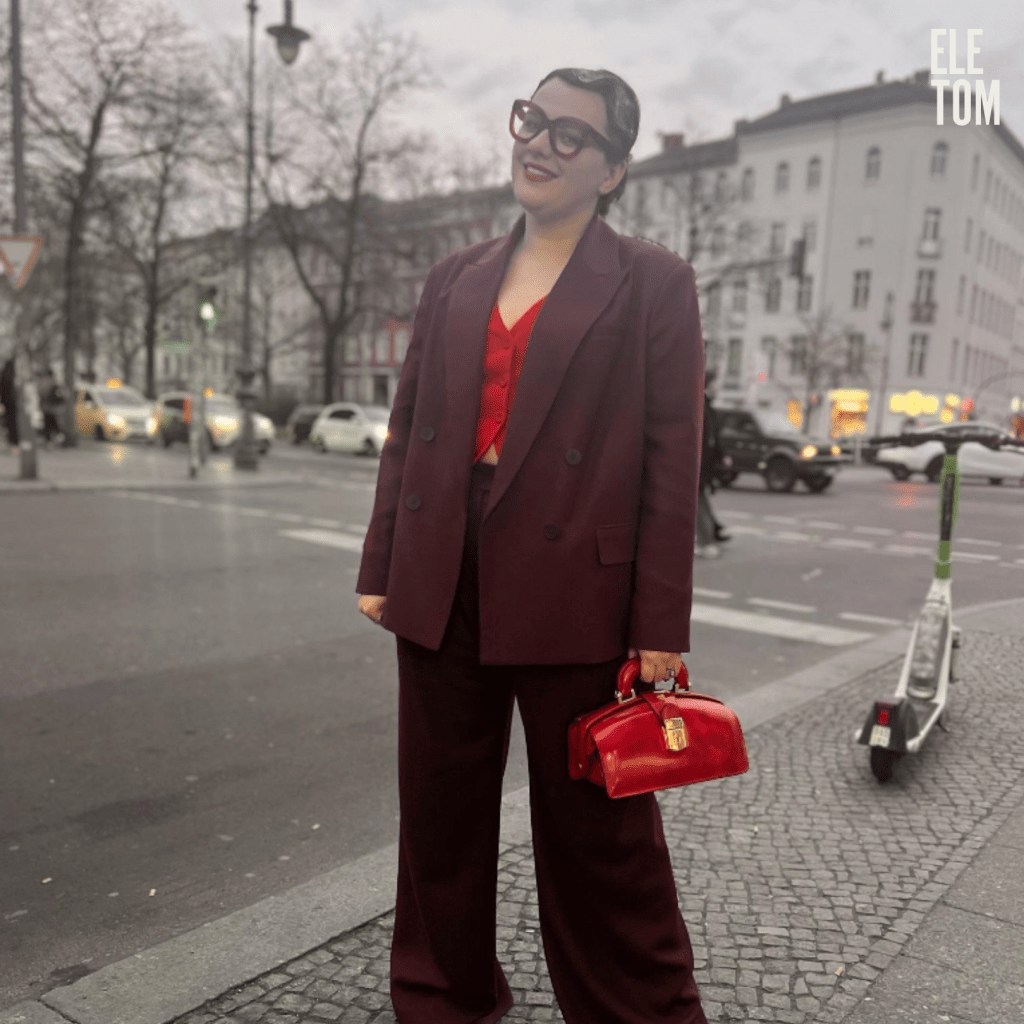
I was wrapped in burgundy, my power color. A deep, rich hue that has always felt like me at my best—bold, grounded, alive. That day, I wore a full burgundy suit, layered with a bright red waistcoat and matching red glasses. It wasn’t just an outfit. It was my armor, my anchor, and my amplifier.
The moderator even matched me—unintentionally—wearing a burgundy sweater. That’s the thing about color: it connects. It cues. It speaks to us before we speak to each other.
That suit wasn’t just fabric. It was an emotional reset.

The Power of Color Psychology
Color is one of the fastest mood regulators we have. It bypasses logic and speaks directly to our emotional brain.
Research in color psychology shows that different hues activate different responses in the body and mind.
● Reds and oranges heighten alertness and encourage action.
● Blues and greens calm the nervous system and promote clarity.
● Yellows are linked to joy, hope, and creativity.
But science aside—you feel it, don’t you? That subtle lift when you wear your favorite shade. The way soft colors soothe after a hard day. The energy shift when you catch your reflection and see yourself glowing in a color that just fits.
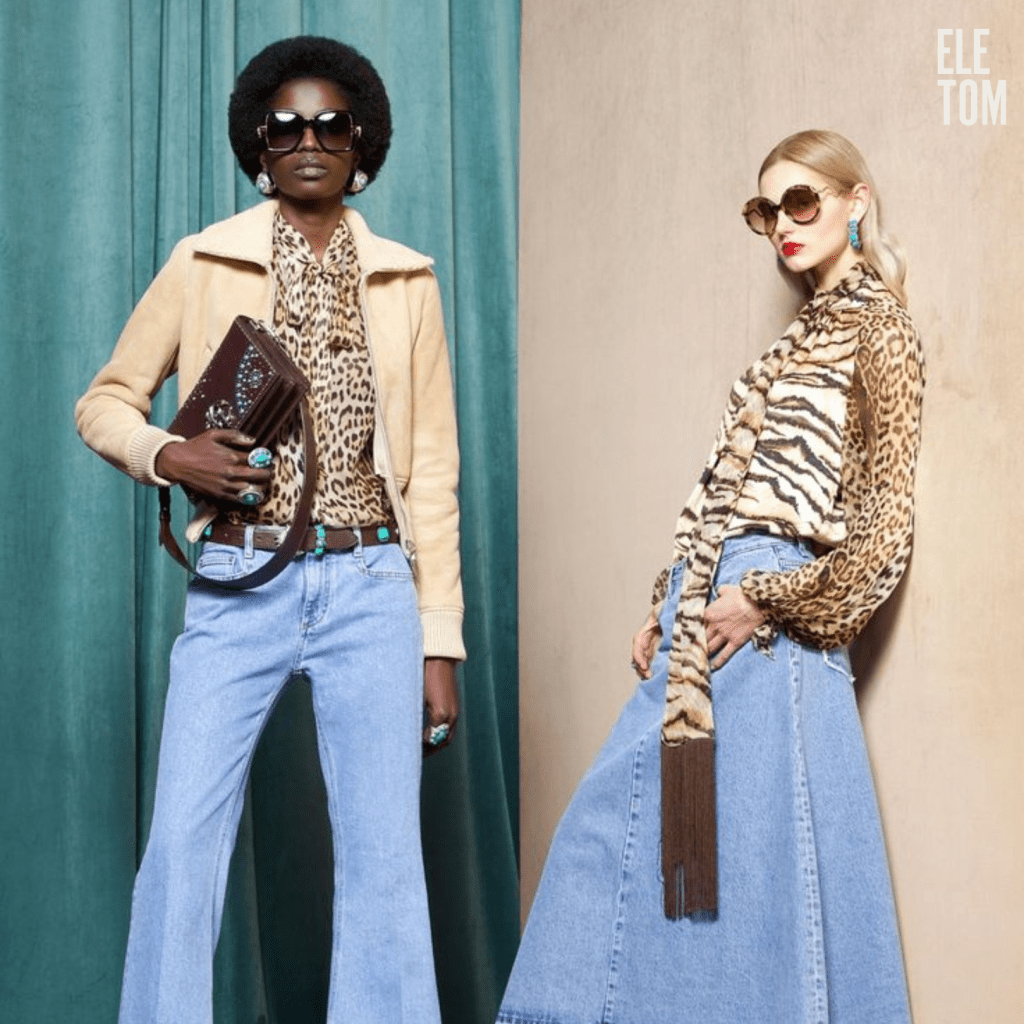
Because it’s not just about how others see us. It’s about how we see ourselves.
The Colors We Avoid (Until We Don’t)
For years, I avoided bright blue. I knew it looked good on me. But it felt like too much. Too loud. Like stepping into the spotlight with no place to hide.
Eventually, I realized it wasn’t the color I feared—it was being fully seen.
When I finally wore it—with presence, with pride—I felt it. The shift. The brightness of the blue became a reflection of something I’d grown into: a version of me that no longer wanted to dim.
Sometimes, the colors we avoid are the ones that hold the mirror to who we’re becoming.
Color as Emotional Grounding
Not every color is about stepping out. Some are about returning inward.
I have this olive green sweater—a bit worn now, but it’s stayed with me through a lot. It’s not flashy, it doesn’t photograph well, but it wraps me in calm. I wear it when I need to feel steady. Safe. Rooted.
It’s a reminder that not every day is about impact. Some days are about integration.
We reach for color based on how we feel—or how we want to feel.
Color is a mood regulator, a sensory signal, a soft kind of support.
From Hiding to Honoring
One of my clients once said, “I wear black so I don’t have to explain myself.”
For her, black was a shield. She wore it every day, not out of preference, but out of protection. She had other colors in her closet—but they felt too exposed, too vulnerable.
Then, slowly, we started exploring. Softly. Intentionally.
She tried on a pale butter yellow—a color I’ll admit is difficult to wear unless it really suits you. But when she looked in the mirror, something shifted. Her whole face seemed lighter. Her eyes more awake. Her body softened, and so did her smile.
It wasn’t just about yellow. It was about allowing herself to take up space gently.
Now, she still wears black—but it’s a choice, not a default. She pairs it with pieces that honor who she’s becoming, not just who she had to be.
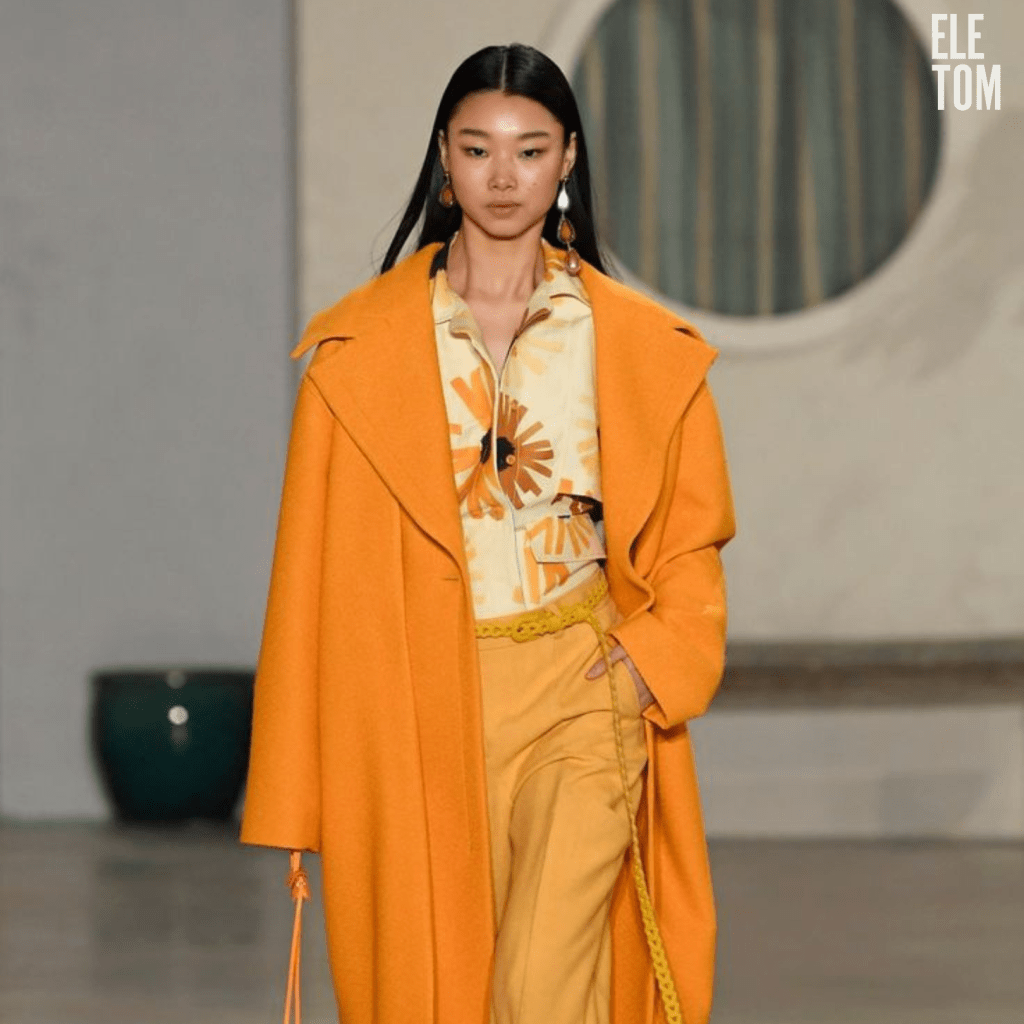
Seasonal Shifts: Dressing in Alignment with the World Around You
As spring arrives, I find myself slowly shedding the black and grey layers I leaned into during winter. Not because I’ve outgrown them—but because I’m ready for lightness.
Spring is emotional too. It invites renewal. A kind of blooming from the inside out. Psychological research suggests that seasonal transitions, especially into spring, naturally elevate mood and energy levels as increased daylight boosts serotonin—the brain’s chemical for happiness and calm (Lambert et al., 2002).
That’s when I reach for what I call psychological bloom tones—soft greens for possibility, lavender for ease, a pop of peach or buttery yellow when I need warmth.
Even if the weather hasn’t fully caught up, changing what I wear helps me feel in rhythm again—with the season, and with myself.
Your Emotional Palette: A Reflection
So I invite you to ask yourself:
● What color makes you feel you—not just seen, but reflected?
● What’s your calming color—the one you wear for you, not for anyone else? ● What’s one color you’ve been avoiding—because it might be asking you to grow into something bigger?
Because color isn’t just visual. It’s emotional. It’s narrative. It’s memory.
You’re not just putting on a shade.
You’re stepping into a version of yourself.
Coming Next Month:
“The Stories We Wear: Why We Keep Clothes That No Longer Fit Our Lives” We’ll explore the psychology of sentimental clothing, how fashion connects us to memory and identity, and what happens when letting go becomes a form of emotional clarity.
Until then, let your wardrobe reflect who you are—
and who you’re becoming.
For more on Style My Mind, Please check out her website: www.stylmynd.com