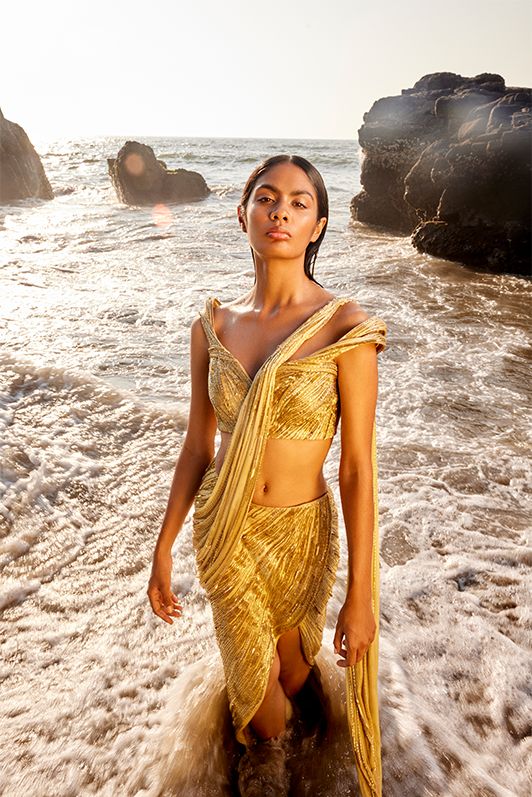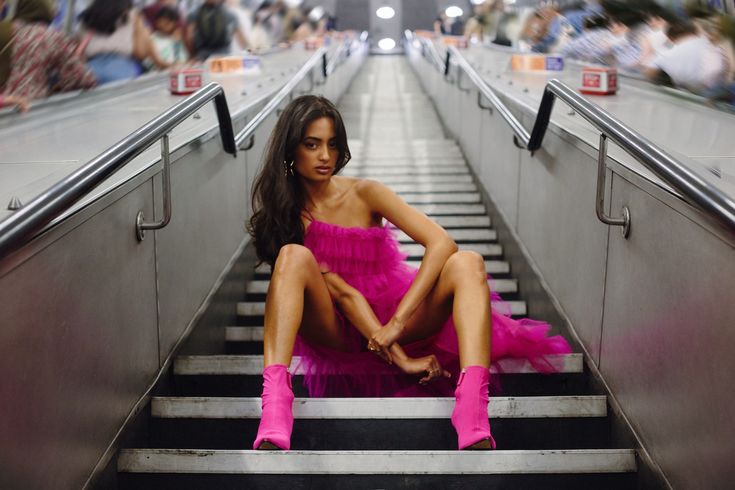
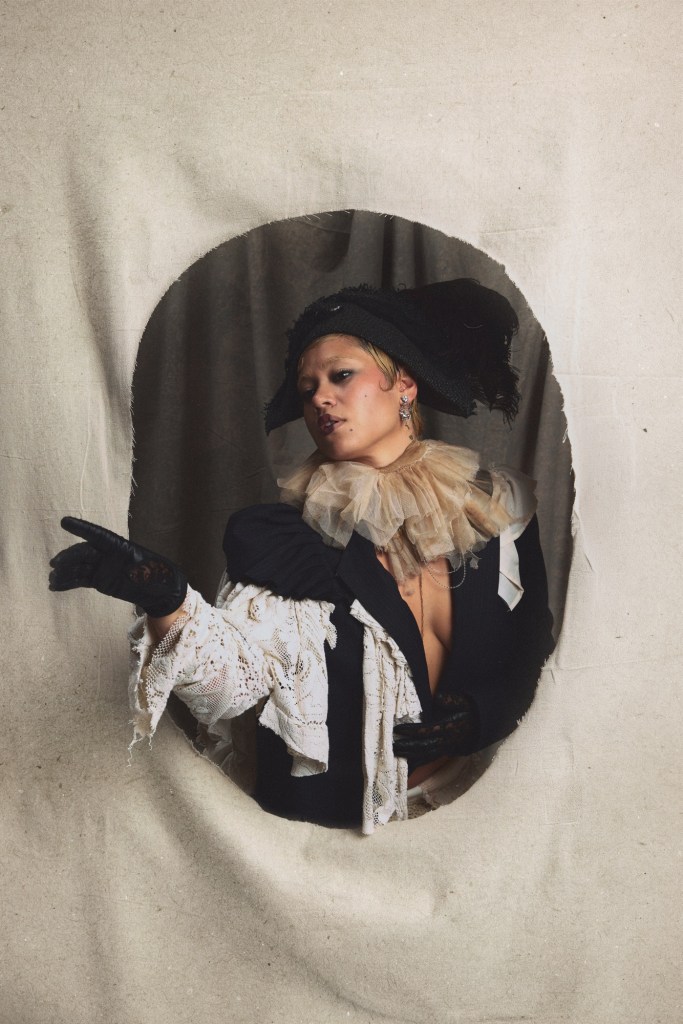
Australian-Filipino artist VITA doesn’t separate the music from the world around it. On her debut album OPIA—out now, alongside the new single “HYPER”—sound and image move together: playful, theatrical, camp and beautifully unpredictable. Working with longtime creative partner Naz, VITA approaches the visual side of her music much like the music itself—instinctively. After ten years of creating together, the two have developed what she describes as almost an unspoken language. In this Artist Spotlight, VITA talks about the places and people that shaped her, what OPIA forced her to confront in herself, and why honesty—even when it’s uncomfortable—remains at the center of her work.
“The visuals and the sonics usually come to me at the same time.” — VITA
THE CONVERSATION – VITA, in her own words:
01. For someone discovering you for the first time, who is VITA—not the artist bio, but the person behind the work?
If I’m being super honest, I’m really just a silly little guy who likes to make art. So much of who I am is my humor, my love for my family and friends, my love for building things with my hands, moving my body and learning new things. I’m a very energetic and curious person at heart.
02. Your journey has taken you from Sydney to Los Angeles and now Mexico City. How has your idea of home evolved, and what has each place brought out in you creatively?
I’m very much a “home is where the heart is” kind of person. I have been distinctly different people in each place. Sydney shaped my adolescence. My love for music, dance and art was solidified as a life purpose there through my artist/musician mother’s love for the craft. Los Angeles shaped my coming of age from being a teenager to an adult. I moved there alone at 18 and lived there for 10 years, until I was 28. I learned how to be a recording artist there; I learned the business and how to be a well-rounded creative from being around the most incredibly talented people in the industry. Moving to Mexico has brought me a different sense of creative freedom and exploration.
03. As an Australian-Filipino artist, how has your heritage shaped the way you see yourself and tell stories—even in ways listeners might not immediately recognize?
My mum was part of a Filipino jazz band, so I was always surrounded by live music. Obviously, karaoke was such a huge part of my life as well—karaoke is a Filipino institution. It introduced me to all the greats, like Whitney Houston and Chaka Khan. Being Australian introduced me to very niche subsections of electronic music, and psychedelic and surf rock. It also shaped the freedom in my expression and how honest I am, because Australians are very straight-up people. No bullshit.

04. OPIA turns the gaze inward. What did creating this album reveal about yourself that you did not expect to confront?
That I am extremely avoidant. I had so much judgment toward people who are avoidant because I am known amongst my friends and family as someone who is not afraid of conflict. I think I’ve always had conflict-averse people gravitate toward me because of my honesty when it comes to how I perceive things and, if anything, I am usually the one rocking the boat for communication to occur. I had to come to terms with the fact that, when it comes to myself—my own fear, my own discomfort, my own anger, my own faults—I can be extremely avoidant. I have an extremely hard time expressing myself in the name of responsibility and care for others. I had only ever known how to regulate other people, but never myself. My judgment of others came from a place of insecurity and judgment about myself, which is usually the case with most judgments.
05. The album holds space for contradictions—confidence and uncertainty, pleasure and guilt, intimacy and independence. Which contradiction was the hardest for you to accept?
I was so attached to the idea of being a “good person.” I punished myself constantly for every mistake. I would never let it go; I would bury myself in it out of fear of ever making a mistake again. The reality is, though, that there’s no stopping making mistakes—especially in your 20s. I dare say it’s what you have your 20s for. I can be a good person, and I can be a bad person, and sometimes there’s no such thing as good or bad—just what a person is. I had labeled certain things to make everything black and white, but I am capable, and always will be capable, of doing things that are against my nature in certain circumstances, and I need to hold space for my humanity. My standard for a “good person” is unreasonable and not actually in line with what I would expect from others.
06. “PLEASER” feels like a love letter to a younger, more reckless version of you. What would she recognize in the woman you are today, and what would surprise her?
She would recognize the girl who goes for it no matter what. The one who sees the ledge and isn’t afraid to jump. I’ve always been fearless in that way. I think she would be proud I haven’t let fear lead my life. I think she’d be surprised at how strong, self-assured and level-headed I am. I take risks, but they are much more calculated. She’d admire how considerate, caring and intentional I am with the people I love, and how I’ve left behind a lot of the carelessness of my youth.

07. “SINGLE” makes friendship the central love story. Was there a particular person or moment that changed how you understood love, intimacy and devotion?
Everyone I have in my life right now reflects the love, intimacy and devotion I expect in my life. I experienced polyamory for the first time in my early 20s. I think having the lines between friendships and lovers blurred made me realize that what I consider romantic has never been attached to sex or partnership. My friends reflect different parts of what I would expect in partnership. They show me how to protect my heart, how to be intentional, how to be thoughtful and considerate, exciting and spontaneous. Someone taking care of me when I am sick—that is romantic. When someone respects my boundaries—that is romantic. When someone gives me the space to express emotions freely—that is romantic. When I feel safe, when I feel someone supports my dreams, when I can be completely myself—that is deeply romantic. I am deeply devoted to everyone I love equally; there is no hierarchy between partners and friends. To me, romance is deeply expansive and not something exclusively gate-kept for one person.
08. Is there another side of VITA waiting on OPIA that listeners may not be prepared for?
I think on this project there’s a side of me that even some people who have known me for years don’t know. I think I’ve set up my audience to expect brutal honesty from me. I think this is a different level of vulnerability.
09. When an idea begins, what usually arrives first—a lyric, a sound, a character, an image or simply a feeling you cannot explain yet?
Sometimes it comes out like vomit; sometimes it’s so painfully methodical that every word, every note, every drumbeat is agonized over for months. Sometimes it feels like if I don’t say the thing, I might die (I’m very dramatic, if you can’t tell). At this point in my career, the visuals and the sonics usually come to me at the same time, as if listening to a soundtrack and the movie simply appears along with them.
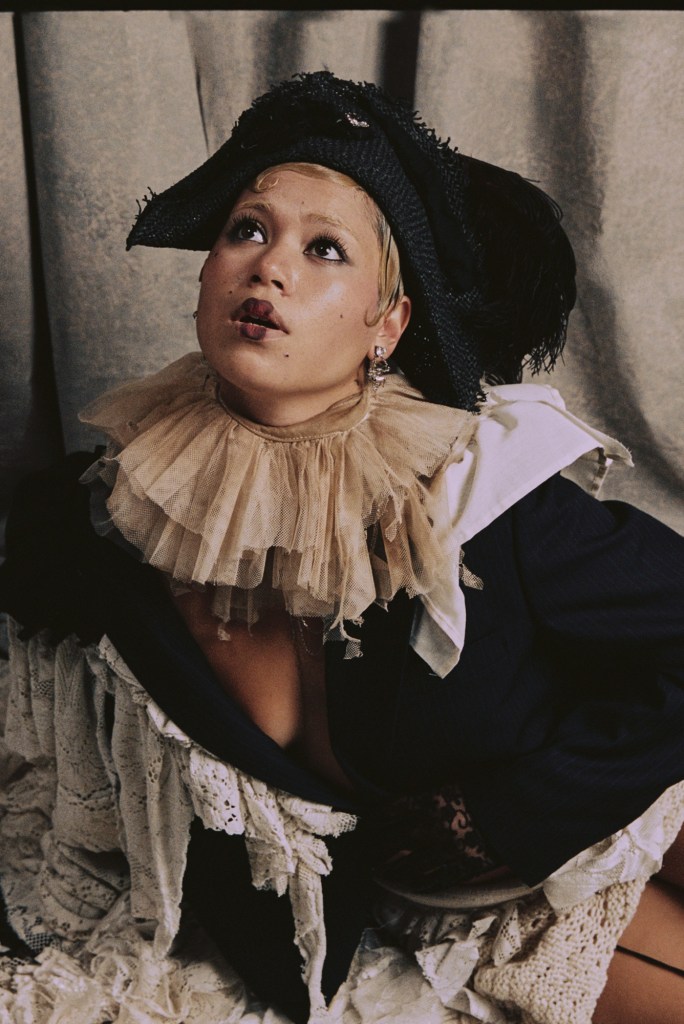
10. Your visuals are playful, theatrical, camp and beautifully unpredictable. How do you and Naz translate a song into an entire visual world—and how do you know when it truly belongs in the VITA universe?
We both have crazy, campy ideas and are both deeply specific people with very distinct visions. We bounce off each other, and it’s kind of an unspoken language after ten years of working together. We know what it’s like to make things we think will work and have them not resonate with us. It’s all trial and error. Now it’s instinctual. When we know, we know. I don’t know how to describe it.
Photography by Mikayla LoBasso