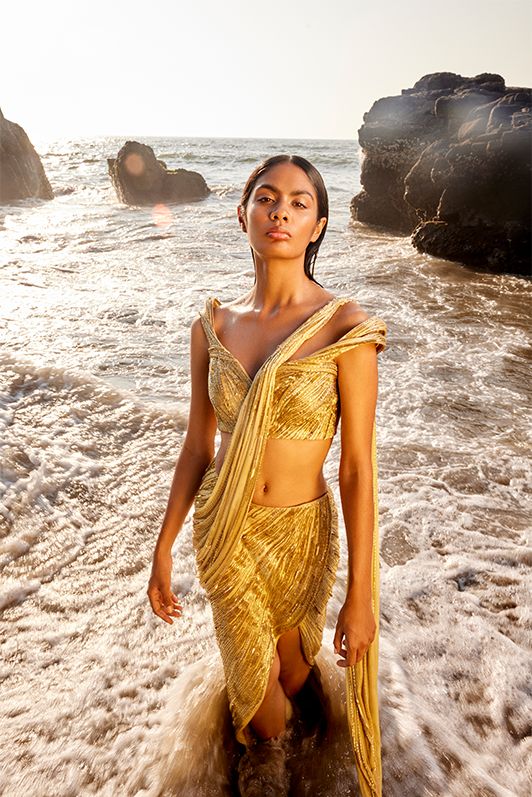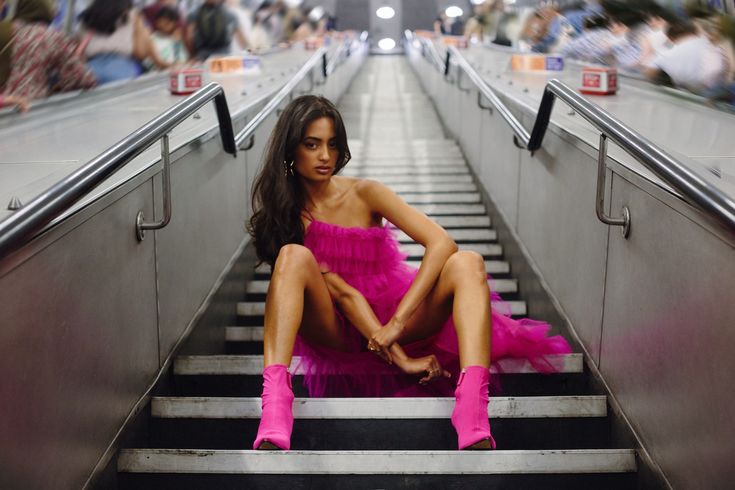
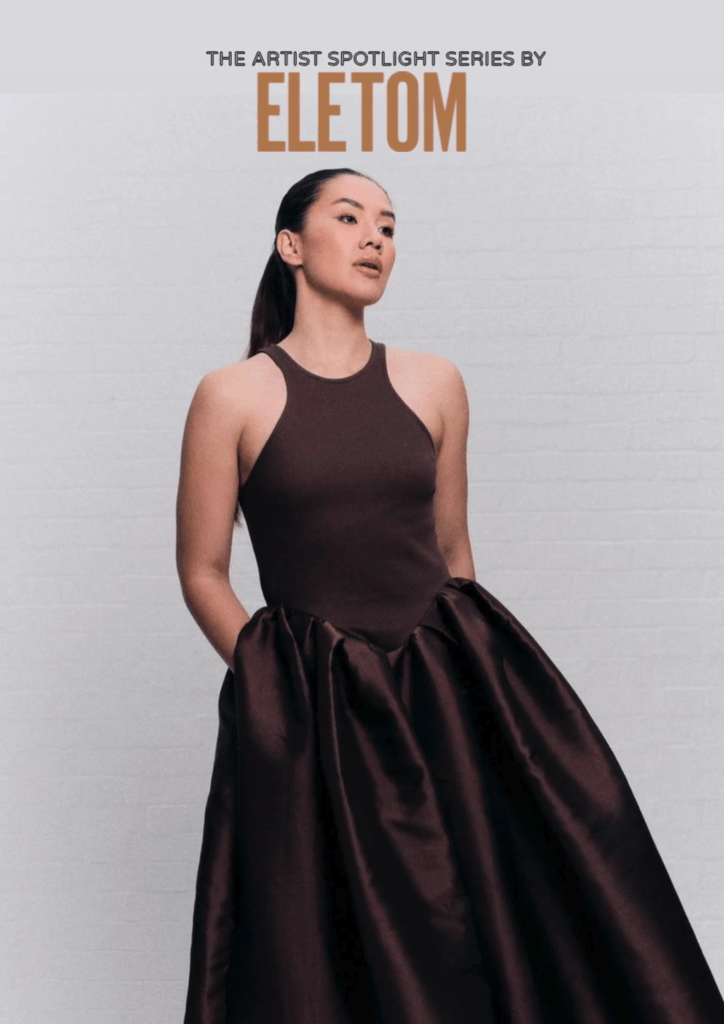
From Reuters to The Magic Faraway Tree — Julia Saubier on what happens when you refuse to choose just one version of yourself.
Julia Saubier was just easing in from an otherwise hectic day out in London. Her toddler is asleep, the babysitter is on her way out, and another appointment is waiting to begin in a few hours — and yet, she was fully composed, unhurried, and warm in the midst of the organized chaos that is just another day in her world.
In this case, it only felt natural to ask: When did your journey as a fully-fledged artist truly begin?
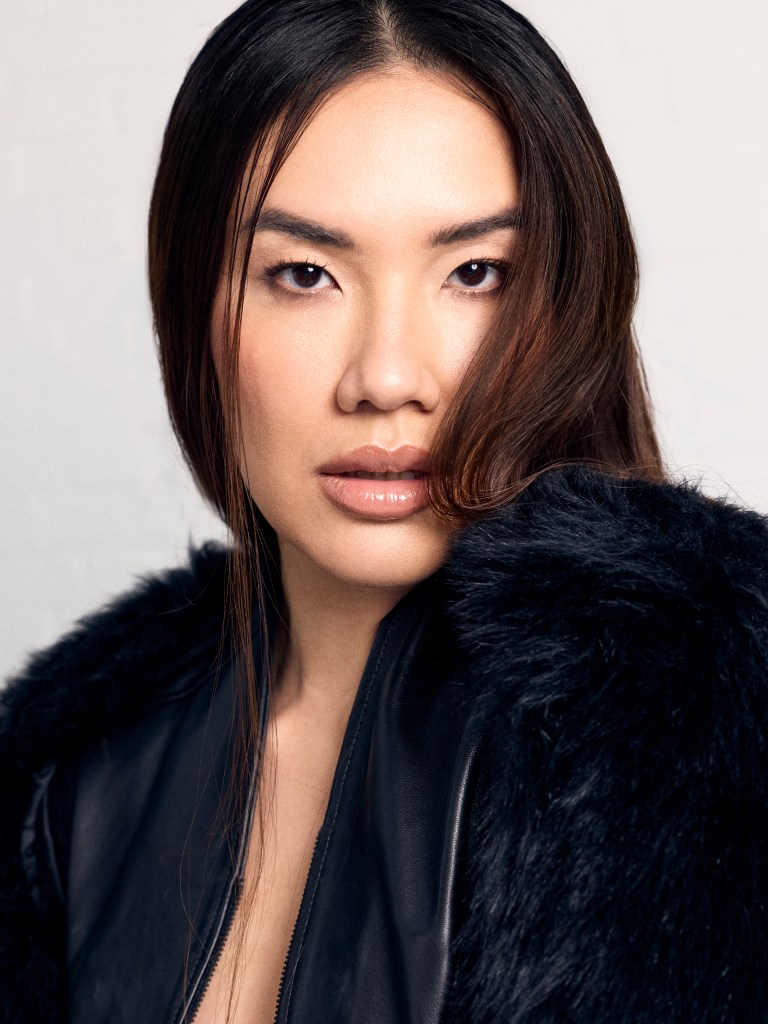
Born to French and Filipino parents, Julia lived in Manila, studied in Beijing, and now resides in London. She worked at Reuters covering Gaza, competed twice in Miss Universe Philippines, trained in martial arts, earned a master’s in Film Finance, and recently starred in a major family film, an adaptation of Enid Blyton’s The Magic Faraway Tree. Her journey is undeniably fascinating. To better understand her path, it’s helpful to look at the transitions that shaped her career.
Growing up in Manila until 17, Julia’s curiosity led her to theater, academics, and varsity athletics, and she represented the Philippines in Southeast Asia. She credits her parents for encouraging her to do her best without pressuring her to choose a path.
Her father significantly shaped her drive for mission-driven work. Starting in IT before shifting to social entrepreneurship, he encouraged Julia to join medical missions and intern at his social enterprise. This inspired her to pursue impact-focused work over traditional careers.
On her mother’s side, Julia comes from a family of professionals and patriots: her mother is a dentist, and relatives include lawyers, doctors, and one who helped draft the Philippines’ first constitution.
Once that seed was planted, Julia’s thirst for knowledge paved the way for her to become a journalist for Reuters — and later, the film industry.
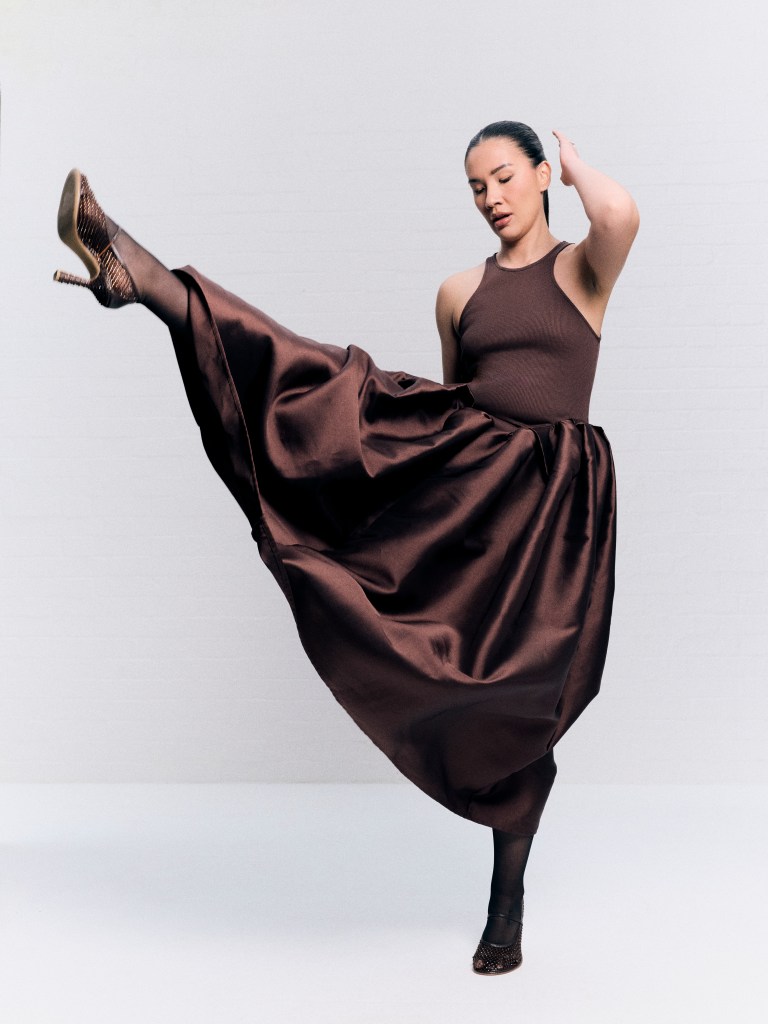

“I got more interested in government, then international relations, then journalism — specifically conflict journalism. But at the same time, I was in the school play and got roped into doing senior thesis films, and that’s when my love for film developed. I’d always done theater, but never considered it as a career path. It’s been a process of pursuing what I love, realizing what I do and don’t like about it, and constantly refining.”After leaving Reuters, Julia ventured into the world of pageantry. While, for those on the outside, this might seem like a sharp departure, it actually reflected another evolution in her pursuit of impact and advocacy.t.
“I pursued journalism, and eventually I felt I was more suited to film and television — but from the production side. I didn’t actually want to pursue acting initially,” she said. “I wanted to produce projects.”
What drew her to Miss Universe Philippines was the platform’s power to address issues that mattered to her—nationalism, gender, and the meanings of womanhood, beauty, and worth. In the Philippines, the Miss Universe Philippines titleholder shapes these conversations locally and globally. For Julia, it opened another side to her career—the commercial and modeling work alongside her acting training. But it had its hurdles.
For the first time in her life, none of what she had accomplished seemed to matter. Everything she had built — her intellect, her values, her thought — was no longer the primary tool being used to evaluate her.
“I was judged on appearance, something I had never cared about. The first agency told me to lose weight—even though I was 30 pounds lighter than I am now. Someone even suggested veneers. My mom is a dentist, so I refused. Veneers are irreversible.“
And that, unfortunately, is one of the many unhealthy parts of the business that hasn’t changed as much as everyone would like.
While it was genuinely brutal in many ways, the experience became a training ground—an education in media training and in how to carry oneself through the noise of public scrutiny. Entering the modeling world afterward felt easier by comparison.
“I’m so grateful I entered that space at a point in my life where I had already developed some sense of self. Because if I had received those comments when I was younger, maybe I wouldn’t have had the confidence to say no. There was a time I started going into chat rooms and seeing what people were saying — comparing me to people I didn’t even look like, spinning narratives about me.”But even as the pageant world was shaping her resilience and confidence, she found her creative vision evolving in a different direction.
During Miss Universe, Julia completed her master’s in Film Finance in China, flying between Manila and Beijing. Viewing martial arts films as coursework sparked a shift in her ambitions.
“For the first time, I saw Asian women onscreen as physically strong leaders. Zhang Ziyi inspired me—not just in Crouching Tiger, Hidden Dragon, but as a blind swordswoman who lived with a blind person for two months to study their movement. That level of commitment defines real excellence.”
And it was in that moment that she thought about finally pursuing acting as another medium of expression that fully aligns with where she is at right now.
“I love martial arts, using my body, and these films. What’s the intersection? Maybe acting. I pursued training with action work in mind.”
Because of her platform as a Miss Universe candidate, she worked with a casting director in the Philippines who enlisted her for a commercial that required someone physically strong and able to work on wires. Long story short, she auditioned and landed the job, which solidified that this was the genre she wanted to work in.
But as she got older, sustained injuries, and later became pregnant and had her son, she ended up pivoting away from action and toward family-centered drama.
“To operate at that level and do your own stunts, you have to train every day — and I didn’t have that capacity anymore but the action genre will always hold a very dear place in my heart.”
And that brings us to her latest role in Enid Blyton’s The Magic Faraway Tree film adaptation.
This beloved classic, for many reasons, has captured the hearts of millions of young children since its publication in 1939.
Julia plays one of the four elves in the film, and it was also her first time in a comedy-driven role. She confesses it wasn’t easy, given that she was postpartum at the time, but she knew this role would make her son extremely proud of her one day, and as a mother, that brought a new perspective to Julia’s creative philosophy, and it certainly gave her a sense of renewed purpose in navigating her choices both on and off screen.
“I was drawn to it for two specific reasons. First, because it’s a family story, and I had just become a mother. My taste had genuinely shifted. Before, maybe I wouldn’t have been as excited by this kind of project — but now I thought: my son is going to watch this one day and say, “That’s my mom.
Second, the character is French, and I’m half French. Part of why I do this work is to show that French people can look a certain way — that there isn’t one face for what it means to be French. Growing up, whenever I went to France, people never believed I was French. I felt there wasn’t much representation of French Asian or mixed people in public-facing spaces. So I really wanted that role for that reason too.”
That shift into motherhood and a more intentional, thorough approach to her storytelling choices brought Julia’s journey into sharper focus. As she reflects on her journey, we came to the conclusion that her path has never been defined by a singular moment but by a series of events rooted in her genuine curiosity, conviction, and evolution. “It’s been a process of pursuing what I love… and constantly refining,” she shares — a throughline that connects her journey from journalism to where she is now.
On that note, one thing Julia would like to say is that she has always been anchored in telling stories that carry meaning and broaden representation. “My mission has always been to put Asian and Filipino people on the global stage,” she says, a commitment that continues to shape the projects she takes on and the collaborators she chooses to work with.
Regarding her future endeavors, “Long term, I want to do both,” she emphasizes, referring to acting and producing films. Since for Julia, it’s not simply about building a career, but about contributing to a broader cultural movement that she wants to be part of.
In the end, Julia’s journey is a testament to the power of evolving with the intention of holding onto imagination, staying open to change, and, as she puts it, “never stop believing in magic.”
Photo credits: Photographer – Joe Whitmore | Stylist – Prue Fisher | Hair & Make Up – Megan McPhilemy