
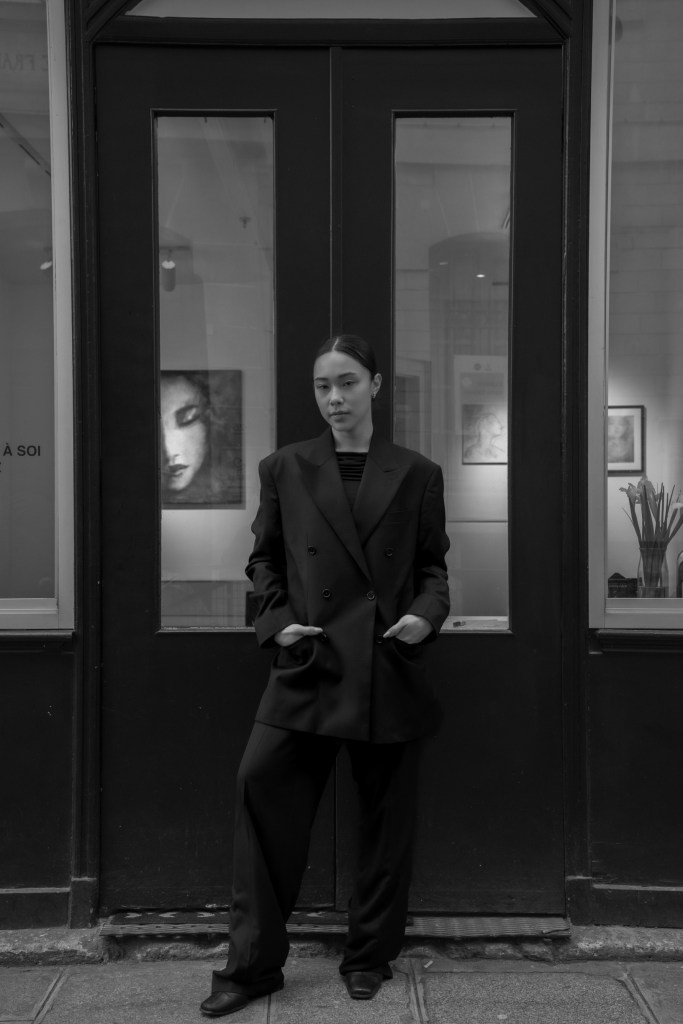
On finding her voice, her purpose, and what it means to make art that is truly her own.
” Don’t be eager to please. People-pleasing will dilute your creative voice.”
Those are the words that global Filipino figurative artist, art instructor, and curator Kim Cruz stands by. One that pushes her to pursue her journey in the arts, not only for herself but also for those she helps — whether through her art or through her work with Kalma Foundation, a non-profit organization that uses art therapy to help victims of human trafficking rebuild their lives.
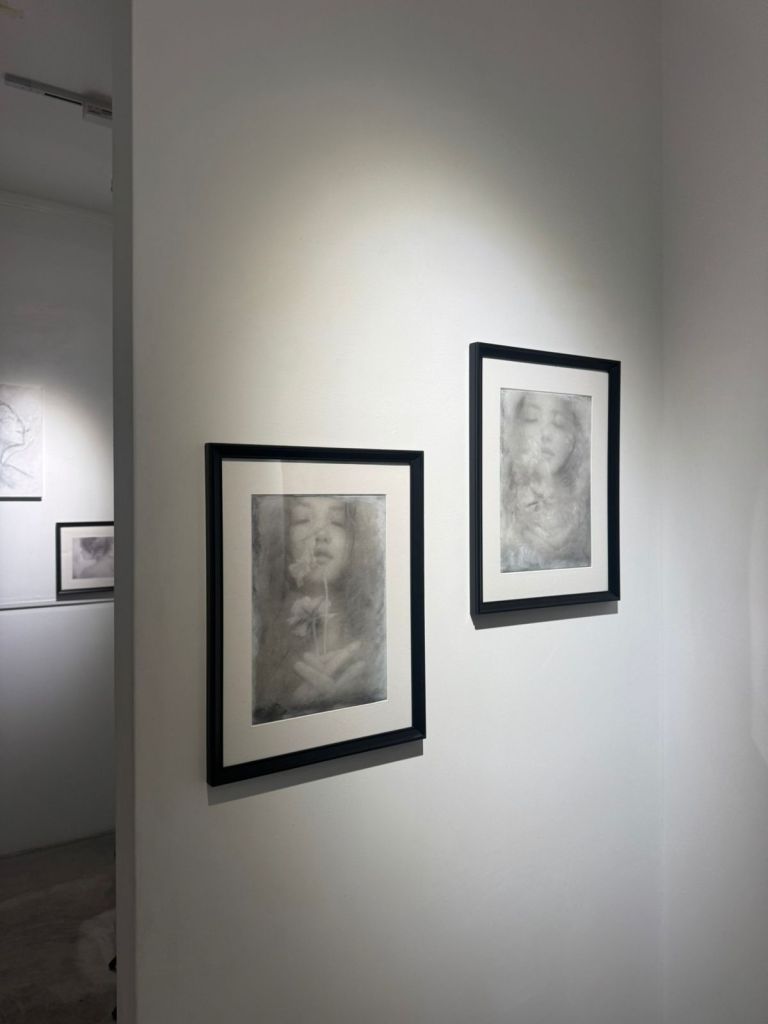
I met Kim at another exhibition early last year, where she presented her work alongside other ART HOUSE artists for a Nena Saguil retrospective. Her series, Stillness, caught my eye for its vivid depiction of feminine strength and her masterful use of Chiaroscuro, an Italian art technique meaning “light-dark.” After talking to her, it was clear that this is one of her trademarks. The dramatic contrasts of Japanese sumi ink against charcoal made one do a double-take; it was almost impossible to simply walk past her artwork without taking a closer look.


For this Artist Spotlight Series, I had an in-depth conversation with Kim via Zoom from her home in Lisbon back in October. We began talking about her journey as a multifaceted creative. Growing up, she always loved painting; it was an early spark that later led her to pursue the arts full-time. “ When I was younger, I tried everything—sports, singing, dancing—but I always came back to art. I would sketch during class, paint gifts for my parents, draw our dogs, and even my dad’s cars. My parents collected Asian art, especially figurative works, so I grew up surrounded by it.”
Yet this was still the Philippines, a country where Catholicism and its values were notably conservative, especially when it came to talking about sexuality and the human form. What Cruz experienced in the outside world was different from the art she saw at home, where the human figure was celebrated. According to her, “That contrast shaped me. I never understood why depicting the body was considered wrong. I think that early exposure made me comfortable exploring figurative work.”
While she didn’t pursue this career path straight away, Cruz tried her hand at being a VJ, working in media, and even becoming an influencer. Shortly before the pandemic hit, she realized something felt wrong.
I couldn’t see myself living that life forever. During the pandemic, I interned at a major gallery in the Philippines to learn about the art business. I thought I wanted to curate.”
Around that time, she assisted at exhibitions for national artists like BenCab, who is well known in the Filipino art scene as the preeminent artist of his generation. “ One day, I went up to him, and I told him I was inspired by his early nude works. He invited me to sketch sessions in Baguio City (an artists’ haven in the cool mountains of northern Luzon). That invitation was life-changing. It was the first time I thought, “Maybe I could really be an artist.”


What happened later provided the building blocks for her career as an artist, though it wasn’t without its bumps in the road; after all, she was still discovering her voice. In her early years, Cruz said her work reflected uncertainty. She painted to please galleries or the market—more color if they asked for color, certain styles if they said it would sell. Eventually, she lost her passion for a while because she didn’t feel proud of what she was creating.
After several months, she moved to Los Angeles and landed a corporate job, since she had doubts about whether she could make it as an artist. Eventually, Cruz returned to painting, this time experimenting with ink and monochrome abstraction, which helped her rediscover joy. She left her day job and based herself between Portugal and the Philippines.
About a year and a half ago, something changed. I started making work I would actually hang in my own home. I experimented with charcoal and Japanese sumi ink, and that felt authentic. One nine-foot ink piece I made was hard for me to let go of. That was new for me.”
In the present day, fresh off her first solo exhibition in Paris, Une Chambre à Soi at the Galerie Hoang Beli, Cruz has transformed into an artist more confident in her skin, a far cry from where she was, and that exhibition alone proves it.
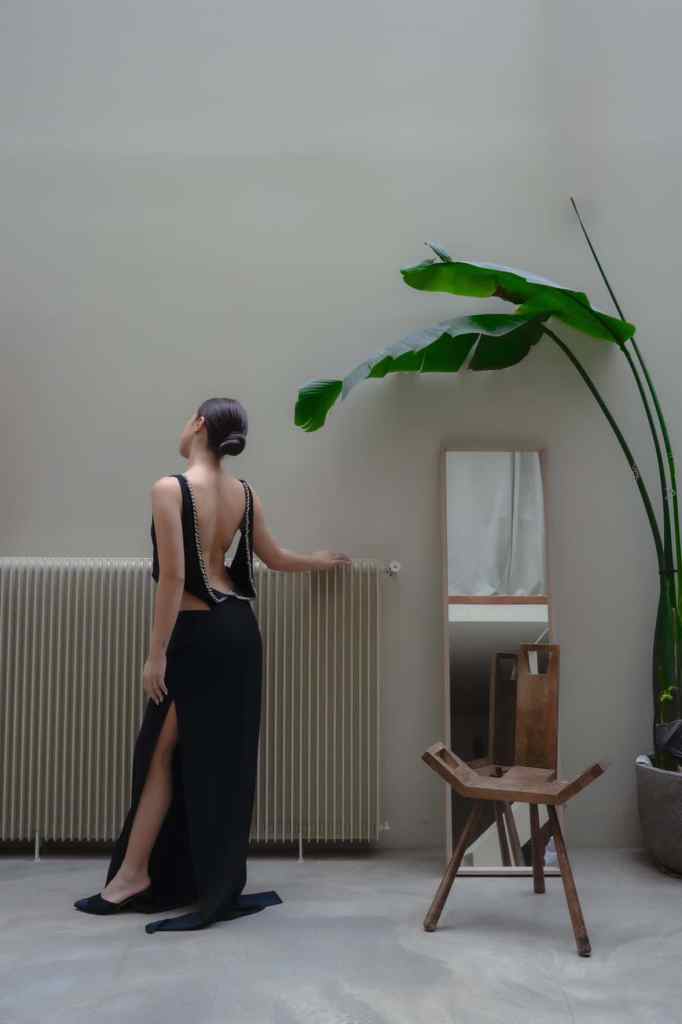
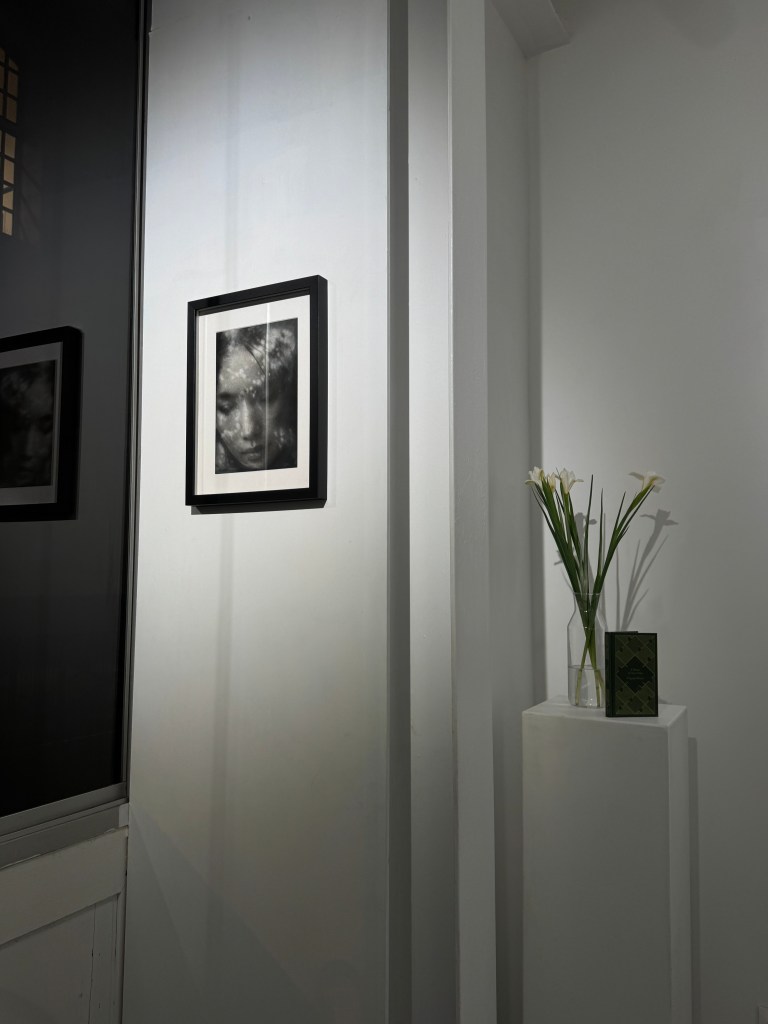
Taking inspiration from Virginia Woolf’s A Room of One’s Own, she examines the unseen process of artistic creation as a form of self-discovery and empowerment, further encouraging her viewers to meander through intimate spaces where thought, memory, and emotion converge, revealing what it takes to become oneself, both as an individual and an artist.
When your work becomes personal and intentional, collectors feel that. Now people tell me they connect emotionally with my pieces. Intention changes everything.”
That hard-won clarity also helped her navigate the politics of the art world. But in her mind, “Everything is cliquish, not just art. I learned not to take things personally and to separate personal from professional life. I don’t feel the need to belong to a specific group anymore.
“When I was younger, I wanted to please people and fit in. Now I’m comfortable in my own space. That mindset protects me from the industry’s politics. “
In Cruz’s case, she felt this personally when she first began as an artist, that feeling of not being supported or taken seriously. She said, “Transitioning from being a media personality to being taken seriously as an artist was difficult. People labeled me as an ‘influencer trying to be an artist.” It was frustrating.

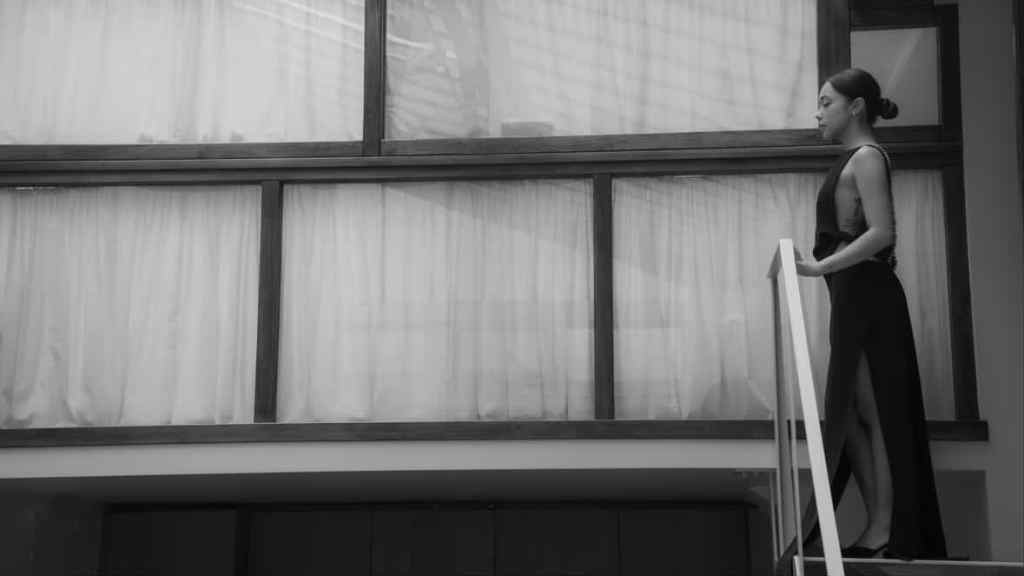
Moving abroad helped. Cruz found that she could simply introduce herself as an artist, without the baggage. “Now it feels meaningful when people approach me because they appreciate my work not my online persona,” she said.
What other barriers do female artists face in the Philippines? Gatekeeping and “crab mentality” are considered prevalent factors that deter any budding artist from pursuing this path successfully, while access to materials, education, and platforms isn’t easily attainable in the Philippines.
“Many parents still see art as a waste of time; it’s not considered practical in their eyes.”
The conversation turned to the Kalma Art Foundation, an NGO that she founded at the age of twenty-four. Cruz herself funded everything, inspired by her grandfather, a missionary in India for nearly 70 years, and, at a young age, she visited orphanages and saw poverty firsthand. It deeply affected her.
She later volunteered with an anti-human trafficking organization in the Philippines, which, unfortunately, is also one of the top hotspots for trafficking, especially when it comes to young children.
“It was and still is emotionally overwhelming, but I realized children don’t always process trauma through conversation. So I studied art therapy and proposed integrating it into outreach programs.”
Now, from its beginnings as a small outfit, it is seeing more growth, with 50 volunteers signing up in one day. Cruz dedicates her time to helping volunteers apply the principles she learned as an art instructor for children, providing a safe outlet for them to fully express themselves without judgment. Seeing the results of that makes Cruz feel that her art has purpose. “ I’ve seen kids who were once withdrawn grow into confident individuals.”
We reached the end of our conversation with a simple question: “ Where do you see yourself in the next 5-10 years? Cruz’s response was ambitious and clear. She wants to build a world around her art, not just paintings, but also expanding into ceramics and large-scale immersive work, growing the foundation, and staying rooted in the Philippines while building her presence internationally. But perhaps the most telling ambition she has is one every artist shares: “Ultimately, I want people to instantly recognize a piece and say, ‘That’s a Kim Cruz.'”
Photos by Tiago Pestana
For more on Kim Cruz and the Kalma Art Foundation check out their websites: www.kimcruzart.com | www.kalmaartfoundation.com