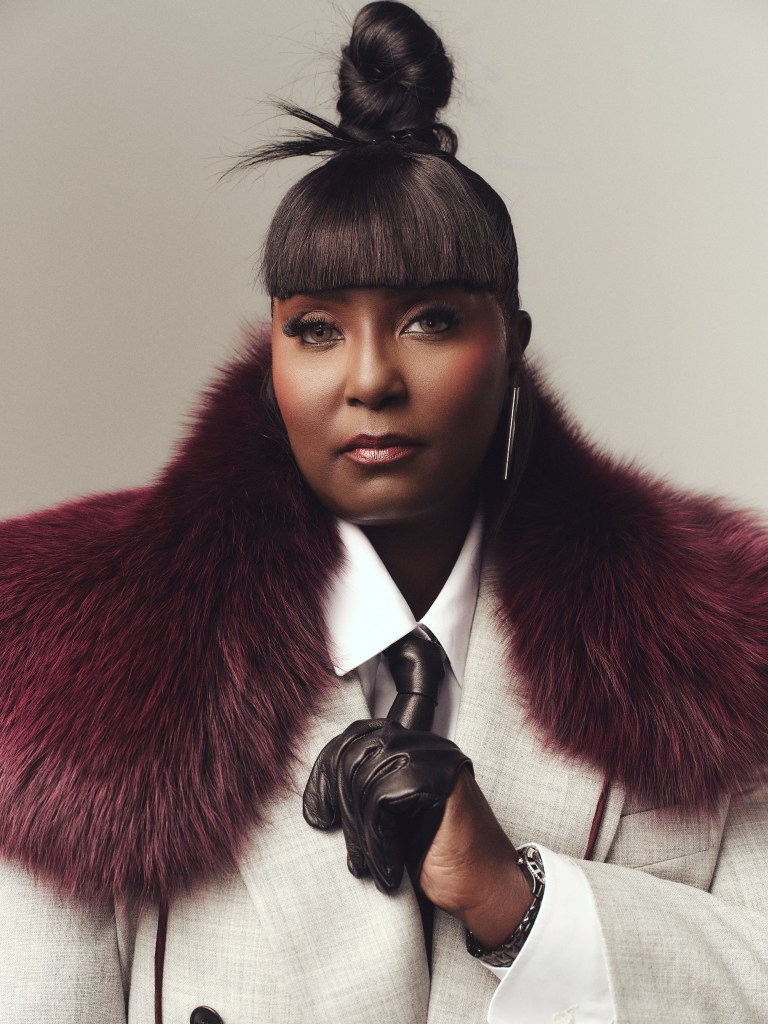
Charlotte Jackson’s multi-faceted journey to becoming a fashion powerhouse began in her formative years, growing up in the entertainment and music industry. Since then, she has translated her love for design into something tangible that resonates with women around the world. This all came together after years spent behind the scenes with power players such as McQueen and Stella McCartney. Charlotte witnessed the lack of inclusivity and set out to challenge outdated industry standards. She opposes ideas that dictate what women can wear, whether it is pret-a-porter or couture, at any age, body size, or life stage. She proves that personal style shouldn’t ever be limited.
Drawing on industry expertise, Charlotte founded the Curve Authority to guide brands in creating inclusive fashion that accurately reflects and serves plus-size women, especially those participating in prestigious events. The Curve Authority is dedicated to redefining standards and empowering women by developing a lifestyle brand focused on clothing and media.
To know more about Charlotte and the Curve Authority, read the interview below.
Before becoming a power player in luxury fashion, you built quite a career for yourself as an actress and a singer. How did those early pursuits shape your approach to advocacy and consulting in the fashion world?
Charlotte: Fashion has always been a part of my life, even long before it became something I took seriously. Growing up in entertainment as an actress and singer, I learned very early how much clothing shapes how you feel and how you are received. Your presence speaks before your voice does. And for women, especially curvy women, wardrobe is often the difference between shrinking back or standing fully in who you are.
As someone who performed and worked on sets, I often felt prepared for the opportunity but not supported by the wardrobe. That stays with you. It teaches you to pay attention. It teaches you how clothing affects confidence, identity, and the way women move through the world. That perspective shaped how I entered the fashion space.
So, when The Curve Authority came to life, it came from a personal place. I understood what it meant to love fashion, but not always see myself in it. I knew the gap was not in women’s desire to be part of the luxury industry. The gap was in the industry’s willingness to include us. My background gave me a clearer lens. Fashion should help a woman express who she is, not make her feel she has to fit into something she was never meant to be. That belief guides everything I do today.

What was the pivotal moment that made you transition from navigating Fashion Week as an attendee to founding The Curve Authority and consulting with major brands?
Charlotte: There was a moment during Paris Fashion Week that shifted something in me. I was standing in a room filled with creativity, beauty, and some of the most talented people in the industry. The energy was incredible. But as I looked around, I realized I did not see anyone who looked like me. I was excited to be there, but I was also aware of the absence. And that awareness stayed with me.
It made me look at the industry differently. Not with frustration, but with clarity. I understood in that moment that curvy women and mature women were not just missing from the front row. We were missing from the narrative. And it was not because we did not love fashion. It was because the industry was not designing with us in mind.
That experience became a turning point. I did not want to simply attend Fashion Week. I wanted to be part of reshaping it. The Curve Authority was born from that realization, from understanding that someone had to bridge the gap between the women who love luxury and an industry that had not yet fully embraced them. I stepped into that role because representation only changes when someone is willing to speak up, stand in the space, and help guide the evolution.
You’ve stated that plus-size women “deserve more than just extended sizes.” What’s the difference, and what specific gaps did you notice while moving through circles with McQueen, Stella McCartney, and other luxury houses?
Charlotte: In the beginning, moving through luxury circles with houses like McQueen and Stella McCartney was both inspiring and revealing. I loved the artistry, the storytelling, the way their clothes carried presence. I wanted to wear those pieces the way everyone else did. But as a plus-size woman, I often found that the racks did not reflect my reality. I was building relationships in spaces where I could see the beauty, but I could not always access it in my size.
There were seasons where I had to buy from the men’s side or tailor pieces just to get close to the look I envisioned. That experience is what taught me the difference between extended sizes and intentional design. Extended sizes simply stretch what already exists. Intentional design starts with the understanding that a curvy woman deserves the same level of fit, structure, and craftsmanship as anyone else.
Over time, I became deeply grateful to brands like Stella McCartney and McQueen because they began to listen. They created pieces I could actually wear, and for the first time, I could feel the full power, elegance, and artistry of luxury fashion on my own body, not just admire it from a distance. But that journey also exposed the gap. Plus-size women should not have to fight to be included at that level. We deserve more than an afterthought. We deserve clothing that is designed with us in mind, not simply graded up as an obligation.
Those experiences are a big part of why I speak so strongly about intentional design. The goal is not to criticize the houses I respect. It is to help them see the opportunity in truly embracing curvy women as part of the story from the start.
You’re advocating for two underserved demographics: plus-size women and women over 50. Why is the 50-plus demographic, which holds massive spending power, so overlooked by luxury fashion?
Charlotte: Women over 50 are some of the most powerful consumers in the world, yet they are rarely positioned at the center of luxury storytelling. The irony is that this demographic embodies everything luxury claims to represent. Confidence, refinement, discernment, and the ability to invest in quality. These women know exactly who they are. Their taste is established, their style is intentional, and they are often the ones purchasing the very pieces that become classics.
I believe the industry sometimes chases youth so aggressively that it overlooks the women who actually sustain luxury. Women over 50 are not waiting to be invited into fashion spaces. They have always been there. The issue is visibility. They want to see themselves reflected in campaigns, on runways, and in design decisions. When you do not see yourself represented, the message becomes subtle but clear. You are not the priority. My mission is to correct that narrative.
Mature women should feel seen, valued, and celebrated. They are not an afterthought. They are the foundation. And when luxury brands embrace them with the same energy, they give every other demographic, the entire industry becomes richer, more authentic, and more aligned with the women who truly move it forward.
When you consult with major fashion houses, what is the most common misconception they have about the plus-size luxury market, and how do you reframe it as a financial opportunity?
Charlotte: One of the biggest misconceptions is the belief that plus-size women are not investing in luxury at the same level as other consumers. The truth is the complete opposite. Curvy women love fashion. They appreciate craftsmanship, and they are willing to spend. The issue has never been interest; it has been access. When you do not offer clothing designed for a curvy body, customers are pushed toward accessories, handbags, and shoes because those are the only areas where luxury brands consistently include them.
What I show brands is that this demographic is not a niche. It is a global market with growing purchasing power. When you design for plus-size women from the beginning, rather than treating them as an afterthought, you instantly expand your reach and revenue. The opportunity is already there. It is the mindset that needs to shift.
I often remind houses that the most loyal clients are the ones who feel seen. When you create clothing that fits beautifully and honors a woman’s silhouette, she becomes a repeat customer. She becomes an ambassador without being asked. And with plus-size and mature women, that loyalty is unmatched.
Once brands understand that inclusivity is not charity but smart business, the entire conversation changes. What was once viewed as a challenge becomes one of the biggest untapped opportunities in luxury fashion.
You want curvy women to be “the muse, the blueprint, the starting point” rather than an afterthought. What would it actually look like if a major house designed this way from the ground up?
Charlotte: Designing from the ground up does not mean replacing one standard with another. It means creating both with equal purpose and equal craftsmanship. True inclusivity happens when a fashion house begins its design process with the understanding that beauty and luxury come in every size. If you cut a sample in a standard size, you cut the same garment in a curvy size with that exact same level of detail. They should walk side by side, not one in front of the other.
When a house commits to that balance, everything shifts. The fabric selections expand. The pattern-making becomes more thoughtful. The fit becomes more intentional. You begin crafting pieces that celebrate a woman’s silhouette rather than adjust it. And curvy women finally see garments that honor their bodies with the same artistry offered to everyone else.
Imagine runways where both silhouettes are represented as equally important. Imagine campaigns where mature and curvy women stand in the same spotlight as their counterparts, not as an exception but as the standard of luxury. Imagine a brand where the muse is not defined by size, but by presence, confidence, and identity.
When curvy women are included from the very beginning, luxury grows. It becomes more honest, more diverse, and more powerful. That is the world I advocate for. Not a world where one replaces the other, but a world where all women stand shoulder to shoulder in the same beauty and the same excellence.
What brands, if any, are getting it right? Who should the industry look to as a model for inclusive luxury?
Charlotte: There are a few brands that are starting to understand the importance of genuine inclusivity, not because it is trending but because it is necessary. And with that being said, those brands know who they are. For a more specific list of brands, interested individuals can contact the Curve Authority for more information. I appreciate the designers and creative directors who are beginning to expand their vision and acknowledge that luxury belongs to every woman. There are houses exploring new silhouettes, offering broader size ranges, and created with intention. Those efforts matter. They show progress.
But I also believe the industry is still in its early stages of truly getting it right. Inclusivity cannot be a capsule collection. It cannot be a brief moment on the runway. It has to be embedded in a brand’s DNA. It requires thoughtful fit, real investment, and consistent representation. It takes a willingness to learn the architecture of curvy bodies and honor that structure with craftsmanship.
The brands that will lead the future are the ones willing to do the work behind the scenes. The ones who build teams that understand curves. The ones who test on real bodies. The ones who design both standard and plus-size garments with equal excellence. This is the direction luxury must go in.
So, the model is not just about who is doing it best right now. The real model will be the brands that commit, innovate, and include all women from the very beginning of their creative process. Those will be the brands that shift the culture and set the new standard for what inclusive luxury truly looks like.
As a regular at Paris Fashion Week, what strategies have you developed for commanding space in rooms that were not originally designed with you in mind?
Charlotte: Paris Fashion Week is one of the most extraordinary experiences in the world, but it can also be one of the most exclusive and intimidating. Walking into those rooms as a curvy woman and a mature woman requires a level of self-possession that is not just outward, but deeply internal. My strategy begins with identity. I walk in knowing exactly who I am. I do not shrink. I do not apologize. I take up the space that belongs to me because confidence is its own invitation.
Styling is another part of my strategy. Clothing is a communicator. When I show up to a show or an event, I am intentional about the message I want to send. I choose pieces that represent my voice, my energy, and the level of sophistication I expect the room to mirror back to me. When you dress with clarity, the room responds to that clarity.
Relationships also matter. I show up for people. I build connections. I treat everyone with respect, from the front row to backstage to the team seating guests. People remember how you make them feel, and that is one of the most powerful tools you can have in fashion.
Most importantly, I enter every space understanding that representation is bigger than me. When I walk into those rooms, I carry thousands of women with me who have never seen themselves in those seats. That awareness keeps me grounded, confident, and committed to standing tall. The room may not have been designed with me in mind, but I am there now. And my presence alone expands the space for the next woman.
How does clothing, or lack of access to certain clothing, impact how women show up in professional and social spaces with power and presence?
Charlotte: Clothing affects far more than appearance. It influences how a woman feels, how she carries herself, and how she occupies space. When a woman has access to pieces that fit her properly and honor her body, she moves differently. Her shoulders relax, her posture shifts, her confidence rises. She can walk into a room with presence because she is not battling her clothing. She is supported by it.
For plus-size women, the lack of access to luxury clothing creates an unnecessary barrier. When options are limited, women are forced to compromise. Instead of choosing garments that reflect their true identity, they settle for what is available. That affects not only their style but also their voice, energy, and sense of belonging in certain spaces.
When clothing affirms a woman, she is empowered. She leads differently. She negotiates differently. She engages with the world from a place of assurance instead of self-consciousness. This is why I advocate for intentional design. Fashion has the power to lift a woman emotionally and psychologically. It is not vanity. It is identity. It is an expression. It is how she shows up to claim her seat at every table, professionally and socially.
When women have access to clothing that reflects their beauty, their authority, and their maturity, they show up as their fullest selves. And that changes everything.
The Curve Authority is evolving into its own lifestyle brand with clothing and media. What is your vision for the next five years, both for your platform and for the industry you are working to transform?
Charlotte: The Curve Authority is bigger than just fashion. It is a movement that will include various forms of media. From television shows and fashion consulting. It is a shift in how we see beauty, maturity, luxury, and womanhood. Over the next five years, my vision is to continue building a brand that honors women in a full and authentic way. Clothing will be a part of that, and we will enter that space with intention. Our pieces will reflect craftsmanship, elegance, and the real bodies of the women who inspire this work.
Beyond clothing, we are expanding our presence in ways that allow women to see themselves, hear themselves, and feel represented. I want The Curve Authority to be a place where women can find not only style, but community, confidence, and meaningful storytelling.
Within the industry, my goal is to continue advocating for balanced design practices. Standard and plus-size garments should be created with equal artistry. Curvy women and mature women should see themselves reflected in luxury spaces consistently, not as exceptions but as part of the true landscape of fashion.
In the next five years, I hope to see campaigns that highlight curvy women and mature women as powerful, stylish, and influential. Women who shape culture. Women who move the industry forward. I want brands to embrace the full spectrum of womanhood with intention and respect.
My mission is to help reshape the language of luxury so that it celebrates identity over idealism and presence over perfection. The Curve Authority will continue to stand at the forefront of that transformation, uplifting women and expanding the way the world sees beauty, a vision reflected in our mantra: “We See You, We Style You, We Crown You.”
To Follow This Great Visionary & Learn More About The Curve Authority
Stay connected with Charlotte Jackson and The Curve Authority as they continue to redefine modern luxury, empower curvy women, and elevate the mature woman in fashion.
Instagram: @TheCurveAuthority
Facebook: The Curve Authority
Photo Credits: Photographer: Jonny Marlow | Hair: Mimi Green | Makeup: Sanai Terri