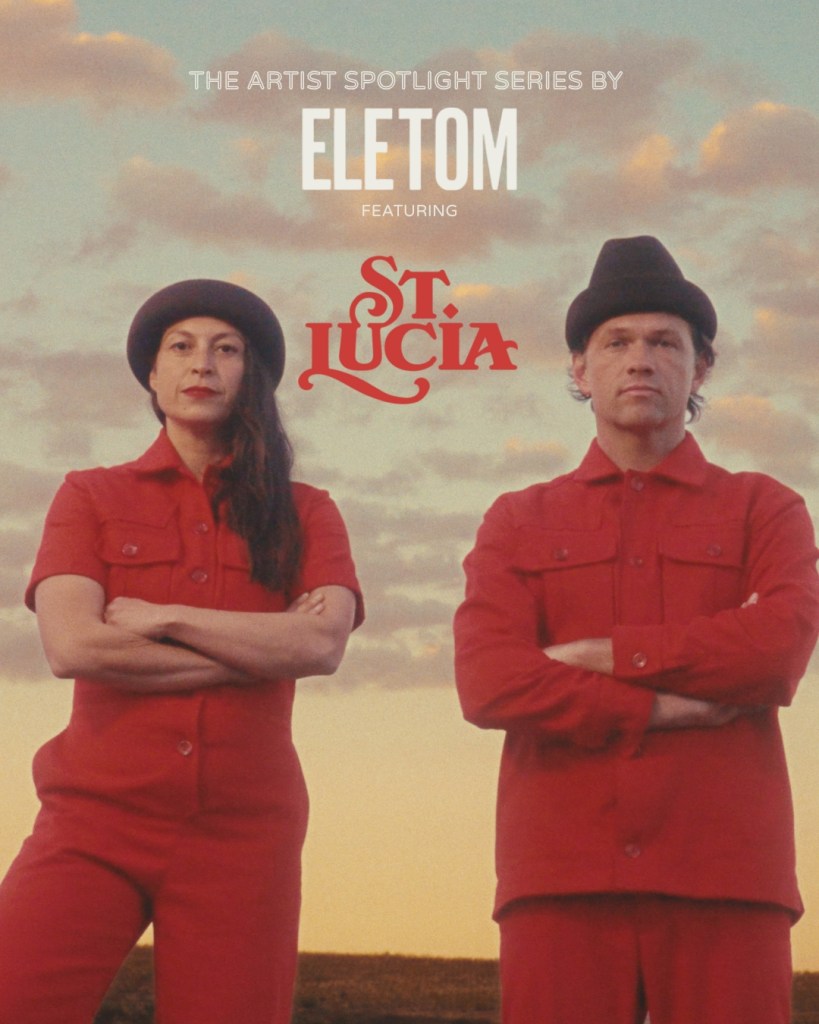
On December 5, NYC-based husband-and-wife duo St. Lucia (Jean-Philip Grobler & Patti Beranek) finally came out with the second iteration of their expansive double album, Fata Morgana, titled Dusk. The album’s title refers to the transitional period-an in-between space that in this context refers to the album’s exploration of change, ambiguity, and the blending of genres, offering listeners a sense of anticipation and reflection.
Dusk explores various musical genres, including old-school rock, a version of 80s synth pop that sounds remarkably familiar yet modern, fused with psychedelia and experimental sounds that make it unique to St. Lucia’s musical identity. To deepen understanding, it also weaves themes of nostalgia, transformation, and introspection, inviting listeners into a reflective journey through sound and emotion.
The album encapsulates St. Lucia’s craft as artists on a journey, aiming to evoke a transcendent emotional experience for listeners.
ELETOM sat down with the duo; see the full interview below.
Congratulations on this new album! Could you tell us more about your creative partnership behind this double-album project, and what the idea was behind calling it Fata Morgana?
Phew, honestly, it’s hard to know where to start answering this question, because this record has been such a journey. It’s an album that has songs from almost all parts of the St. Lucia timeline, the oldest one being The Universe Explodes, which was written during the When The Night era, People Change, which was written for Hyperion, but neither was used because they just didn’t fit on the record or didn’t feel like they’d reached their potential. The first recording sessions I can truly say, ‘ok, this is where this album started,’ were towards the end of 2019 and during the pandemic.
Basically, the whole of Dawn was more or less finished by the start of 2021, but something wasn’t quite right with it. Something was missing, and we couldn’t figure out what: either a song or some aspect of the sound.
When we moved from the US to Germany in early 2021, in the process of searching for that missing song, we started writing and recording what would become Utopia (our 4th album). A couple of the songs that were initially going to be on what would become Dawn ended up on Utopia, like ‘Memory’ and ‘Hey Now’.
Then, when the Utopia tour was over, we returned to the other material we’d been working on, which developed into Fata Morgana Dawn & Dusk over the next couple of years. I wrote ‘Falling Asleep,’ which turned out to be the missing song from Dawn, and we found a way to add real strings to the record, which was the missing element we were looking for.
Can you walk us through the creative evolution from Dawn to Dusk? What were the genres that both of you explored when it came to creating and curating your songs for this new album?
The decision to turn this into a double album took a really long time. I’ve never actually ever been much of a fan of double albums. I often feel that double albums could have been better if the artists had made a single album and selected the best songs. Still, we had this massive body of work, and any time I tried to make an album with only the singles, it felt like too much and sorta one-dimensional. It needed all the other non-single-ish tracks to tell a story and take you on a journey.
We decided to split the album roughly in two, based on when the songs were written and the energy/genre they explored. It felt like an interesting idea to have one album that was a little more singer-songwriter/psychedelic/60’s & 70’s, and the other album more of an exploration of dance/pop, without being mutually exclusive and in some way reflecting each other.
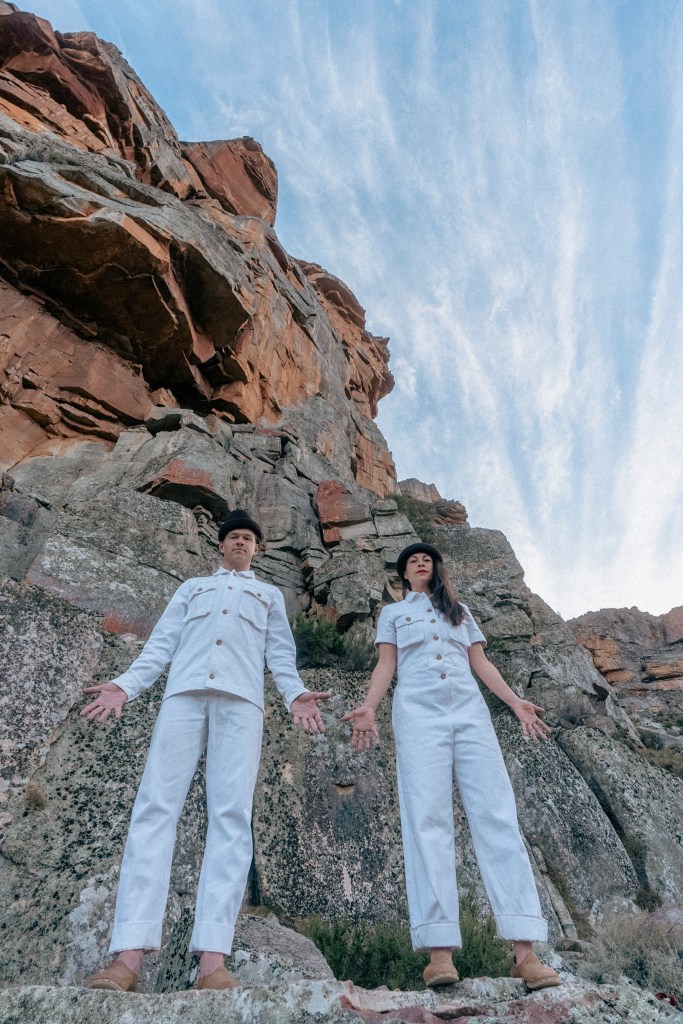
What was the most unexpected musical direction either of you pushed for during the Dusk sessions?
Most of the time, the most unexpected musical direction is the most exciting to me. The majority of the time, songs are just sorta planted in my head; they just arrive fully formed in a moment of inspiration or who knows what, it’s kinda like magic.
I’d always wanted to make a record that explored the 60’s & 70’s a bit more and artists like ELO, Abba, David Bowie, The Beatles, Ennio Morricone and Milton Nascimento, and so when songs like Pie In The Sky, In Your Arms, Rolling Man etc started arriving in my head I got very excited because I could tell that these are the songs that are meant to make this album I’ve always dreamed of making. It definitely felt exciting and somewhat risky because I knew that people who liked our music for the 80’s elements might not like this, but I like being risky.
You’ve worked with Chris Zane across multiple projects. What does he bring to your sound, and how did his approach differ between mixing Dawn and Dusk?
Chris is just the best. He has no ego and never questions my artistic decisions unless he seriously disagrees with them. But over the years, we’ve developed a strong creative partnership, where, in general, he knows what I’m looking for before I have to say it. He’s also just technically a perfect mixer, one of the best in my opinion.
I don’t use him because I’m unable to mix; I just find it useful to send my music off at some point when it feels done, because otherwise I could always get stuck in the tweak zone. I find it really useful to hear the songs through another person’s lens at the end of the process. Sometimes it’s hard to decide what the most and least important parts of an arrangement are, and sending it to someone else and hearing what they choose to feature can say a lot.
“People Change” has to be one of our favorite songs on the list. What is the meaning behind this particular track?
This song was written in 2016 and was part of the Hyperion song group, but someone felt it didn’t quite come together, or it wasn’t part of the story for that album. I always believed in the song, though, and we recorded a few other versions over the next few years, but it finally came together only after really simplifying the arrangement.
It’s a pretty earnest song, it’s often hard for me to know what a song is actually about until a while after it’s done but because People Change has been around for so long it’s become clear to me that it’s about redemption, not in a religious sense but in the sense that you could be wronged or bullied by someone or you could do it to someone else. Still, people change (and some stay the same, of course, haha).
I was bullied as a kid, and I also passed that bullying onto other kids and I know it really affected them as it affected me. But you have to forgive yourself and forgive the people who do those things to you, because otherwise it eats you up inside. So the best way to do this is just to realize that often those things are not about you being a loser or someone else being a loser, it’s because the people who are doing it are projecting their own issues onto you (or you are projecting your own issues onto others) and not to take it personally, as hard as that can be in the moment.
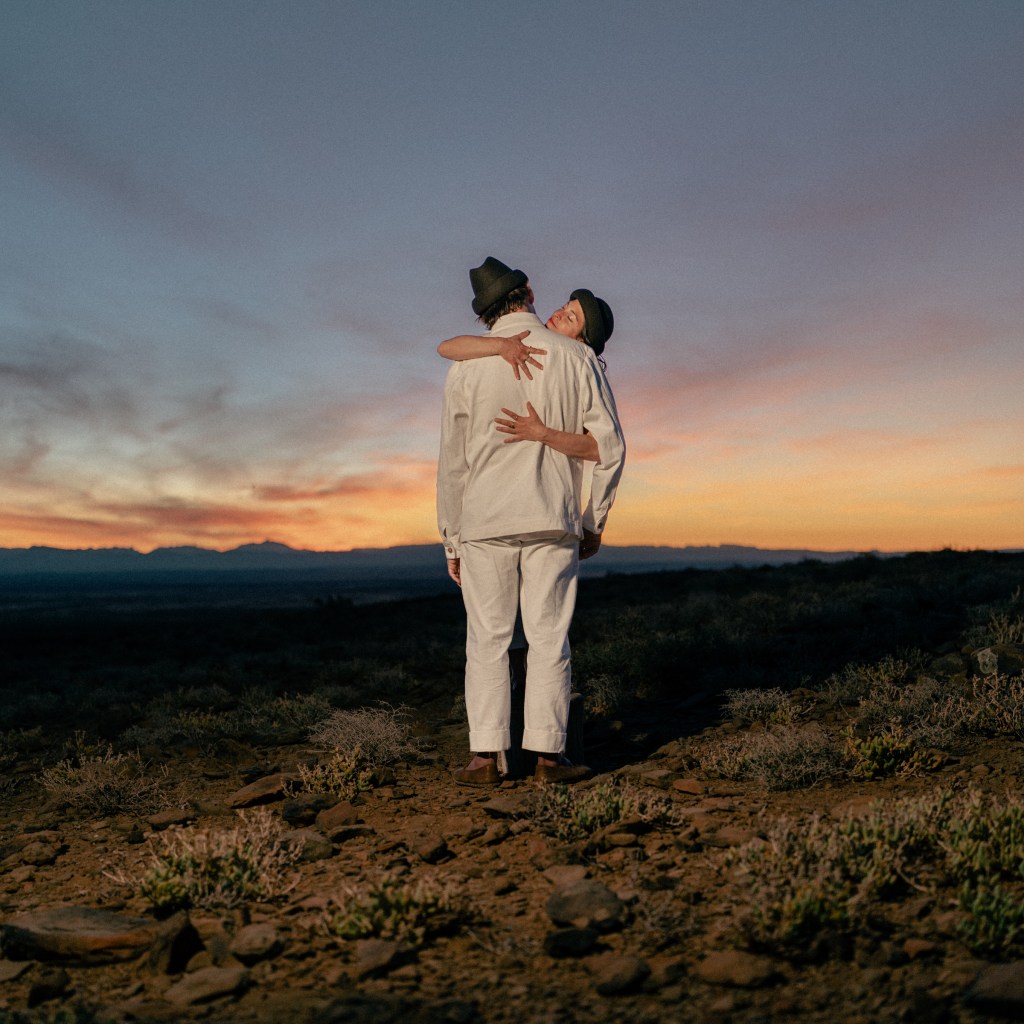
When it comes to the themes explored in your previous work, what themes did the two of you project for Dawn and Dusk?
As I mentioned in my last response, I need more space to fully understand the work. And especially in the case of these two albums, because there’s so much to process, I feel like I’m really going to need space, haha. I’m always in some way aiming for something hard to express in a tasty sound bite. To me, and I think it’s similar for most artists, the art is a way to express something that can’t be described with just language.
We are going beyond logic, even the figurative. There’s something about the combination of the words and the music that we can say oh it’s happy or it’s sad or it’s this or it’s that but at the end of the day it’s almost impossible to actually describe what it’s about without listening to it. I do, generally speaking, aim for something transcendent. However, that feels like it contains all human emotions, is almost like experiencing life itself, and takes you on an emotional journey through as many parts of that spectrum as possible.
How do you hope listeners experience Fata Morgana as a complete work? Should they listen chronologically, or does each half stand alone?
Experience it however you can! It’s obviously a lot to ask of people to go sit through two albums, but I do think it rewards being listened to in that way. It really is designed as a journey. But you could also see it as a movie and its sequel.
Looking at your discography from your self-titled debut to now, where does Fata Morgana fit in your artistic trajectory?
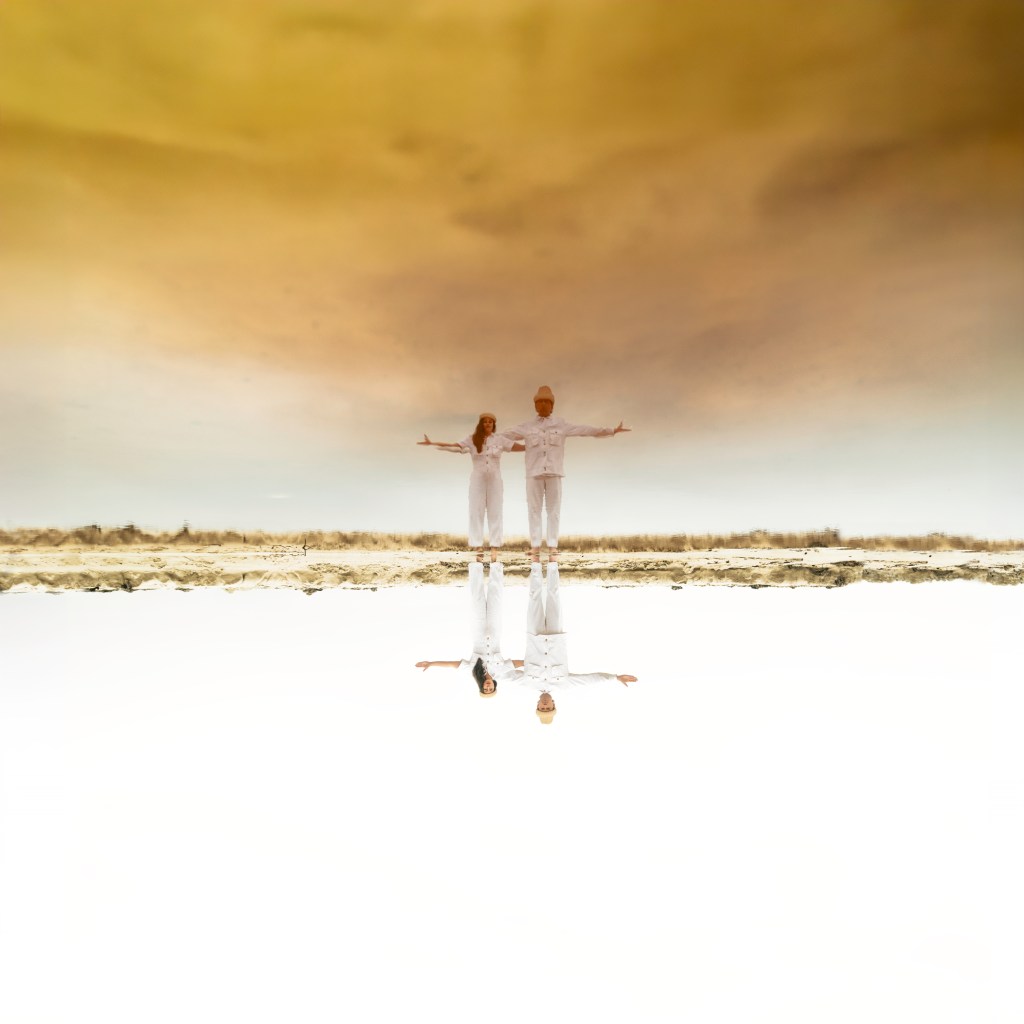
To me, it really feels like the next level. The scale of the musical journey, the production, the strings, the thinking of everything on all these different levels, and then on top of that, the whole visual journey we went on, which was basically as epic as the making of the album itself. For anyone who doesn’t know, we made all the visuals for the album ourselves with a friend, Xander Ferreira.
We’ll actually be releasing a whole documentary about this process in the next couple of months. It was such an insane process. We set out to make a standalone visual for every song on both albums, and we actually achieved that, even though at first it seemed totally insane. I also edited and colour-graded basically all the visualizers (not the music videos), and before this album I had no idea how to do any of that.
I just really feel like we’re on a tear right now, creatively speaking. Fata Morgana and Utopia are two albums on which I can confidently say there were no compromises; we took everything as far as we could and executed a full creative vision.
I’m, of course, very proud of our older albums too, but looking back, we were dealing with so much external pressure and people’s opinions and expectations from labels and others, which I think, in some ways, affected the vision at times. Not that we ever actively compromised, but there was a lot of noise around, so you can’t help but be affected by it. These albums were made entirely on our own, and, to our current label, Nettwerk’s credit, they never tried to change anything or guide the process. So I am very proud of that.
To cap things off, St. Lucia announced their Spring 2026 North American headline tour, with stops across the East and West coasts. For the first time, St. Lucia will perform a special 2-set show every night, with no opening act.
For tickets, please visit https://www.stlucianewyork.com.