

When a K-pop–fueled demon hunter popped up on our Netflix queue during a Vegas holiday, I figured it’d be a late-night family watch. Instead my 8‑year‑old daughter, my 10‑year‑old son and I were glued to the telly—and woke up to watch it again. It became our summer go-to and, no surprise, a full-on cultural moment. By episode two they were humming the chorus in the car; by the third watch they had full choreography. Once we were back home, it immediately slipped into the playlist queue, became part of morning routines, and quickly rose to the top recommendation: ‘You have to see this—it’s so good.’
What hooked us first was the music. These songs burrow in the way only perfect pop can—one minute we’re doing kitchen dance breaks to a stadium-ready anthem, the next we’re sitting in the dark with tissues through a heartbreaking ballad. The soundtrack blends Korean melodic sensibility with global pop polish so tracks work as both viral dance challenges and sleepy-night singalongs. It’s not nostalgia theater: the idols at the center—HUNTR/X and collaborators—reclaim the spotlight, proving Asian performers can dominate charts and hearts at once.

The numbers back what feels true in our living room. Billboard tracked the soundtrack’s dominance: HUNTR/X’s “Golden” hit No. 1 on the Hot 100 and pushed for a fourth week at the summit, while the album became the first soundtrack in Hot 100 history to place four songs simultaneously in the top 10. The record sits at No. 2 on the Billboard 200 and the soundtrack has amassed billions of streams. Netflix’s Tudum confirmed the film’s streaming clout too: KPop Demon Hunters is the most‑watched English‑language Netflix film of all time, with more than 236 million views—outranking Red Notice. There was even a sell‑out sing‑along theatrical run across multiple countries. Have you danced to “Soda Pop” by the Saja Boys yet? It went global—Novak Djokovic even referenced it after the U.S. Open, saying, “For Tara. Soda popping into semifinal.” This is not a blip; it’s a phenomenon.
On screen, the plot moves with the sleek confidence of a midnight anime marathon crossed with a Saturday‑night concert. A trio of pop idols double as demon hunters in a neon city where monsters feed on fear and isolation. It’s flashy—swords, rain‑soaked rooftops, choreography that stops your breath—but the heart of the story is quiet and humane: fractured families, public shaming, the slow erosion of trust. The villains aren’t evil for shock value; they’re symptoms of social wounds, and the heroes defeat them by repairing what’s broken—rebuilding bonds, reclaiming voices, and reminding fans why art matters. Darkness exists to make the light feel earned.
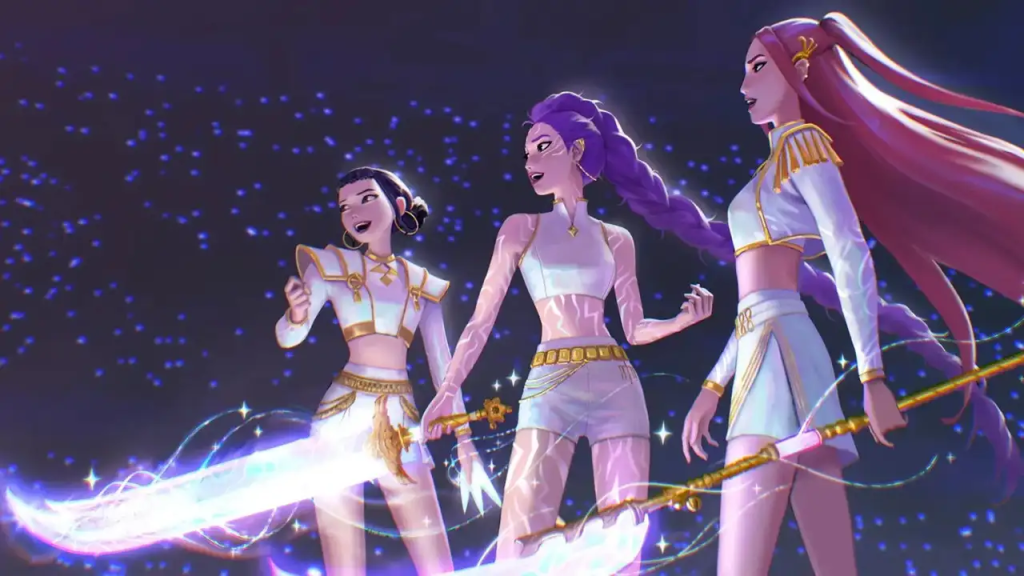
Watching it as a parent was unexpectedly perfect. My daughter wanted the glitter and costumes; my son wanted the action. I wanted a story that trusted us not to be spoon‑fed. We paused to talk about fear, responsibility and bravery; my kids asked hard questions and weren’t frightened into silence. It scratched the same nostalgic itch I had for anime openings as a teen but with sharper choreography, theatrical production values, and a fandom cycle that turns songs into global rituals overnight. It became our ritual—car singalongs, breakfast debates over favorite tracks, and midnight replays on road trips.
This show matters beyond family viewing. It’s a reclamation—of Asian talent, of musical storytelling, of a kind of pop spectacle that centers empathy. Coverage in Billboard, Netflix Tudum and Parade highlights both commercial success and critical buzz: chart records, massive streaming numbers, a 97% Rotten Tomatoes score cited in coverage, and industry talk that Sony and Netflix are negotiating a sequel. With a soundtrack that reshaped the Hot 100 and a film that pulled families into sing‑alongs, studios will want more.
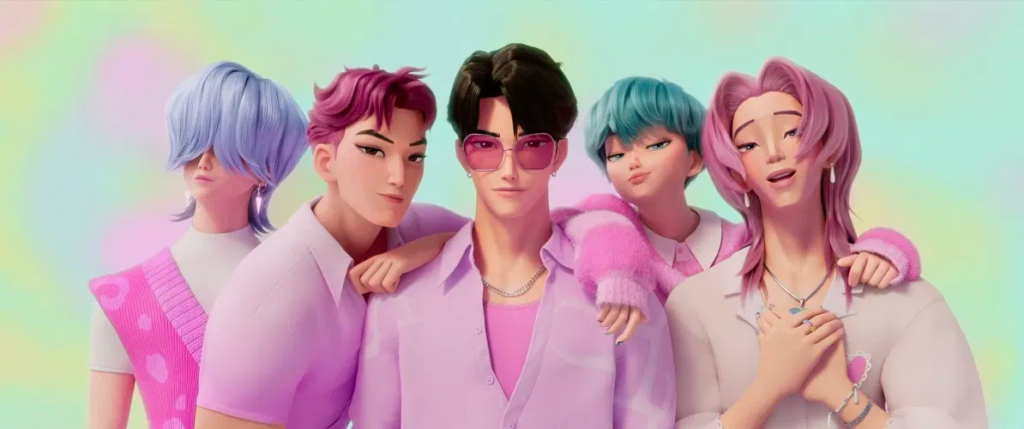
If you haven’t watched yet, expect a slick, emotional, catchy ride that appeals across generations: moms who remember late‑night anime devotion, queer fans who live for kinetic performance and camp, teens who live on TikTok choreography, and anyone who loves a good pop hook with stakes. It’s messy sometimes, tender often, and relentlessly rewatchable.
What’s next? Industry chatter—backed by reporting in Parade and Billboard—suggests a sequel is likely. Expect teasers and OST snippets to drop on socials first, dance challenges to explode, a sequel announcement within a year, and a theatrical or streaming release about 12–18 months after that. Spin‑offs, merch, and a kid‑friendly animated take are all plausible—this IP was built to expand.
From a 43‑year‑old millennial/gen‑X mom’s vantage: this film gave us genuine family fun, a killer playlist, and the kind of pop‑culture moment that actually unites people. Stylish, sincere and smart, it’s a sugar rush with bite. We’ll be first in line for the next movie and album. Homon will be saved again—and my kids will already know the chorus. Clear your playlists and your calendars: the sequel is coming, and it’s going to be worth the wait.
Visit Netflix.com for updates on what is next for Huntrix!