We sat down with Carol to explore how Angkan intertwines Filipino heritage with global sensibilities, her journey from fast fashion to slow, conscious luxury, and the values that continue to guide her vision.
Fast fashion has often dictated the course of trends—nowadays, it’s a microcosm of what’s considered viral or noteworthy. Specific “cores” (as the youth now call them) usually happen for one minute, then move on to the next. This is where Angkan (a Filipino word that means tribe or community) steps in as a slow, community-rooted heritage brand shaped by heritage and sustainability.
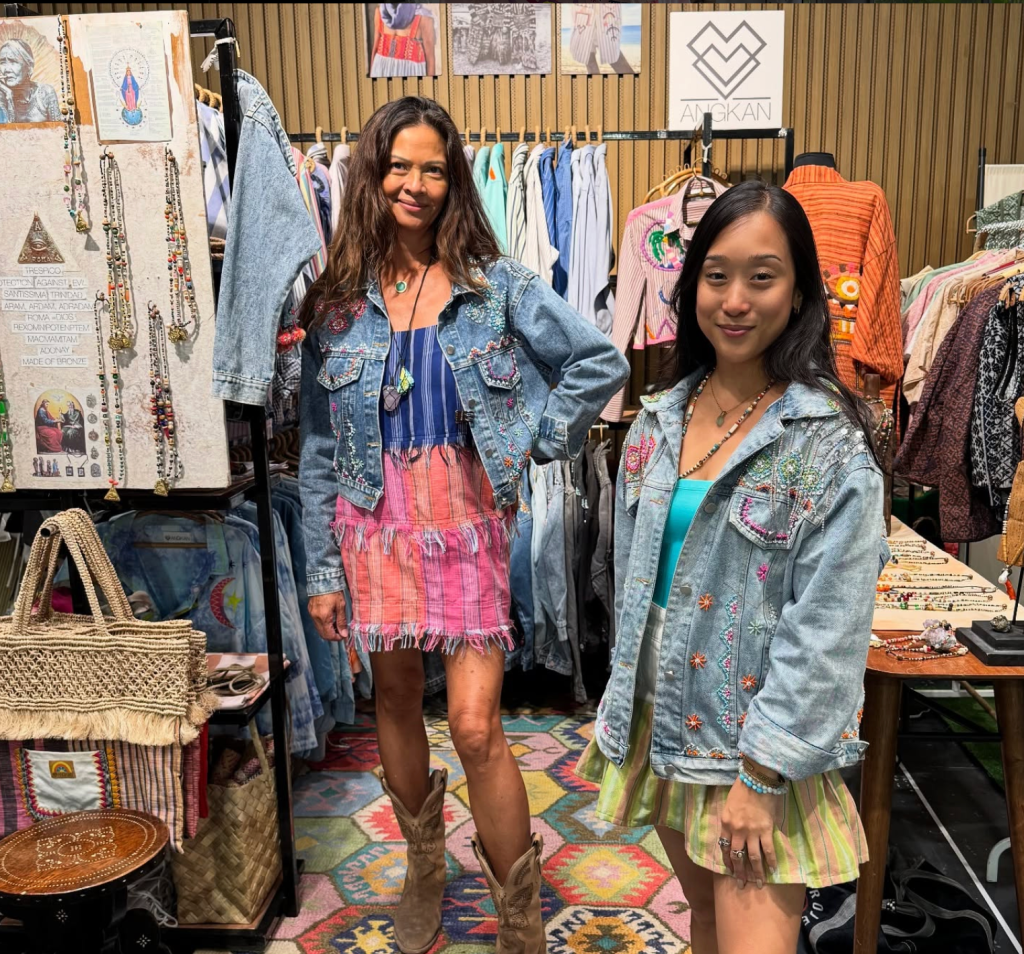
At the center of it all is Carol de Leon, their creative director, whose life has been dedicated to having a career in fashion. During her formative years, she has always appreciated the workings of design and later on fashion. She recalls, “Ever since I can remember—maybe at four years old—drawing was a big part of my life. My dad was an architect, so I’d play on his big drawing table at home. At school, teachers noticed I was a budding artist and often asked me to make illustrations. I especially loved designing dresses.”
Growing up in Los Angeles, she would watch chic old Chanel TV commercials—which for a young girl struck her as something so elegant, so European, even though she had never been there. Since then, that glamorous image of fashion stuck with her, and by her sixth-grade graduation, she was already sketching her own dress designs.
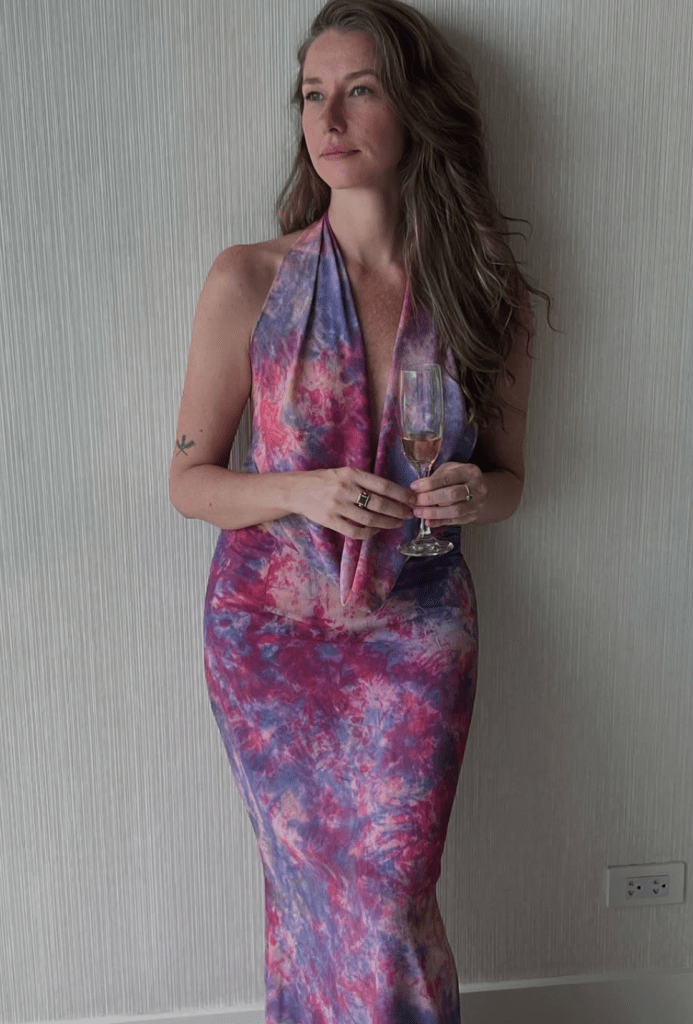
But a special moment with her mother eventually led her to fall more deeply in love with fashion. She further elaborates on this, vividly remembering that moment, “My mom took me to a local seamstress where I picked the fabric and watched my sketch turn into a real dress. She came from the Philippines, where people often had their clothing custom-made—true slow fashion—so she encouraged my creativity.”
Since then, she made that dream into a reality, working across the four major fashion capitals around the world: New York, Los Angeles, Milan, and London as a designer for several brands and eventually her own line. “Looking back, those early experiences—custom clothing, handmade details—set the foundation for my career. Of course, I also lived through the ’90s, a decade known for its excess and fast fashion boom. But now, I’ve come full circle, returning to the Philippines and embracing sustainability and rejecting disposable fashion. I feel blessed to have always known my calling, and even more blessed to apply it today in ways that help communities.”
As time went on, however, Carol’s perspective changed. She no longer felt satisfied with designing to meet goals, and it was during the rise of e-commerce in America that she made a big, unforeseen turn. Turning away from hyper consumerism, she instead took a step towards a conscious way to shop where people and marginalized communities can have a chance to earn fair wages, and artisans can have their work exposed and appreciated by like-minded people across the globe.

“You know, at one point, my own footwear line sold 150,000 pairs in its first season, bringing in $6 million. The success was incredible, but I began to feel uneasy. We were importing wood from Russia and France to make shoes, chopping down trees just to meet growing demand,” she said, explaining how that one experience set the tone for how Angkan came to be.
Then came the pressure from big department stores—”We sold out, now double the order.” Any designer dreams of that moment, but for Carol, it felt greedy. She put the business on pause because she couldn’t figure out how to make it sustainable.

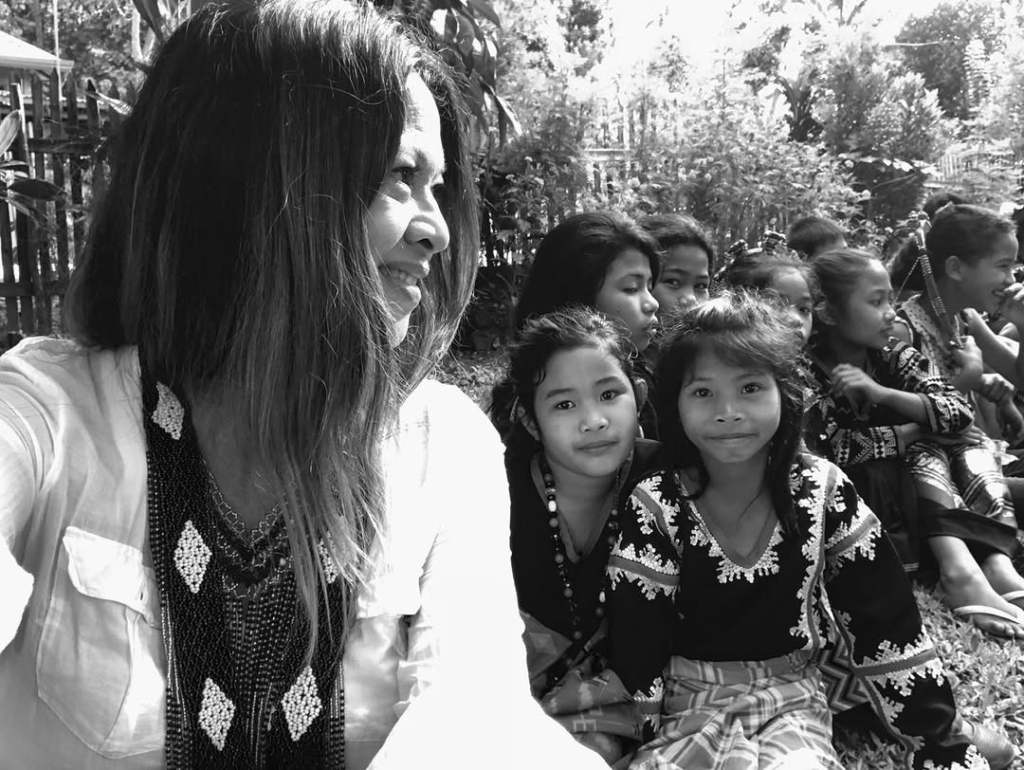
That’s when she found herself reconnecting with the Philippines. Through the Department of Trade and Industry, she was able to visit 11 indigenous communities. “Initially, the mission was to translate traditional attire into commercial products. But what I truly learned was how these communities lived in harmony with nature. It completely shifted my thinking—away from mass production toward slow, conscious fashion,” she says.
At the beginning, though, that wasn’t always the case. She explains, “Angkan was actually trademarked in California for export, because I didn’t expect local buyers to afford the real cost of handmade work. But the pandemic shifted things, and we built a Philippine market first.”
Even now, when investors suggest scaling up, she’s cautious. “I don’t want to pressure communities into mass production. If we grow, it must be by activating more communities, keeping the one-of-a-kind nature of each piece.”
When it came down to creating Angkan’s entire design philosophy, Carol wanted to merge different facets of her life—from her identity as a Filipino-American who grew up in California and later spent half her life in Italy. As a result, the brand began to incorporate Filipino history and symbolism into every piece—whether it’s talismans, traditional patterns, or decolonization themes—while ensuring the designs appeal internationally. “Growing up abroad, I wanted to show the world that Filipino design is more than wood carvings or tourist trinkets. We can create luxury, artistry, and modern resort wear that holds cultural value.”

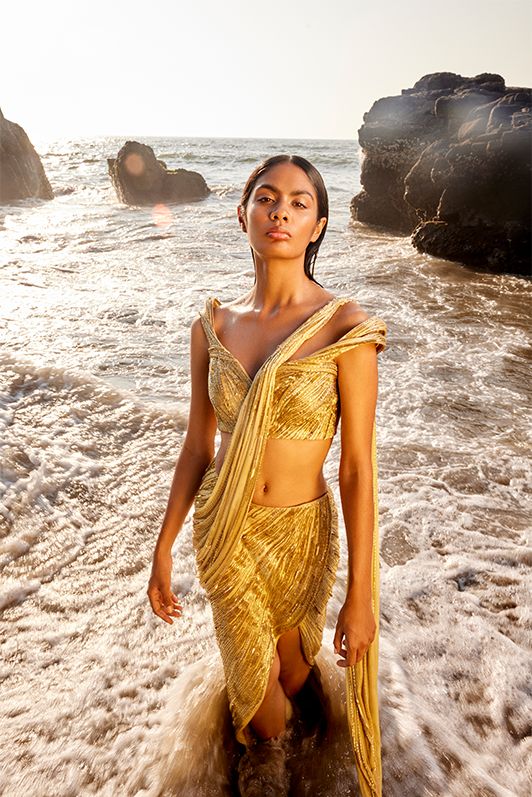
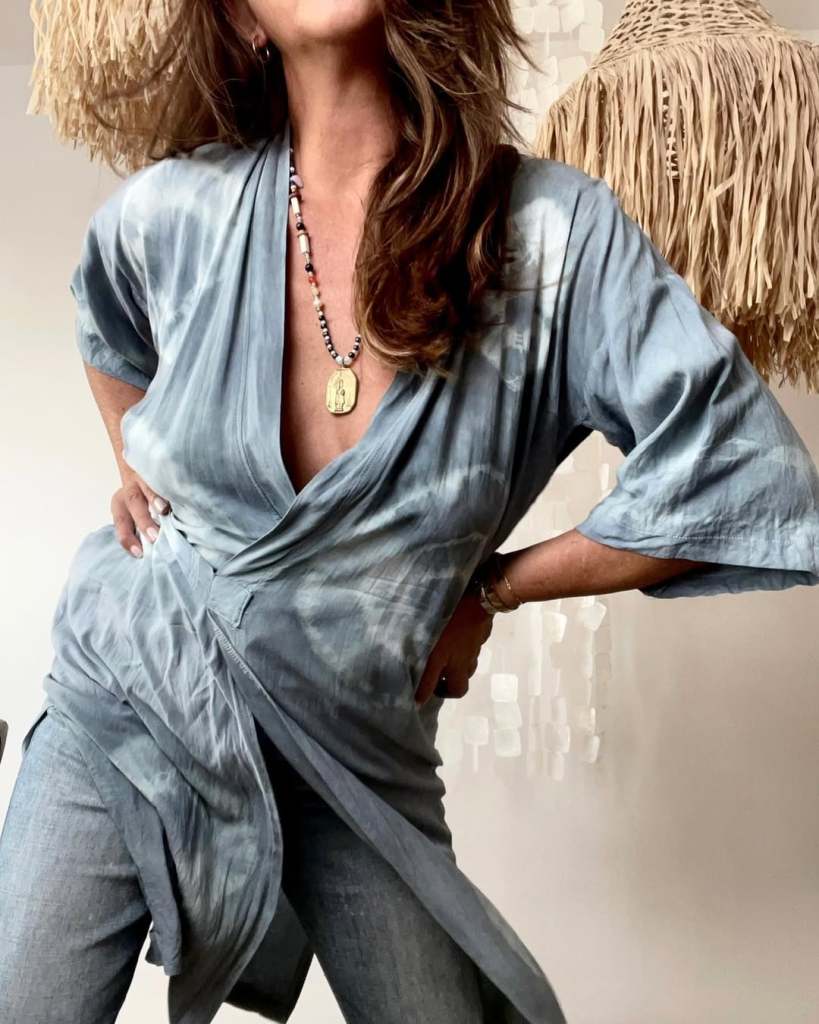
Some of her pieces also showcase her work with various indigenous communities around the world—not just the Philippines, but even extending to Mexico. Her dreamy kaftans, Banker shirts, jackets and dresses incorporate a series of hand-dyed fabrics using Philippine indigo and iconographs from the Bagobo tribe, all while creating unique resort wear that withstands the test of time.
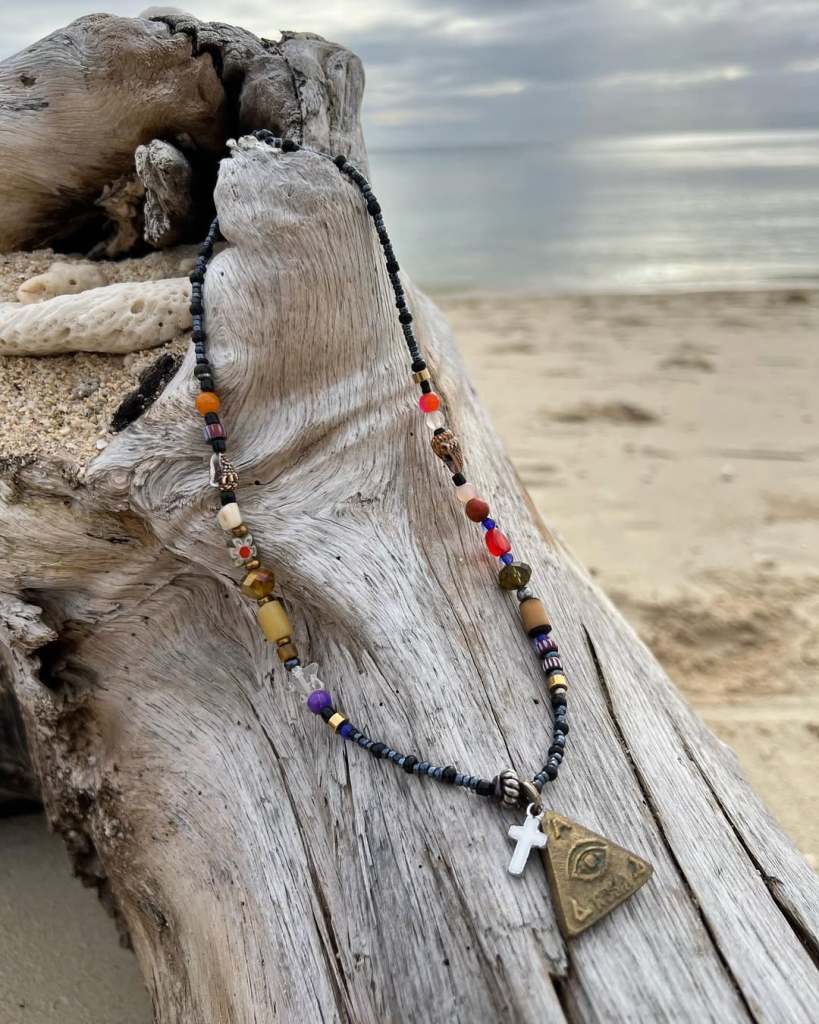
At the center of it all, Carol leans closely to the spiritual nature of the world. In fact, one of the first products that came out of Angkan was a series of energy cuffs, which used magnets to balance out the qi (energy) in one’s body. This is something that she further expounded on in the form of the agimat necklaces (talismans) that were used to protect the wearer from evil and to give the wearer power. The history of these amulets dates back to the colonial period, which was a blend of indigenous beliefs and Christianity.
“I first received one as a gift without knowing its meaning. I reframed it from something ‘mysterious’ or ‘scary’ into something empowering, incorporating beads, pearls, and dismantled rosaries. Each one carries layers of symbolism—history, decolonization, and energy. Sourcing authentically was key. I traced one supplier back to Cavite, where original molds are still used. For me, it’s not just a product—it’s a conversation starter and a connection to our roots.”
This method also applies to how Carol would create her clothing lines, according to her, it’s of the utmost importance to use pre-loved or surplus natural fabrics—100% biodegradable and transform them into new designs. “Then we activate artisan communities across the Philippines, providing materials, design guides, and training. When one community gets enough work to sustain itself, we move to activate another. It’s flexible, scalable, and ensures livelihood without overproduction,” she said.
Despite all the noise in the industry about what’s trendy or not, what sets Angkan apart in the crowded fashion landscape isn’t just its aesthetic—it’s the philosophy that underpins every decision its founder made. When asked about the challenges of running a heritage-focused fashion brand, Carol’s response revealed a mindset that prioritizes purpose over profit, community over competition.
“Honestly, very few,” she says when discussing any challenges she had. “When your ego isn’t driving decisions, you remain adaptable and solution-oriented. A ‘challenge’ might be something as straightforward as replacing a broken sewing machine. The secret is creative adaptation while keeping sight of the ultimate goal: supporting communities.”
Looking ahead in the next five years, Carol is content with the brand’s current position despite it being at a crossroads, which Carol calls “a moment for reflection and re-evaluation.” The brand has attracted attention from major retailers, including interest from New York stores—the kind of opportunity that might cause many designers to leap without looking. Yet her response reveals the thoughtful deliberation that has characterized Angkan from its inception.
“Angkan could remain exactly what it is—artisan-driven, creating one-of-a-kind pieces,” she explains. “We’ve had interest from New York retailers, but I’m resistant to wholesale models that demand uniformity. Perhaps a diffusion line could work, but only if it honors our core values.”
It shows a deep understanding of what makes Angkan special. The brand’s strength lies not in its ability to mass-produce consistent products, but in its celebration of individual artisanship and cultural storytelling. Each garment not only carries a unique aesthetic, but it also tells the story of the hands that made it and the traditions that inspired it.
For more on Angkan, please follow their Instagram @angkanworld
All images belong to Carol de Leon and Angkan