
MANILA, PHILIPPINES – On a special November night, the Goldenberg Mansion opened its doors once again hold the second iteration of the Goldenberg Art Series. This time around, two of the country’s most compelling contemporary artists came together, for a three-day exhibition that explored the themes of the past, present, and the future amidst the chaos and beauty that is part of the complexity that surrounds Filipino identity, aesthetics and heritage.
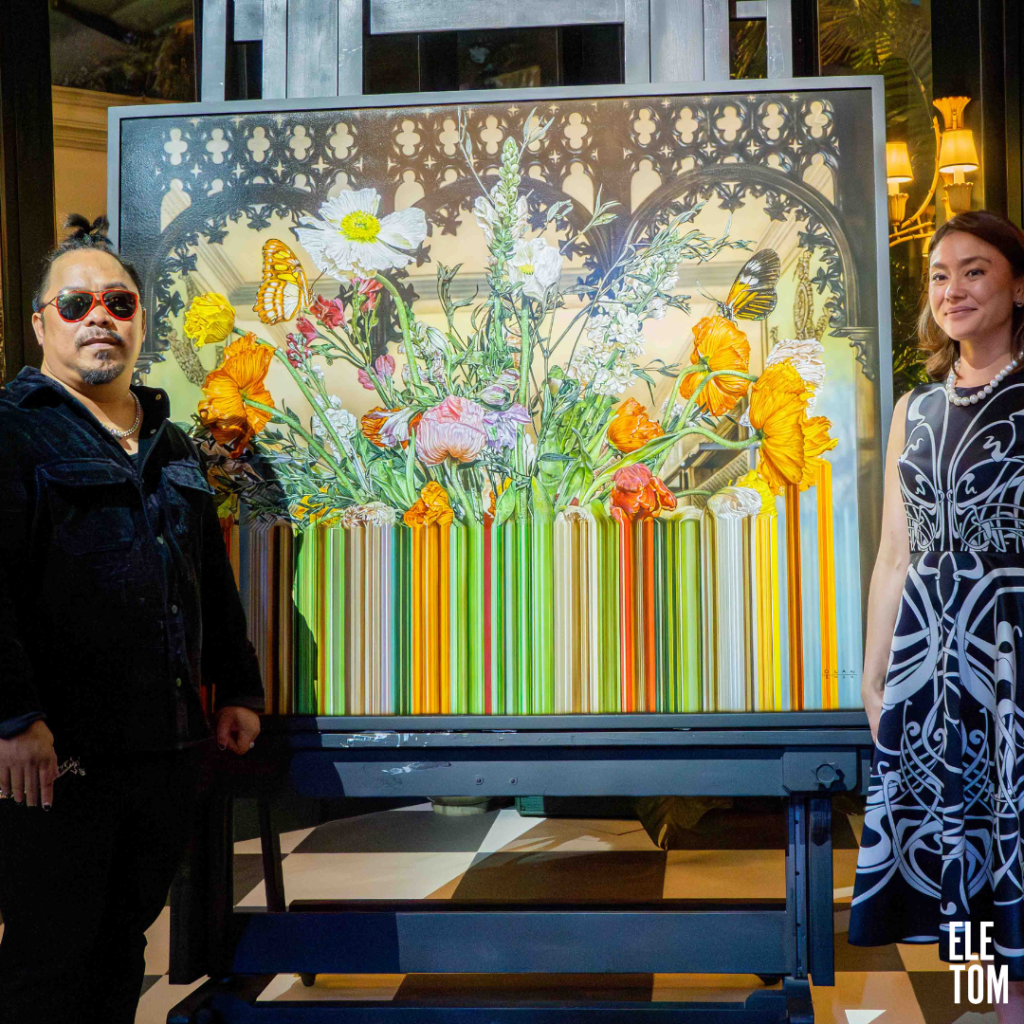
Olan Ventura: Fractured Blooms & The Art Of Disruption
At first glance, Olan Ventura’s still lifes appear familiar, touching on the dark florals that reminds us of the masters such as Jan van Huysum, whose works became famously well-known around the world during the late 18th century.
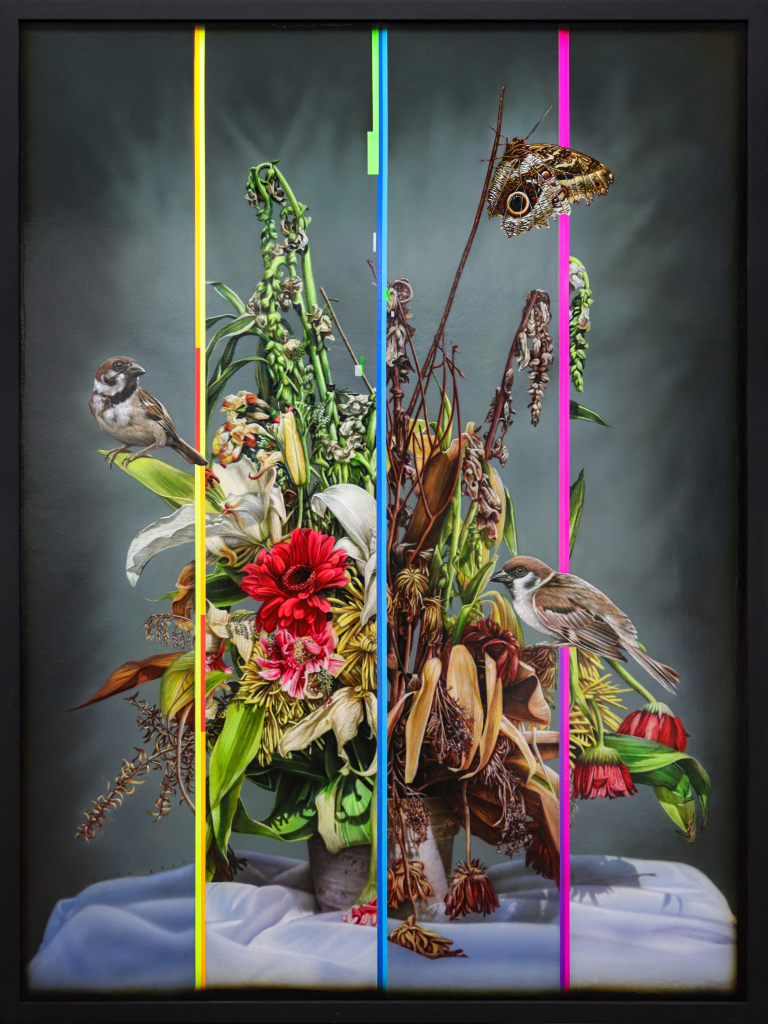
However, a closer look reveals a different tale: Ventura’s floral compositions are anything but still and immovable. In “Prismatic Petals,” his flowers are dissected and interrupted, sliced into pieces by bands of vibrant color that evoke the glitch of a faulty screen or a printer’s error. His work mediates the fragmented nature of contemporary existence, where beauty and order are continually interrupted by the chaos of technology and modern life.
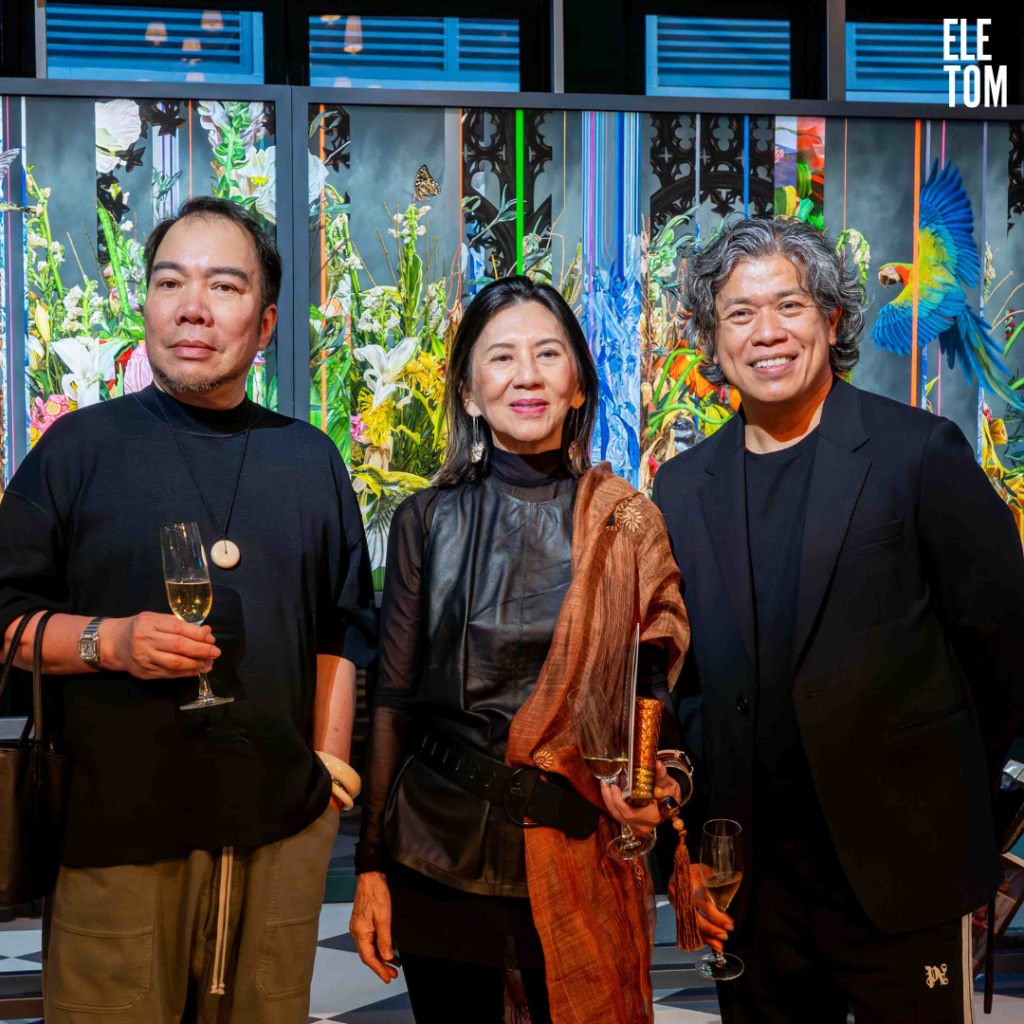
“Sometimes you have to destroy beauty in order to create a new kind of beauty,” Ventura says of his process. His bold, deconstructed blooms force viewers to engage with the tension between nature and artificiality, between the calm of tradition and the frenzied pace of today’s world.
One of the standout pieces in the exhibition is a large-scale diptych, where delicate petals and stems are bisected by vertical bars of color. The composition feels digitally manipulated, as though a printer has malfunctioned mid-task. The effect is unsettling, but oddly mesmerizing. Ventura’s flowers are delicate and resilient, thriving even in their fragmented state.
The “Prismatic Petals” collection can be seen as a commentary on the instability of beauty in the digital age, where every image we consume is subject to disruption, interference, and reinterpretation. Ventura’s use of fragmentation mirrors our contemporary experience: we live in a world of fractured realities, where the natural and the synthetic overlap, and where even the most timeless forms — like a simple flower — are filtered through the lens of technology.
Ronson Culibrina: Revisiting The Past, Rethinking The Present
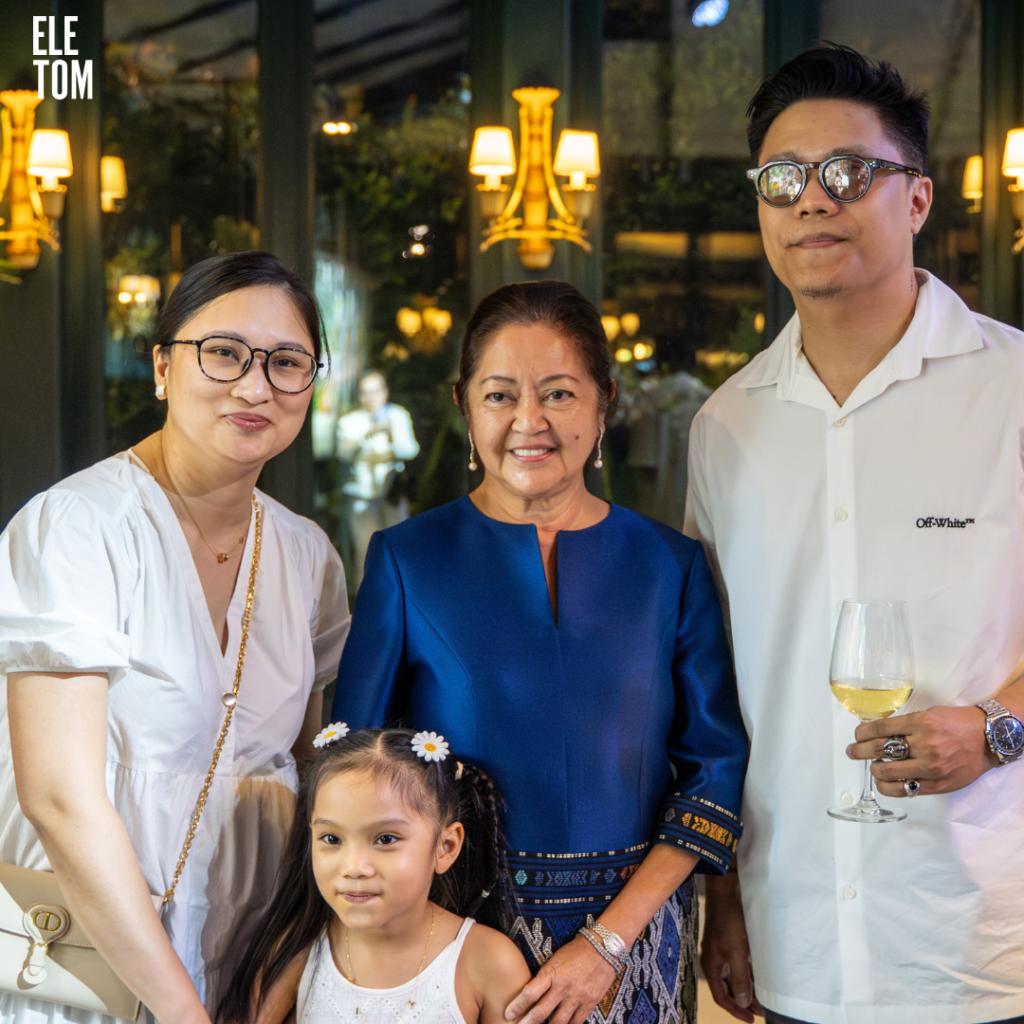
Ronson Culibrina offers a radically different, yet equally provocative, take on Filipino identity. His latest series, “Marahuyo,”, an ancient Filipino word that means “to be enchanted, reinterprets the iconic works of Fernando Amorsolo, the Filipino master known for his idyllic rural scenes and portraits of the feminine form. But where Amorsolo romanticized these visions of a simpler, pre-colonial Philippines, Culibrina distorts and disrupts them, layering contemporary pop culture symbols onto the pastoral landscapes.
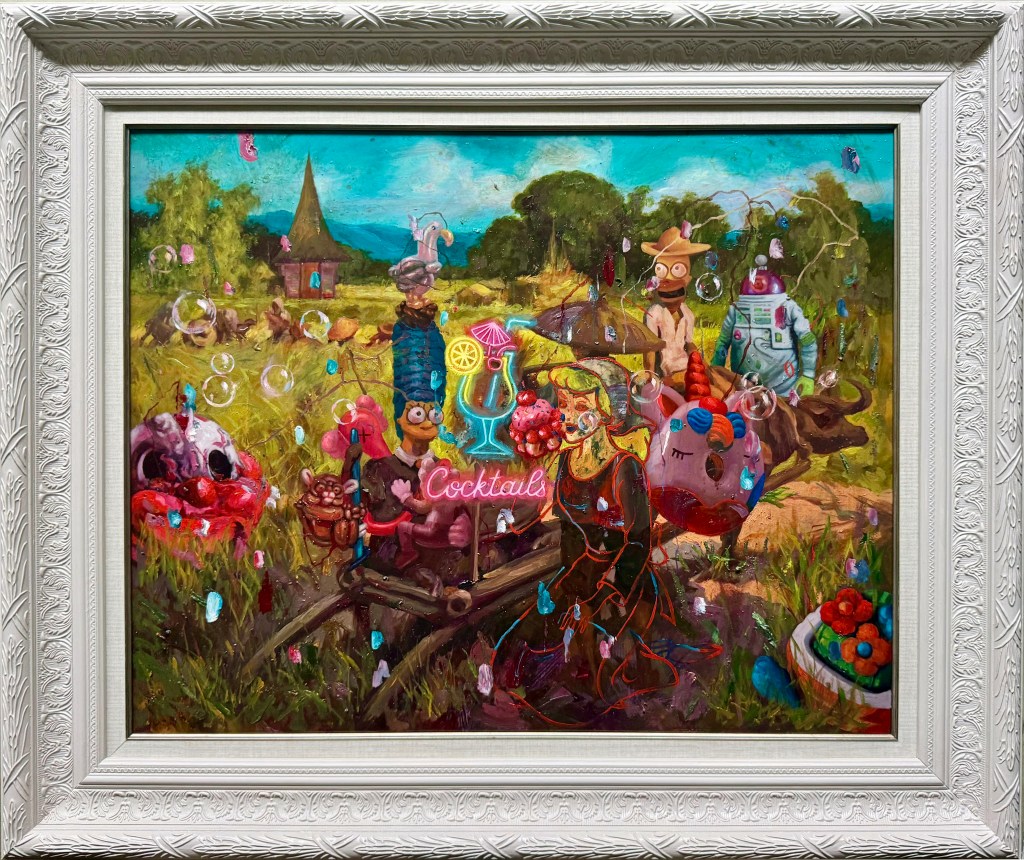
Culibrina’s “Siesta,” for instance, is a kaleidoscope of dots and splashes of Coca-Cola red. Elsewhere, in “Piging sa Ilog,” a once serene riverbank scene is now splattered with bursts of color, challenging the viewer’s perception of Amorsolo’s pristine portrayal of Filipino life.
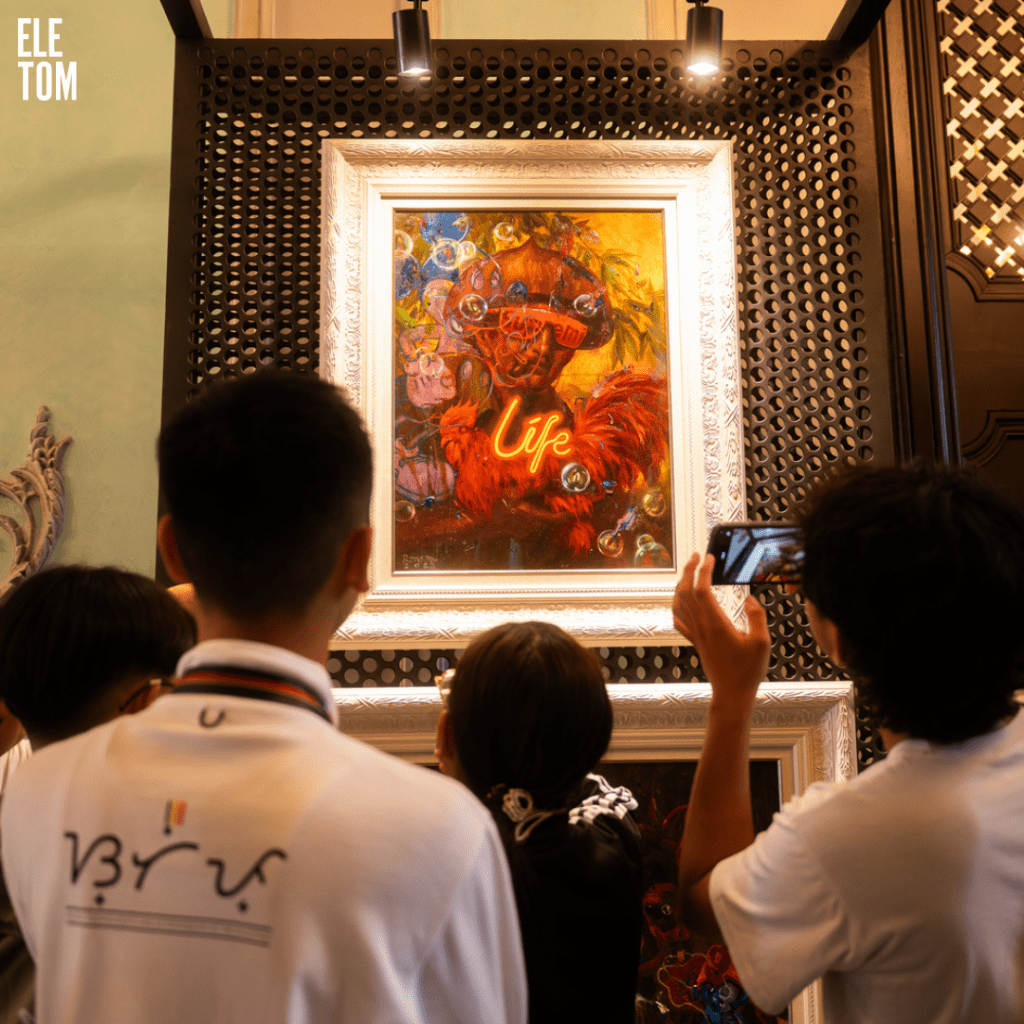
The work feels like an explosion of cultural references — a chaotic fusion of the old and the new, where images from the East and West collide. The traditional rural Philippines meets modern consumerism, and the resulting clash is both jarring and illuminating.
For Culibrina, it is clear that enchantment is not a passive experience. His take on Amorsolo’s works ask us to rethink the past, to question the narratives we’ve been handed about Filipino identity. By embedding global cultural symbols within these quintessentially Filipino scenes, Culibrina invites viewers to consider how external influences shape, and sometimes distort, national identity in a globalized world. “I grew up with these images of rural life,” Culibrina explains, “But as I’ve grown, I’ve realized that the Filipino experience is more complex. It’s not just about nostalgia; it’s about how we adapt, how we blend traditions with modernity, and how we navigate an increasingly interconnected world.”
A Dialogue Between Tradition And Innovation
What links these two exhibitions — Ventura’s fragmented florals and Culibrina’s pop culture-laden Amorsolo interventions — is a shared fascination with disruption and chaos. Both artists grapple with the tension between the old and the new, the natural and the digital, the local and the global. And yet, within that tension, both find moments of beauty and clarity. Resonating with the pair’s aesthetic is the Goldenberg Mansion, a space that itself embodies a dialogue between history and modernity. Situated in the heart of Manila, the mansion is a testament to the city’s colonial past, now reimagined as a vibrant cultural hub.
This exhibition provided a window into the evolving landscape of Filipino art. As the country grapples with its place in a globalized world, artists like Ventura and Culibrina are leading the way, challenging us to rethink what it means to be Filipino in the 21st century.
For visitors, the exhibition offered more than just aesthetic pleasure — it is an invitation to engage with the deeper questions these artists are posing. What does it mean to preserve tradition in a world where everything is in flux? How do we reconcile our past with our present? And, perhaps most importantly, how do we move forward?
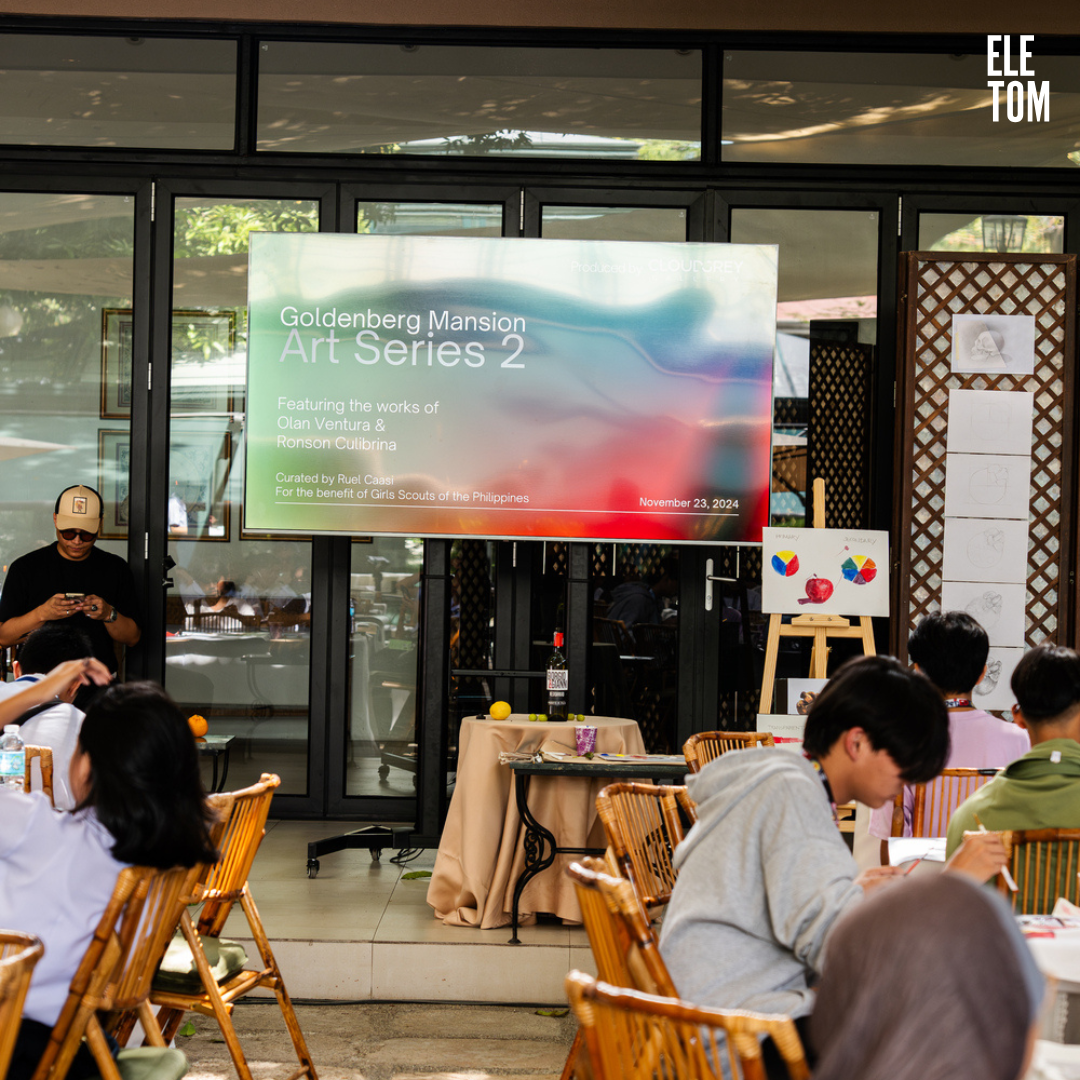
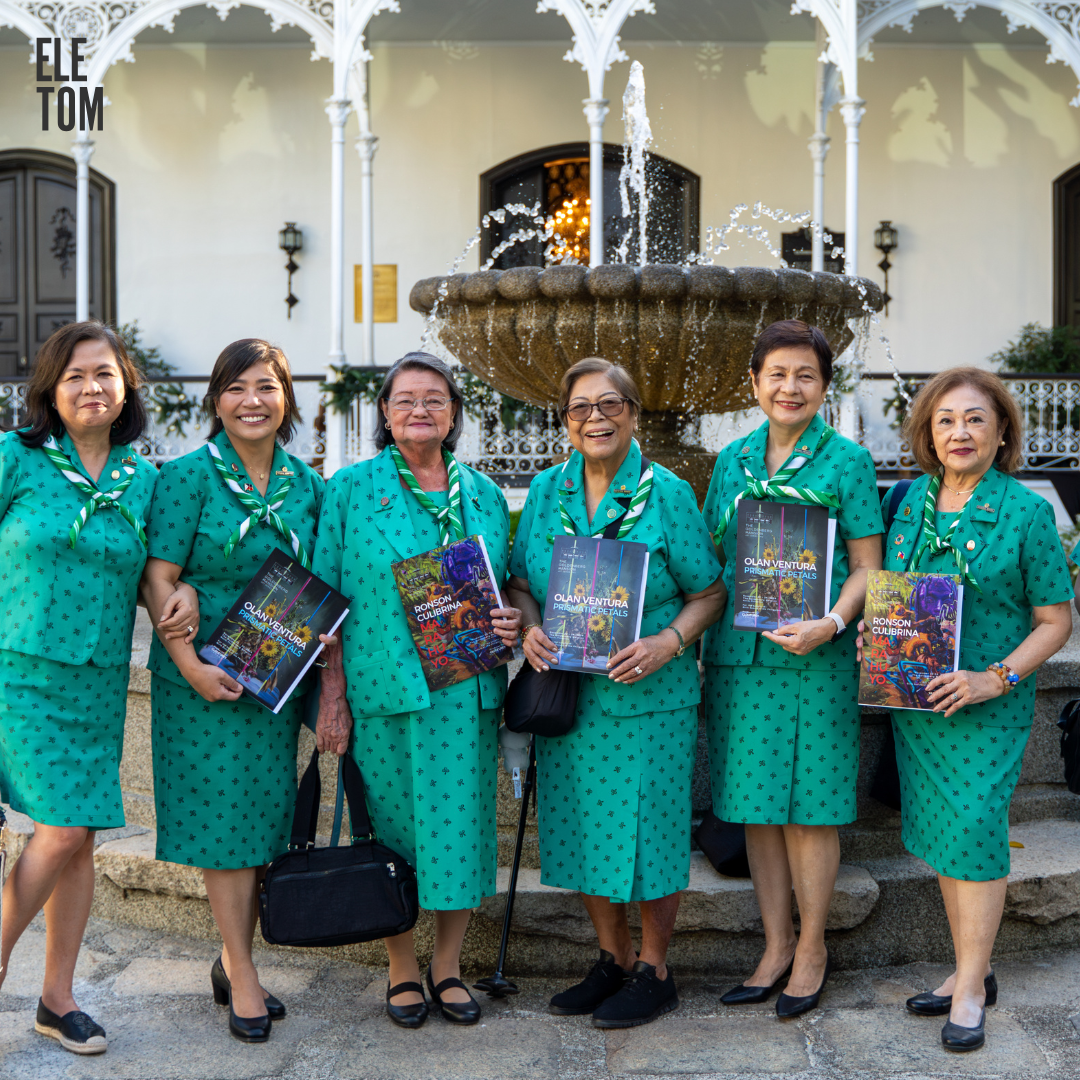
An exhibit walk-through and art workshop by Olan and Ronson was held at the Pavillion of the Goldenberg Mansion last November 23rd. It was attended by students and teachers from Victorino Mapa and Ramon Avanceña High Schools in Manila. The works of Olan Ventura and Ronson Culibrina are up for sale until December 24, 2024.
A percentage from the total purchased pieces will be donated to the Girl Scouts of the Philippines, a non-stock, non-profit organization that aims to provide continuous leadership training and opportunities for higher education to deserving Girl Scouts. For inquiries about the artworks, please contact 09628708507.