
For months, the mystery behind the identities of Sym Fera’s band members kept everyone on their toes. The band captivated listeners from the start with their genre-bending alternative rock sound, turning them into devoted fans who supported the duo by listening to their EPS and venturing to their cryptic shadow live performances that heavily disguised their identities; reports were circulating that even select attendees who were invited to their concert at the Lodge Room in Los Angeles were told to hand over their phones in sealed bags to prevent filming. Nobody knew who they were, and not even the record label they were signing at first knew who they were until they had already offered to sign them.

It was just this last month that their identities became public knowledge. Nick Simmons, the son of KISS co-lead singer Gene Simmons and singer-songwriter Vinnie Ferra, finally came out and said, “We’re the guys behind sym fera.” It was a happy revelation for fans who spent months trying to dig up information on the band online, ending speculation once and for all.
To others who might say that their anonymity was a clever artistic statement or a well-planned marketing gimmick, According to Nick however, it had nothing to do with that, “I really wish our anonymity was for a really cool reason, like some sort of artistic statement. But it’s mostly because Vinnie and I are burnt out and self-conscious But we just didn’t want to deal with it. We wanted to make something and have it either be liked, or disliked, and that’s it.”
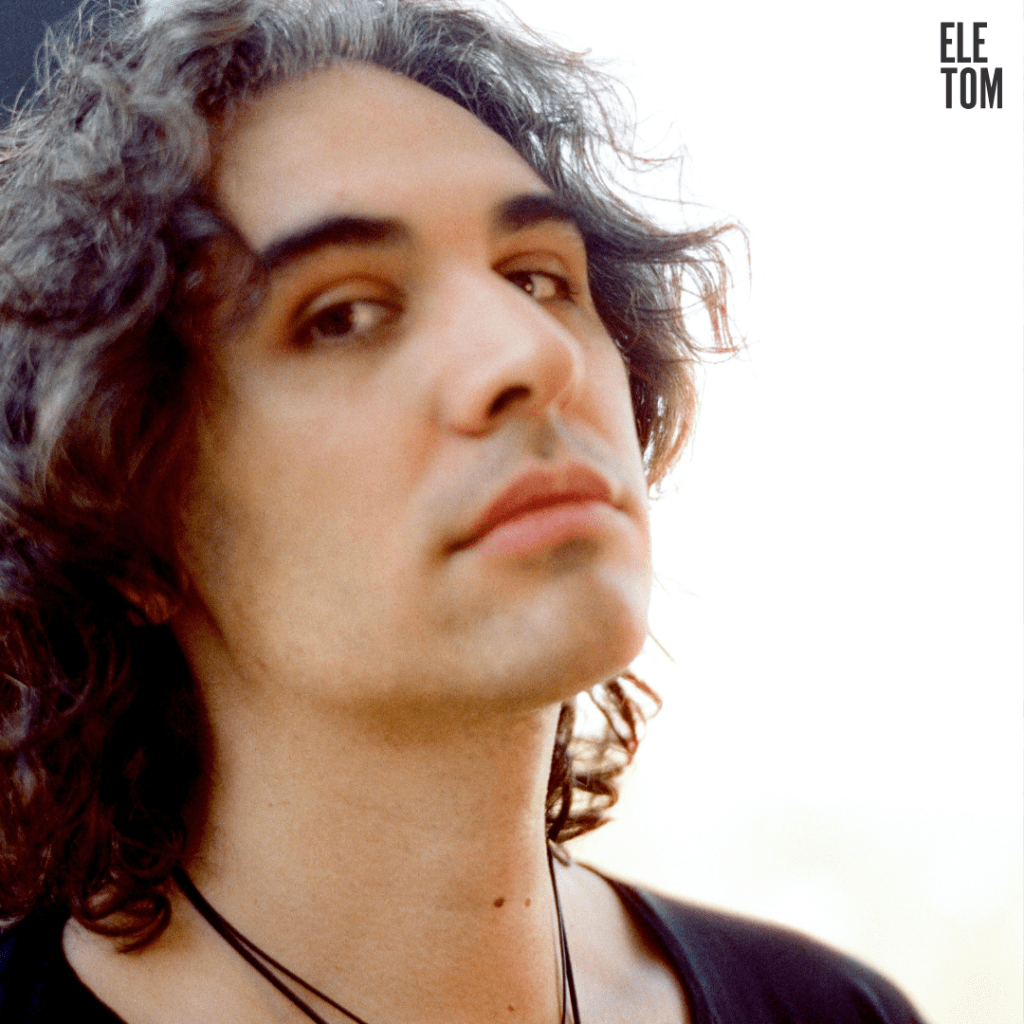
Sym Fera’s genre-bending and atmospheric sound speaks about the digital dystopia we are all in now, which can be overwhelming due to the amount of information coming through from all sides of the spectrum. He says, “Nothing about what we looked like, our ages, our family backgrounds, or any of that seemed like it was or should be relevant, and we felt like we’d never really know what people were reacting to if we didn’t isolate the music itself from everything else. There’s cowardice and hypocrisy there, of course, but I embrace both of those things because they are part of being a person. “
This paid off, with critics citing similarities between Sym Fera and bands such as Pink Floyd, James Blake, and Bon Iver. Comparisons that the duo gratefully wear on their sleeves,” I think a lot of our heroes are chimeras of their heroes, and their heroes before them, all the way down the line. I think it’s about the unique way you put the pieces together that makes something new emerge and create a new identity. And we definitely want something new to come out of the collage.”
The duo’s most popular single, “11/8”, featured on the hit Netflix series Ozark, is a commentary on exploring the intricate ways that social media distorts our way of thinking in more ways than one. Since then, Sym Fera has reimagined the single into haunting remixes.
For this special ELETOM exclusive, Nick and Vinnie sat with us to discuss their journey, music, and the creative process.
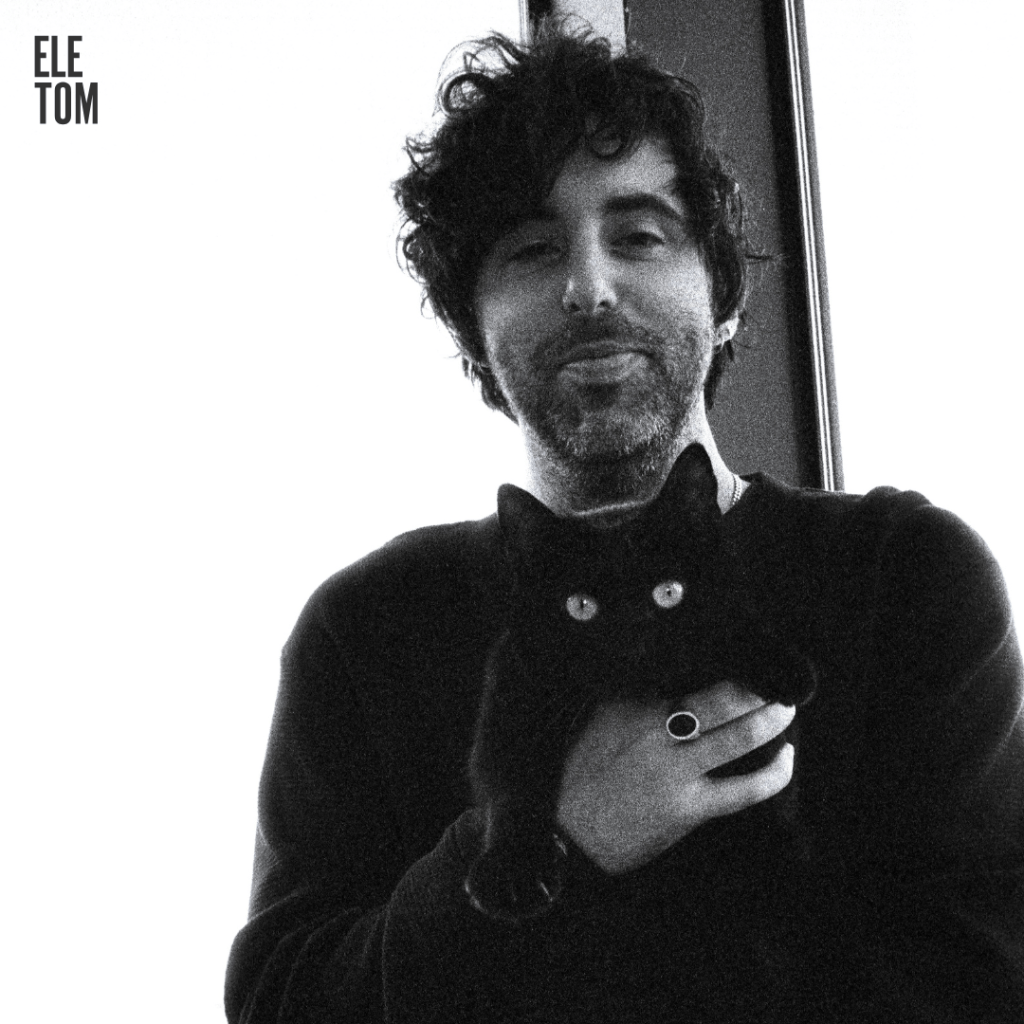
You’ve mentioned that the people who signed you didn’t even know your real names. What was it like navigating the music industry from behind a veil of secrecy, and how did that impact how you created and shared your music?
The music industry is difficult to navigate, even for people who are much more connected than we are. We just got very lucky that our then-manager submitted our demos to some of the most music-centric, passionate guys in the biz, Ian McEvily and Marc Jordan of Rebel One, now SOTA Records. They are powerhouses in the industry, but they’re also proper music fans, which doesn’t often go hand in hand.
They were ready to sign us based on how much they liked the music and nothing else, and after we met them, we realized that Vinnie and Ian already knew each other, and Marc recognized me from TV back in the day. We were all happy about that because we knew the deal happened for the right reasons, not because of our relationships or public image but because of what we made.
They were instrumental in launching this thing properly, especially in the quality of the music videos, and they were incredibly generous with us because they believed in the stuff. I hope they’re proud of how it turned out because I am.

Your music has been prominently featured in major TV shows like Ozark, The Resident, and Prodigal Son. How did those placements come about, and how did it affect the band’s visibility while maintaining your anonymity?
It was mostly SOTA, Ian and Marc, and their team that got us with a sync agency early on, and we’re still pursuing that lane. That’s where off-center, indie, and alternative artists really get to shine: in the visual medium. There’s no more 90s stigma with getting synced to television, it’s not the giant “sellout” move it used to be.
Now, it’s a way for more eclectic genres of music besides pop to get into people’s ears on a more massive scale. And we’re stoked with the show’s quality that tended to want our stuff. Our stuff is usually for something other than the dance floor or a club, it’s not peppy or eager. It’s often orchestral and moody and – in other words – a lot like a movie score. So I think we’ll try to lean into that going forward.

Your music videos and live performances have captivated audiences with their cinematic nature. What is the creative process behind those visuals, and how do they connect with the narrative of your songs?
I don’t know. Vinn and I always try to make stuff that we would like if we heard it, and we both like a lot of odd music and much sad bastard music, even though I don’t think we’re particularly sad people in our day-to-day lives. It’s a healthy catharsis, and the visual elements reflect that. I love ancient pagan mythologies, folktales, cryptids, and the feeling of old gods hovering on the fringes of our world. And I also love sci-fi dystopias, the dark fantasy mirrors that reflect where reality is headed. Somewhere between those two fictions – the never-real and the could-be-real – every book, movie, and song I consume somehow flirts with those. I guess you are what you eat.
At your Lodge Room concert in LA, you used audio-reactive lighting and collected phones to prevent filming. How important is the live experience to Sym Fera, and what do you hope to achieve by keeping the performances intimate and mysterious?
The live performance is important to me, of course, but it’s especially important to Vinnie because it’s what he does for a living as the owner of the Beehive company. They are a full-service touring company for several huge mainstream artists, so he feels tremendous pressure to show his ability to deliver that quality when it comes to his stuff.
Doing a show where the light or the quality of the performance seems amateurish isn’t really an option for him because he wants to maintain the reputation he’s built as one of the best in the business. As a creative, I’m lucky I benefit from his expertise there as any client would. All the artists I like have a strong visual identity anyway, so I’m happy to follow his lead on that.
Rolling Stone praised your single “Little Things” for its dark, orchestral qualities. Can you tell us more about the inspiration behind that track and what emotional or thematic elements you wanted to convey?
Little Things deals with the ripple effect of corruption and how the corruption of the individual can radiate outward into their future and out into the world. And there’s some obvious sense that the individual the lyrics are speaking about is, in some way, a politician or a politically involved figure. I always think of the people who eventually become symbols of corruption or otherwise polarizing political figures.
They were shaped by a series of dominos in society and their lives. The music video shows a powerful-looking male figure getting dressed and flashing back to traumatic or morally grey moments in his youth that echo his physical motions while putting on a suit. And it’s the song’s first line: “Little things, little lies, add up in time.” I’m not a conspiratorial person, I’m skeptical of that rhetoric online.
But George Carlin said it best: you don’t need a formal conspiracy when interests and incentives converge. That’s the second line: “little hands, little eyes, interests align.” When bad incentives act upon a system of otherwise unrelated individuals all acting according to their desires, they never even need to meet to converge on what eventually becomes corruption. Corruption can be a totally passive phenomenon, driven by the engine of human nature and simple bad economic and political incentives.
Your decision to keep a low public profile contrasts with how many modern artists engage with fans through social media. How do you view the relationship between Sym Fera and your audience, and do you see the anonymity continuing to evolve?
It’s not really important to the listener, or shouldn’t be, who the people behind the music are in relation to their families, their relationships, or whatever a tabloid might cover about a person. What matters is whether the song they made caused you to feel something or didn’t.
Everything else about a band should be subservient to that goal. Whether a piece of music is sophisticated or simple feel-good pop, it doesn’t matter. Either you felt something when you heard it, or you didn’t. Full stop. So whether we show our faces a lot more and let it all hang out or hide behind masks or shadows, it should all be to make the listening or watching experience the main point.
Your music crosses genre boundaries, blending alternative rock with electronic and orchestral elements. How do you approach genre in your songwriting, and do you find freedom or challenges in this genre-fluid space?
There’s freedom in the streaming era because everyone’s eclectic now. Many people my age or younger are not as loyal to genre cliques as they were. I’m convinced Billie Eilish would have been considered an “alternative” artist in the 90s, and now she’s considered mainstream pop. So that’s an encouraging cultural shift for my taste.
Like a lot of topics, Frank Zappa has the best quote on this:
“What I do is designed for people who like it, not for people who don’t. And I have no desire to inflict it on people who don’t want to consume it. And I’m committed to turning out as much of it as possible for the people who like it.” That’s basically what we think about everything.
As a duo, how do you collaborate creatively? Are there distinct roles each of you plays, or is it more of an organic, shared process when writing and producing your music?
We have a clear division of labor. We both sing, but I sing lead almost all the time, though I’m not committed to that always being the case. I usually write almost all the lyrics because I’m an obnoxiously verbose person and can’t shut up about anything.
We both write chords and the melodic backbone of the song. I do some producing, and I suggest instrumentation and play some of it, but the authentic finished end-production sound and the actual heavy lifting in the mixes is Vinnie; he’s much more skilled at production than I am and a better proper musician on multiple instruments.
With their willingness to explore genre boundaries and evolve their sound, Sym Fera invites listeners and potential fans to immerse themselves in their music’s raw, emotional depth—proof that, sometimes, the story behind the art is as compelling as the art itself.
For more on sym fera, check out their Spotify and social media platforms.