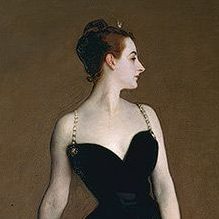
In the late 19th century, influential American artist John Singer Sargent was known to capture the images of the powerful and independent women in the Gilded Age Period through his iconic portraits. One of the most notable subjects that Sargent had was Madame X, also known as Virginie Amélie Avegno Gautreau, who I like to call the principal subject of “Sargent’s Muses,” a series of portraits featuring strong, confident women. These artworks not only showcased the beauty and elegance of the women depicted but also challenged societal norms and paved the way for the empowerment of the modern woman.
John Singer Sargent in his Paris studio, ca. 1883–4. Image via Wikimedia Commons.
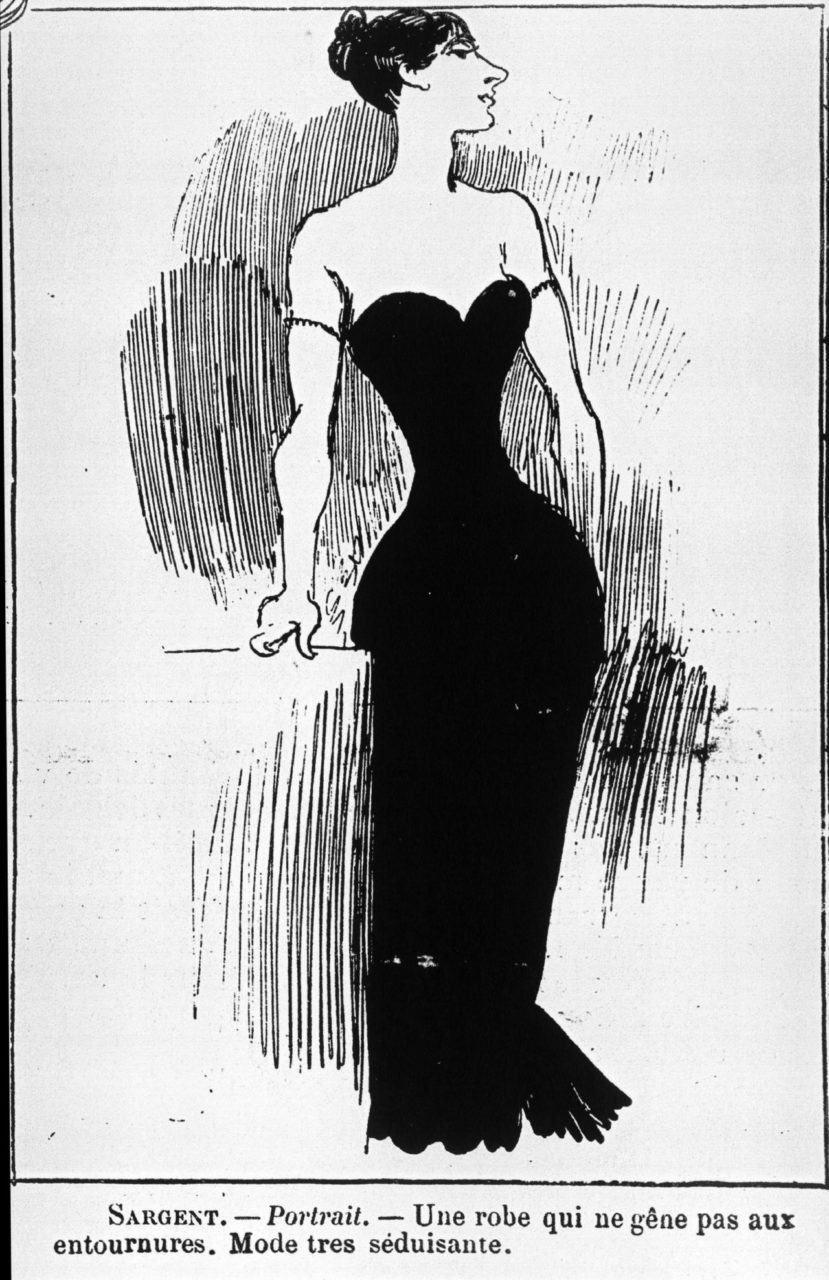
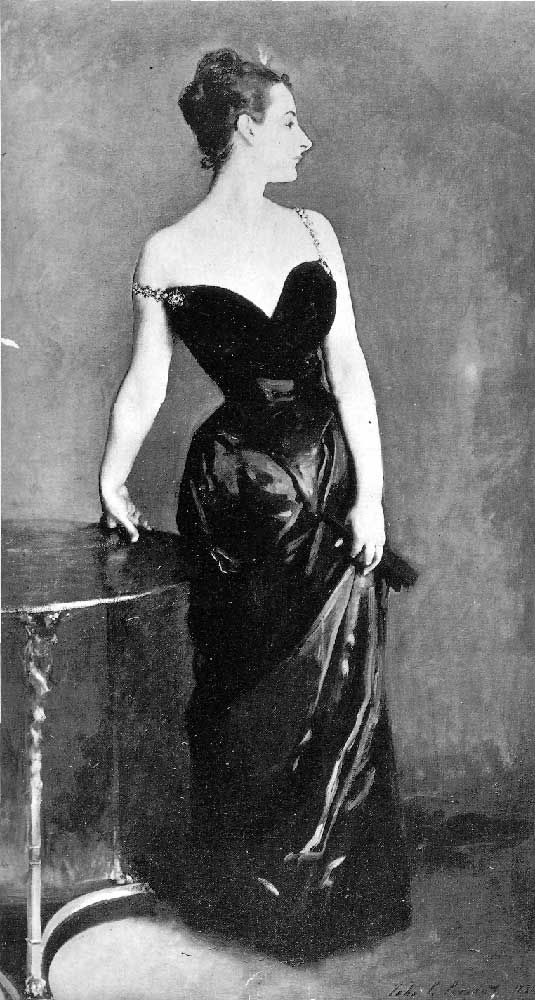
Madame X, painted by John Singer Sargent in 1884, was unveiled at the Paris Salon. It caused quite a stir, even though it may seem tame by today’s standards. Due to his American family’s tireless attempts to adapt to the societal norms among the art elite, Sargent was already at a disadvantage and faced criticism from his peers. The portrait of Madame X was considered scandalous and grotesque by many art critics. One critic famously wrote, “One more struggle and the lady will be free.”
The portrait depicted Gautreau, who had a thin strap falling off her shoulder as she bared the low neckline of her black fitted dress, which contrasted greatly against her almost blue-pale skin and emphasized her tiny waist. Gautreau was a renowned socialite and fashion icon. In fact, many considered her to be a great beauty during the time. Her breathtaking features compensated for the lack of an appropriate background to appease the Parisian elite.
Therefore, she was often sought after as a model by many artists for her ability to attract the male gaze. The bold portrayal of Gautreau challenged the traditional notions of femininity and propriety. Sargent intended to capture her beauty, allure, and confidence. However, during its viewing at the Paris Salon, the portrait was met with criticism and much controversy. This, however, put Gautreau’s reputation in tatters. Being thoroughly shamed, she hid from society, and in a letter written by De Costa, she bemoaned the entire situation, “I will try to get over the sadness which for several days has overwhelmed me and which makes me depressed enough to die.”
Albert Robida (French, 1848-1926). “Le Salon Comique,” Caricature, no. 229 (May 17, 1884): 165. Source: BNF – Gallica
Despite the initial backlash, the painting became an emblem of female empowerment and an inspiration to many. Gautreau was a woman who defied societal expectations and pursued her passions and desires. She is a symbolic figure of the unapologetic and a representation of female independence in a society that tried to confine women to narrow roles. The portrait of Madame X symbolized the strength and resilience of women who refused to be constrained by society’s judgment. As for Gautreau, she soon felt differently about the painting, and she commissioned a similar one in 1891 from French artist Gustave Courtois that featured the same profile pose and daringly dropped shoulder strap.
The significance of works like Madame X extends beyond the art world and has significant meaning for women today. The portrait’s dress, pose, and style have been recreated as inspiration in fashion editorials in Vogue with Nicole Kidman, shot by renowned photographer Steven Meisel in 1999, and then later again in 2008 of actress Julianne Moore by Peter Lindbergh for Harper’s Bazaar.
Left: Nicole Kidman as Madame X by John Singer Sargent (1884) – Vogue by Steven Meisel, June 1999 / Center: John Singer Sargent (American, 1856–1925). Madame X (Madame Pierre Gautreau), 1883–84. Oil on canvas, 82 1/8 x 43 1/4in. (208.6 x 109.9cm). The Metropolitan Museum of Art, New York, Arthur Hoppock Hearn Fund, 1916 (16.53)/ Right: Julianne Moore, photographed by Peter Lindberg as John Singer Sargent’s, “Madame X,” for Harper’s Bazaar, “Portrait of a Lady,” May 2008
The re-creation of this portrait by these famous photographers and well-known publications is seen as a way to celebrate femininity, sensuality, and the power of women, which was the intention of both Sargent and Gautreau when he agreed to paint her. The legacy of Madame X reminds us that progress is possible, and women have the power to shatter glass ceilings, challenge stereotypes, redefine what it means to be a modern woman and be damned anyone who says otherwise!
“The legacy of Madame X reminds us that progress is possible, and women have the power to shatter glass ceilings, challenge stereotypes, redefine what it means to be a modern woman and be damned anyone who says otherwise!”
This portrait and story remind women that they have always been at the forefront of progress and change, and though Sargent was the man holding the brush, women like Gautreau truly brought these portraits and their stories to life. Regardless of all the rejection she experienced, she remains a great beauty, and her portrait is considered one of Sargent’s greatest and most loved works. The image of Madame X and the meaning of the portrait today will continue to pave the way for generations of modern women as they learn to stand firm in their female power.
We have exclusive properties just for you, Leave your details and we'll talk soon.
Imagine owning a home in the majestic landscapes of Montana or Wyoming. With expansive properties, stunning mountain views, and endless outdoor adventures, these states offer the perfect blend of tranquility and excitement. Whether you’re looking for a serene retreat or a vibrant community, your dream property awaits in the heart of the American West. Explore real estate opportunities today and make your frontier dreams a reality! Contact our team, Steger St Clair of C21 BHJ, for your real estate needs.